史鉴
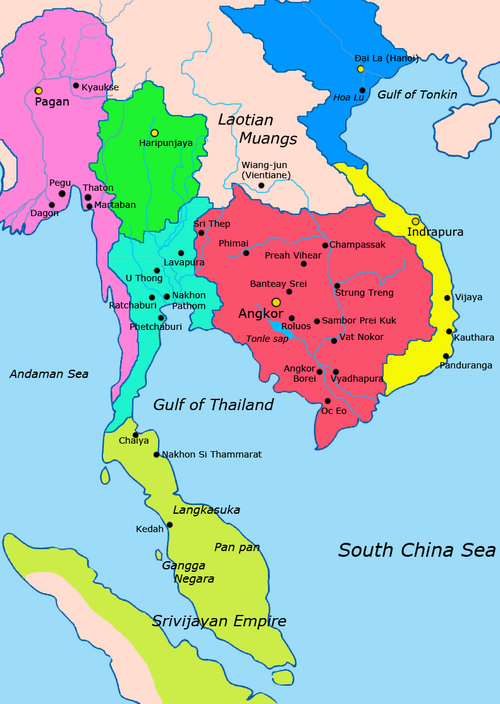
图:Javierfv1212 · CC0 · 维基共享资源
- 存在时间
- 661 年—1292 年
- 首都
- 南奔
- 类型
- 历史国家
- 简述
- 古城邦王国
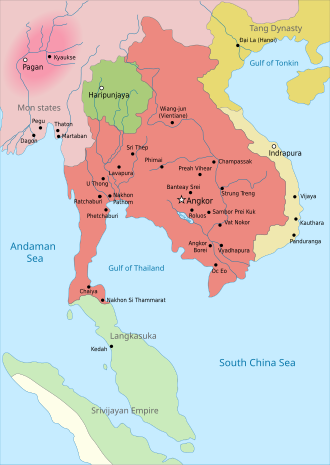
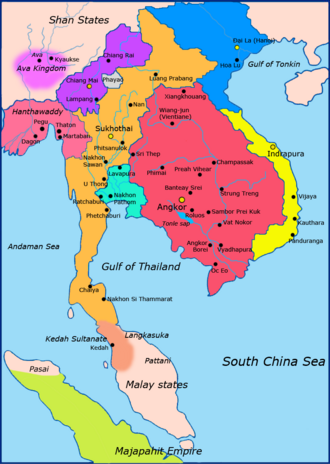
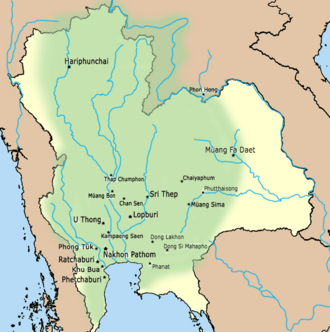
哈利奔猜(泰语:อาณาจักรหริภุญชัย,英语:Hariphunchai),是孟族于七世纪至十三世纪在泰国北部建立的城邦王国,首都位于南奔(今南奔府)。中国古代称其为女王国。其最强盛的时代为十三世纪,最后被兰纳国王孟莱灭于1292年。
详细介绍
历代国王
冉马黛维(Camadevi,662年—669年)
Mahayos(669年—749年)
Kumañ(749年—789年)
Ruthanta(789年—816年)
Sonamañchusaka(816—846)
Samsara(846—856)
Paduma (856—886)
Kuladeva(886—894)
- Maharaj
- Lakkhunsriya
- Kuladeva
- Nok
- Dala
- Gutta
- Sela
- Yuva
- Brahmata
- Mukasa
Traphaka(924—927)
Kampol(930—951)
- Vasudev
- Ñeyyala
- Maharaja, King of Lampang
- Sela
- Kañjana
- Chilankanam
- Phanthula
- Inthavara
- Ditta
Adhijja (1039—1119)
- Thammikaraj
- Ratha
- Sapphasith
- Chettharaj
- Jeyakaraj
- Datvañña
- Ganga
- Siripunya
- Uthen
- Phantoñña
- Thayya ammat
- Atana
- Uthen
- Hvam
Trangal (1195—1196)
Ñotta(1196—1270)
Ñiba(1270—1292)
正文摘自中文维基百科「哈利奔猜」(节选,删去了参考文献、表格和图片),按 CC BY-SA 4.0 使用;在维基百科读全文 ›
英文维基百科的更多内容
中文维基百科这一条比较短,下面是英文维基百科同一条目的节选,原文为英文,未翻译。
Haripuñjaya (Mon: ဟရိဘုဉ္ဇယ; Northern Thai: ᩉᩁᩥᨷᩩᨬᨩᩮᨿ᩠ᨿ; Thai: หริภุญชัย, RTGS: Hariphunchai), also spelled Haribhuñjaya, was an ancient Mon kingdom in what is now Northern Thailand, existing from the 7th or 8th to 13th century CE. Its capital was at Lamphun, which at the time was also called Haripuñjaya. In 1292 the city was besieged and captured by Mangrai of the Tai kingdom of Lan Na. The chronicle tradition credits the foundation to Camadevi, a princess invited from Lavo, and the kingdom's art and epigraphy are treated as part of the Dvaravati world of the Mon city-states. The date of that foundation is disputed, with proposals running from the seventh century to the twelfth.
Burial grounds and an iron-working site in the Lamphun basin are dated between the last centuries BCE and the sixth century CE, before the foundation the chronicles describe. In the twelfth century Adityaraja came into conflict with the rulers of Lavo. Seven large steles from Lamphun, among them the Mon inscription of 1219 from Vat Don, record donations, building works and an earthquake. Whether any Chinese record names the kingdom is disputed.
History
Foundation
Material older than the foundation the chronicles describe has been dated in the same basin. Three burial grounds with grave goods give 500 BCE–100 CE at Yang Thong Tai, 138–618 CE at San Pa Kha and 478–578 CE at Wang Hai, and a site producing iron tools at Ban Hong gives 554–595 CE. Saiklang Jindasu, who reports them, states that the people who left this material are not definitely identified, and only that they were likely a group holding the lowland before the Dvaravati population arrived from Lavapura.
According to the Cāmadevivaṃsa, Jinakalamali and Singhanavati chronicles, the city was founded between 629–57 AD by four hermits named Sudeva, Sukatanata, Tapanana, and Chantasikatungka.……
Wars and conquest by Lan Na
In the twelfth century Haripuñjaya was ruled by King Adityaraja.……
Epigraphy
Haripuñjaya accounts for the third and last phase of Old Mon epigraphy in Thailand, of about the eleventh to thirteenth centuries and found nowhere else in the country. Unlike the brief donative texts of the earlier phases, the seven large steles from Lamphun are substantial documents. They record personal and place names, donations and building works, and an account of an earthquake and of the renovations that followed it. One records a ceremony at which palm-leaf manuscripts and an umbrella were interred in what may have been a man-made chamber.
Lamphun inscriptions from 1213, 1218, and 1219, mention King Sabbadhisiddhi endowing Buddhist monuments.……
Historiography
Chronicles and foundation date
The foundation dates the chronicles give are now considered too early, and the actual beginning is placed at around 750 AD. The chronicles themselves are late. Elizabeth Moore and San Win date the Cāmadevivaṃsa to between 1410 and 1417 and give its author as the monk Bodhiraṃsi, and Woodward places the Jinakalamali about a century after it. Woodward treats the four hermits as mythical figures, while allowing that hermits may have had a real part in the centuries of Indic contact, as successors to village shamans.
In the period the chronicles describe, most of what is now central Thailand was under the rule of various Mon city-states, known collectively as the Dvaravati kingdom.……
Identifications and readings
On Donald Swearer's reading, reported by McCormick and Jenny, Lawa and Khmer speakers lived in the Lamphun area between the seventh and thirteenth centuries and may at times have ruled the kingdom.……
List of rulers
Names of monarchs of the Haripuñjaya kingdom according to Jinakalamalipakorn:
Camadevi (662–669)
Mahayos (669–749), son of the previous
Kumañ (749–789), son of the previous.
Ruthanta (789–816), son of the previous.
Sonamañchusaka (816–846)
Samsara (846–856), son of the previous.
Paduma (856–886)
Kuladeva (886–894)
Maharaj (conquer Haripuñjaya)
Lakkhunsriya (Milakkha conqueror of Haripuñjaya)
Kuladeva (2nd reign)
- Nok
- Dala
- Gutta
- Sela
- Yuva
- Brahmata
- Mukasa
Traphaka (924–927)
Uchitta jakraphad, King of Lavo (927–930)
Kampol (930–951)
Jakraphad, King of Atikuyaburi or Jinghong (951–960)
- Vasudev
- Ñeyyala
- Maharaja, King of Lampang
- Sela
- Kañjana
- Chilankanam
- Phanthula
- Inthavara
- Ditta
Adhijja (1039-1119)
- Thammikaraj
- Ratha
- Sapphasith
- Chettharaj
- Jeyakaraj
正文摘自英文维基百科(原文为英文,未翻译)「Haripuñjaya」(节选,删去了参考文献、表格和图片),按 CC BY-SA 4.0 使用;在维基百科读全文 ›
同时期、同地区的政权