史鉴
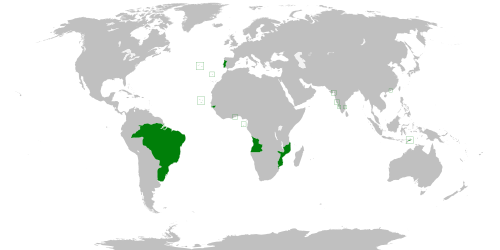
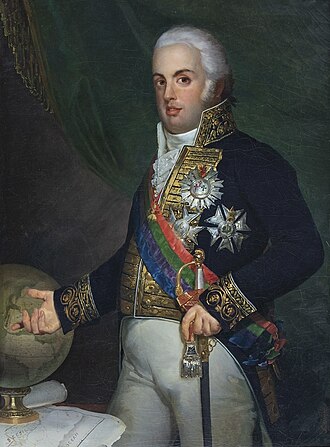
图:Luis wiki This is a retouched picture, which means that it has been digitally al · CC BY-SA 4.0 · 维基共享资源
详细介绍
历史
1500年—1815年,巴西是葡萄牙的殖民地。1807年—1813年,法兰西第一帝国侵占了葡萄牙王国本土,葡萄牙王室流亡巴西。
1815年12月16日,葡萄牙、巴西和阿尔加维联合王国成立,巴西由殖民地升格为王国,与葡萄牙王国结为共主邦联,葡萄牙君主兼任巴西君主。
1821年葡萄牙王室返回葡萄牙王国本土,但时任葡萄牙王储佩德罗仍继续留守巴西。1822年9月7日在时任葡萄牙王储佩德罗领导下,巴西单方面宣告独立。1822年10月12日时任葡萄牙王储佩德罗建立巴西帝国,他本人同时即位成为巴西皇帝佩德罗一世。
1825年11月15日葡萄牙王国与巴西帝国签订1825年里约热内卢条约,葡萄牙王国正式承认巴西帝国独立。
正文摘自中文维基百科「葡萄牙、巴西和阿尔加维联合王国」(删去了参考文献、表格和图片),按 CC BY-SA 4.0 使用
英文维基百科的更多内容
中文维基百科这一条比较短,下面是英文维基百科同一条目的节选,原文为英文,未翻译。
The United Kingdom of Portugal, Brazil and the Algarves was a pluricontinental monarchy formed by the elevation of the Portuguese colony named State of Brazil to the status of a kingdom and by the simultaneous union of that Kingdom of Brazil with the Kingdom of Portugal and the Kingdom of the Algarves, constituting a single state consisting of three kingdoms.
The United Kingdom of Portugal, Brazil and the Algarves was formed in 1815, following the transfer of the Portuguese court to Brazil during the Napoleonic invasions of Portugal, and it continued to exist for about one year after the court's return to Europe, being de facto dissolved in 1822, when Brazil proclaimed its independence. The dissolution of the United Kingdom was accepted by Portugal and formalized de jure in 1825, when Portugal recognized the independent Empire of Brazil.
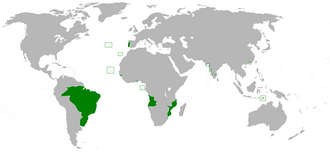
During its period of existence the United Kingdom of Portugal, Brazil and the Algarves did not correspond to the whole of the Portuguese Empire: rather, the United Kingdom was the transatlantic metropolis that controlled the Portuguese colonial empire, with its other overseas possessions in Africa and Asia.
Thus, from the point of view of Brazil, the elevation to the rank of a kingdom and the creation of the United Kingdom represented a change in status, from that of a colony to that of an equal member of a political union. In the wake of the Liberal Revolution of 1820 in Portugal, attempts to compromise the autonomy and even the unity of Brazil, led to the breakdown of the union.
History
Establishment
The United Kingdom of Portugal, Brazil and the Algarves came into being in the wake of Portugal's war with Napoleonic France. The Portuguese Prince Regent (the future King John VI), with his incapacitated mother (Queen Maria I of Portugal) and the Royal Court, fled to the colony of Brazil in 1808.
With the defeat of Napoleon in 1815, there were calls for the return of the Portuguese Monarch to Lisbon. The Portuguese Prince Regent enjoyed life in Rio de Janeiro, where the monarchy was more popular and where he had more freedom, and he was thus unwilling to return to Europe. However, those advocating the return of the court to Lisbon argued that Brazil was only a colony and that it was not right for Portugal to be governed from a colony. On the other hand, leading Brazilian courtiers pressed for the elevation of Brazil from the rank of a colony, so that they could enjoy the full status of being nationals of the mother-country. Brazilian nationalists also supported the move, because it indicated that Brazil would no longer be submissive to the interests of Portugal, but would be of equal status within a transatlantic monarchy.
By a law issued by the Prince Regent on 16 December 1815, the colony of Brazil was thus elevated to the rank of a kingdom and by the same law the separate kingdoms of Portugal, Brazil and the Algarves were united as a single state under the title of The United Kingdom of Portugal, Brazil and the Algarves.
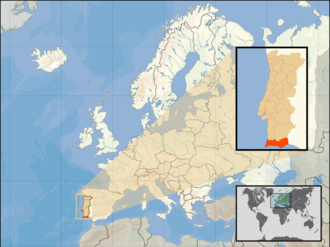
This united kingdom included the historical Kingdom of the Algarves, which is the present-day Portuguese region of Algarve.
The titles of the Portuguese royalty were changed to reflect the creation of this transatlantic united kingdom. The styles of the Queen and of the Prince Regent were changed accordingly to Queen and Prince Regent of the United Kingdom of Portugal, Brazil and the Algarves. The title Prince of Brazil, a title that used to pertain to the heir apparent of the Portuguese Crown, was dropped shortly afterwards, in 1817, being replaced by the title of Prince Royal of the United Kingdom of Portugal, Brazil and the Algarves, or Prince Royal for short. A new flag and coat of arms were also adopted for the new state.
Succession of John VI
On 20 March 1816 Queen Maria I died in Rio de Janeiro. Prince John, the Prince Regent, then became King John VI, the second monarch of the United Kingdom, retaining the numbering of Portuguese Sovereigns.……
正文摘自英文维基百科(原文为英文,未翻译)「United Kingdom of Portugal, Brazil and the Algarves」(节选,删去了参考文献、表格和图片),按 CC BY-SA 4.0 使用;在维基百科读全文 ›
相关事件
- Battle of India Muerta1816 年 11 月 18 日 · 战役 · 拉丁美洲
- 巴西独立战争1822 年 2 月 18 日—1824 年 3 月 8 日 · 战争 · 拉丁美洲
- Battle of Pirajá1822 年 11 月 8 日 · 战役 · 拉丁美洲