史鉴
- 存在时间
- 1815 年—1825 年
- 首都
- 里约热内卢
- 官方语言
- 葡萄牙语
- 前身
- 格罗帕拉与马拉尼昂州、State of Brazil
- 后继
- 葡萄牙-巴西-阿尔加维联合王国
- 所属
- 葡萄牙-巴西-阿尔加维联合王国
- 类型
- 君主立宪制、王国
- 简述
- constituent kingdom of United Kingdom of Portugal, Brazil and the Algarves (1815-1825)
巴西王国(葡萄牙语:Reino do Brasil)是葡萄牙、巴西和阿尔加维联合王国的一个构成国,存在于1815年—1822年,首都是里约热内卢。
详细介绍
历史
新大陆的新王国
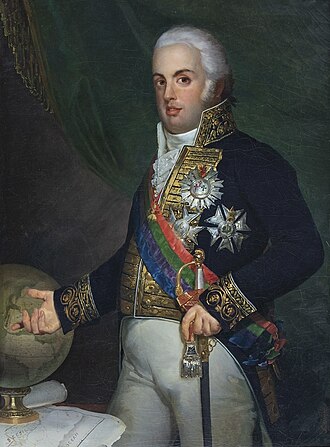
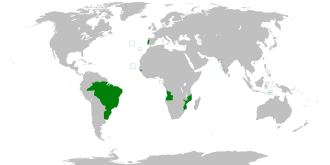
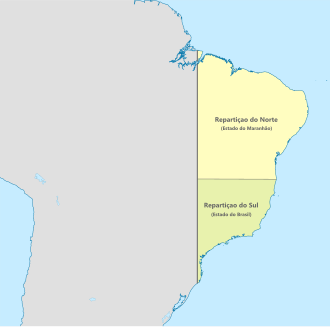
1815年12月16日,当时的葡萄牙摄政王若昂(后来的若昂六世)以其母玛丽亚一世的名义颁布法律,该法律将巴西从原先的殖民地“州”(Estado do Brasil)提升为“王国”,并与葡萄牙、阿尔加维共同组成联合王国。
此举的背景与拿破仑战争密切相关:1807年法国入侵葡萄牙,葡萄牙王室在若昂摄政王的带领下迁往巴西。战争结束后,王室选择继续留在巴西。为巩固统治并回应维也纳会议之外交需求,若昂决定透过法律形式提升巴西地位,使其不再是单纯的殖民地,而是联合王国的平等组成部分。这不仅提升了巴西的行政与经济自主性,也为后续巴西民族意识的觉醒奠定了基础。
摄政任命与自治权的扩大
1820年葡萄牙爆发自由主义革命,里斯本的议会要求若昂六世返回葡萄牙并恢复本土对巴西的直接控制。面对压力,若昂六世于1821年4月决定返回里斯本。1821年4月22日,在离开巴西前夕,他颁布一道敕令,任命自己的长子兼王位继承人——联合王国王储布拉干萨的佩德罗亲王(后来的佩德罗一世)为巴西王国摄政王,并授予他全权代行“巴西王国的总体治理与全部行政事务”,作为国王的代表。
这一任命使佩德罗在巴西拥有广泛的行政、军事与政治权力,巴西王国在联合王国内部获得了相当程度的自治行政权。若昂六世于4月25/26日左右启程返回葡萄牙,留下佩德罗处理巴西事务。这一安排原本旨在维持联合王国的统一,但随着葡萄牙议会不断要求削弱巴西自治权并召回佩德罗,矛盾迅速激化。佩德罗最终拒绝返回(著名的“我留下”宣言,Dia do Fico),并于1822年9月7日宣布巴西独立,建立巴西帝国。
正文摘自中文维基百科「巴西王国」(节选,删去了参考文献、表格和图片),按 CC BY-SA 4.0 使用;在维基百科读全文 ›
英文维基百科的更多内容
中文维基百科这一条比较短,下面是英文维基百科同一条目的节选,原文为英文,未翻译。
The Kingdom of Brazil (Portuguese: Reino do Brasil) was a constituent kingdom of the United Kingdom of Portugal, Brazil and the Algarves.
Creation
The legal entity of the Kingdom of Brazil was created by a law issued by Prince Regent John of Portugal, Prince of Brazil, Duke of Braganza, on behalf of his mother, Queen Maria I of Portugal, on 16 December 1815, which elevated the State of Brazil to the rank of a Kingdom within the United Kingdom of Portugal, Brazil, and the Algarves.
By a decree issued on 22 April 1821 ahead of his departure from Brazil to Portugal, King John VI appointed his firstborn son and heir, Prince Pedro of Braganza, the Prince Royal of the United Kingdom, as Prince Regent of the Kingdom of Brazil, with delegated powers to discharge the "general government and entire administration of the Kingdom of Brazil" as the King's placeholder, thus granting the Kingdom of Brazil a devolved administration within the United Kingdom.
Dissolution
On 7 September 1822, Prince Pedro, Prince Royal of the United Kingdom of Portugal, Brazil, and the Algarves, Regent of Brazil, declared the Brazilian Independence. On 12 October 1822, Prince Pedro became the first Emperor of the newly independent country, thus founding the Empire of Brazil. Brazil's independence was only recognized with the Treaty of Rio de Janeiro, in 1825, by which the Kingdom of Brazil, within the larger United Kingdom of Portugal, Brazil, and the Algarves, was formally dissolved and Brazil's independence was recognized and granted by the Kingdom of Portugal.
On 8 September 1822, in the first day after the Proclamation of Independence, Prince Pedro issued a decree to adopt for the Kingdom of Brazil a new flag and coat of arms, replacing the Portuguese colours, then white and blue, with new colours, green and yellow (green was chosen for its association with the House of Braganza, Pedro's dynasty; yellow was chosen as it was the colour of the House of Habsburg, in which Pedro's wife, Leopoldina, was born; the new national colours therefore honoured the Royal couple that led Brazil at the foundation of its independence); those new symbols would later pass to the Empire of Brazil when it was founded on 12 October 1822. The new, post independence symbols, replaced the original flag of the Kingdom of Brazil (a golden armillary sphere on a blue field) and its original coat of arms (a golden armillary sphere with a blue background in the interior of the sphere), that had been designed in 1815. Of course, after independence, upon the adoption of the new flag and coat of arms on 8 September 1822, the coat of arms of the United Kingdom of Portugal, Brazil, and the Algarves, adopted in 1815 (featuring a juxtaposition of the traditional coat of arms of Portugal and the Algarves with the original coat of arms of the Kingdom of Brazil in the background, surmounted by the royal crown), also ceased to be used.
As per one of the clauses of the Treaty of Rio de Janeiro, King John VI of Portugal and the Algarves, formerly King John VI of the United Kingdom of Portugal, Brazil, and the Algarves, was granted the personal title of titular Emperor of Brazil, thus having stayed monarch of Brazil, in title, until his death in 1826.
正文摘自英文维基百科(原文为英文,未翻译)「Kingdom of Brazil」(删去了参考文献、表格和图片),按 CC BY-SA 4.0 使用
相关事件
- Beberibe Convention1821 年 8 月 29 日—1821 年 10 月 5 日 · 革命与起义 · 拉丁美洲