史鉴
- 存在时间
- 1527 年—1619 年
- 首都
- 比达
- 政体
- 绝对君主制
- 类型
- 历史国家
- 简述
- former country
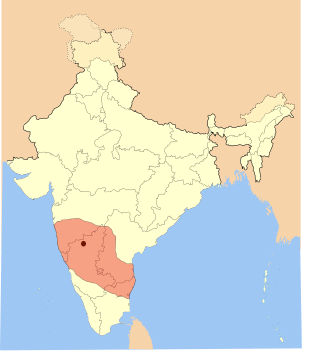
比德尔苏丹国(Bidar Sultanate,1489年-1619年),也称巴里德·沙赫王朝(Barid Shahi dynasty),是一个中世纪后期印度德干苏丹国。
他的建立者卡西姆·巴里迪是一个来自格鲁吉亚的突厥人,他最初为巴赫曼尼苏丹国的穆罕默德·沙三世服务,成为他的总理,在马哈穆德沙时代成为摄政。他1504年死后,他儿子阿米尔成为总理和控制苏丹国行政。之后巴赫曼尼苏丹仍传四代,但也只是阿米尔的傀儡,1527年巴曼尼苏丹国末代苏丹逃走,阿米尔成为事实上统治者,但他没正式称王,直到他的儿子阿里才正式称沙阿。
这苏丹国最有名的是1565年1月打败了最后一个印度教帝国毗奢耶那伽罗王朝,在1619年成为蒙兀儿帝国一部分。
正文摘自中文维基百科「比德尔苏丹国」(删去了参考文献、表格和图片),按 CC BY-SA 4.0 使用
英文维基百科的更多内容
中文维基百科这一条比较短,下面是英文维基百科同一条目的节选,原文为英文,未翻译。
The Bidar Sultanate was an early modern sultanate located in the central Deccan, ruled by the Barid Shahi dynasty. One of the five Deccan sultanates, its initial territory corresponded to that of one of the five provinces of the Bahmani Sultanate, and under the rule of Qasim Barid I in 1492 assumed de facto control of state affairs of the Bahmani Sultanate.
Leadership passed to his sons; Amir Barid I in 1504 and Ali Barid Shah I in 1542. Starting from the 1580s as a result of Ali's death, a wave of successions occurred in the rulership of the dynasty which ended in 1609 under the last sultan, Amir Barid III. He was eventually defeated in 1619 by Ibrahim Adil Shah II of the Bijapur Sultanate, who annexed the territory of the Bidar Sultanate into his realm.
History
Qasim Barid and Amir Barid
The sultanate was founded in 1492 by Qasim Barid I, who was a Turk. He joined the service of the Bahmani Sultan Muhammad Shah III. He started his career as a sar-naubat, and was made kotwal of Bidar by Nizam-ul-Mulk Bahri, for helping the Deccanis in the massacre of the foreign population at Bidar. However, he later became the mir-jumla (prime minister) of the Bahmani Sultanate. During the reign of Mahmood Shah Bahmani II (r. 1482 – 1518), he became the de facto ruler of the Bahmani Sultanate.
After the death of Mahmud Shah Bahmani in 1518, he was succeeded by four sultans, one after another, but they were mere puppets in the hands of Amir Barid.
When the last Bahmani ruler Kalimullah fled to Bidar in 1527, Amir Barid I became practically independent, as his de jure suzerain's state ceased to exist. However, he never assumed any royal title.
Ali Barid Shah
In 1542, Amir was succeeded by his son Ali Barid Shah I, who was the first to assume the royal title of Shah. Ali Barid joined the other Deccan sultans in the Battle of Talikota against the Vijayanagar Empire in January 1565.
Later rulers
After his death in 1580, Ali Barid was succeeded by his son Ibrahim Barid, who ruled for seven years until his death in 1587. He was succeeded by his younger brother Qasim Barid II. After his death in 1591, he was succeeded by his infant son Ali Barid II, who was soon dethroned by one of his relative, Amir Barid II. In 1601, he was also overthrown by one of his relative, Mirza Ali Barid.
In 1609, he was succeeded by the last ruler, Amir Barid III, who fought against the Mughals in 1616 under the leadership of Malik Ambar. In 1619, he was defeated by the Bijapur sultan Ibrahim Adil Shah II. Bidar was annexed to Bijapur sultanate. Amir Barid III and his sons were brought to Bijapur and kept "under surveillance".
Culture
Architecture
The Bidar Sultanate made considerable additions to the Bidar Fort. Their tombs, the Barid Shahi tombs, were their main architectural pursuits, and are also located at Bidar. The rulers employed Hindu architects and engineers for the construction of these buildings, which resulted in amalgamation of some Hindu features within the architecture of this period.
正文摘自英文维基百科(原文为英文,未翻译)「Bidar Sultanate」(节选,删去了参考文献、表格和图片),按 CC BY-SA 4.0 使用;在维基百科读全文 ›
同时期、同地区的政权