史鉴
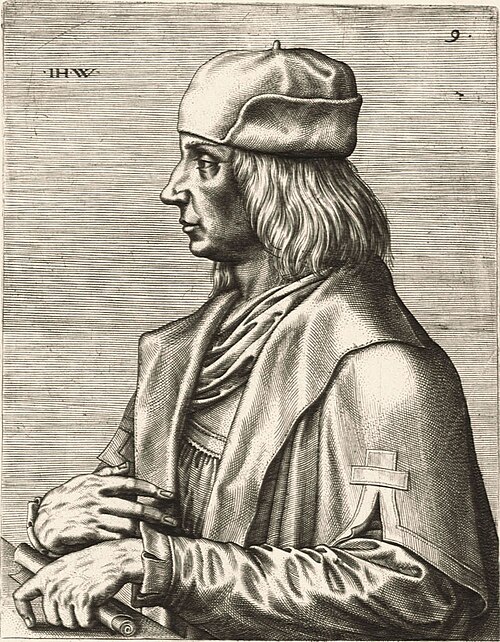
图:Attributed to Johannes Wierix · Public domain · 维基共享资源
- 生卒
- 1456 年—1530 年 9 月 14 日 (日期为儒略历)
- 出生地
- 鲁汶
- 去世地
- 安特卫普
- 国籍 / 所属
- 布拉班特公国、哈布斯堡尼德兰
- 身份
- 艺术家、画家、币章雕刻家、建筑绘图员、视觉艺术家
- 母亲
- Christina Van Pullaer
- 子女
- 詹·马苏斯、Cornelis Massijs
- 代表作
- 古怪的老妇人、The Moneylender and his Wife、Ill-Matched Marriage
- 受影响于
- Lieven van Lathem
- 原文名
- Quinten Massijs
- 所属组织
- Antwerp Guild of Saint Luke
- 领域
- 绘画
- 流派 / 运动
- 早期尼德兰油画
- 简述
- Flemish painter (1466-1530)
昆丁·马西斯(Quentin Matsys、1466年—1530年)是一位早期尼德兰传统风格的佛兰德斯画家。
据传,他在成为画家之前曾是一名铁匠。昆丁·马西斯在安特卫普活跃了20多年,创作了大量宗教和讽刺倾向的作品。他被认为是安特卫普画派的创始人,该画派在16世纪成为佛兰德斯地区领先的绘画流派。他引入了新的技法和主题,并运用道德主题,但又不完全打破传统。
详细介绍
生平
关于马西斯生平的早期记载大多以传奇故事为主,而关于他的活动或性格的当代记载却寥寥无几。根据J. Molanus的《鲁汶史》,马西斯出生于鲁汶,出身卑微,是一名铁匠。马西斯是四个孩子之一,双亲为约斯特·马西斯(卒于1483年)和凯瑟琳·范·金肯的家中,时间大约在1466年4月4日至9月10日之间。传说马西斯为了追求妻子而放弃了铁匠生涯,因为妻子觉得绘画更显浪漫,但卡雷尔·范曼德尔声称这是虚假传闻,真正的原因是他生病期间身体虚弱,无法在铁匠铺工作,而是为狂欢节庆祝活动装饰版画。
正文摘自中文维基百科「昆丁·马西斯」(删去了参考文献、表格和图片),按 CC BY-SA 4.0 使用
英文维基百科的更多内容
中文维基百科这一条比较短,下面是英文维基百科同一条目的节选,原文为英文,未翻译。
Quentin Matsys (UK: MAT-sysse, US: MAHT-sysse; also Massys or Metsys; Flemish: Quinten Matsijs [ˈkʋɪntə ˈmɑtsɛis]; 1466–1530) was a Flemish painter in the Early Netherlandish tradition. He was born in Leuven. According to tradition, he trained as an ironsmith before becoming a painter. Matsys was active in Antwerp for over 20 years, creating numerous works with religious roots and satirical tendencies. He is regarded as the founder of the Antwerp school of painting, which became the leading school of painting in Flanders in the 16th century. He introduced new techniques and motifs as well as moralising subjects without completely breaking with tradition.
Early life
Most early accounts of Matsys' life are composed primarily of legend and very little contemporary accounts exist of the nature of his activities or character. According to J. Molanus' Historiae Lovaniensium, Matsys was known to be a native of Leuven with humble beginnings as an ironsmith. One of four children, Massys was born to Joost Matsys (d. 1483) and Catherine van Kincken sometime between 4 April and 10 September 1466.……
Work in Leuven
During the greater part of the 15th century, the centres in which the painters of the Low Countries most congregated were Tournai, Bruges, Ghent and Brussels. Leuven gained prominence toward the close of this period, employing workmen from all of the crafts including Matsys. Not until the beginning of the 16th century did Antwerp take the lead which it afterward maintained against Bruges, Ghent, Brussels, Mechelen and Leuven.……
Style
Although the roots of Matsys' training are unknown, his style reflects the artistic qualities of Dirk Bouts, who brought to Leuven the influence of Hans Memling and Rogier Van der Weyden. When Matsys settled at Antwerp at the age of twenty-five, his own style contributed importantly to reviving Flemish art along the lines of Van Eyck and Van der Weyden. Matsys departed from Leuven in 1491 when he became a master in the guild of painters at Antwerp.……
Influences
In comparison to other Northern Renaissance artists such as Holbein and Dürer, Matsys shies away from refined and subtle detailing. Because there are numerous connections between him and these masters, however, it can be concluded that his departure in techniques was deliberate and not an act of ignorance. He most likely met Holbein more than once on his way to England, and Dürer is believed to have visited his house at Antwerp in 1520. Matsys also became the guardian of Joachim Patinir's children after the death of that painter.
Death
Matsys died at Antwerp in 1530. He was a religious devotee, despite several of his relatives dying as a result of their faith. His sister Catherine and her husband suffered at Leuven in 1543 for what was then the capital offence of reading the Bible: he being decapitated, she allegedly buried alive in the square before the church. In 1629 the first centennial of Matsys' death was marked by a ceremony and erection of a relief plaque with an accompanying inscription on the facade of Antwerp Cathedral.……
Legacy
Matsys' works include A Portrait of an Elderly Man (1513), Christ presented to the People (1518–1520) (Prado), and A Grotesque Old Woman (or The Ugly Duchess), which is perhaps the best-known of his works. It served as a basis for John Tenniel's depiction of the Duchess in Alice's Adventures in Wonderland.……
正文摘自英文维基百科(原文为英文,未翻译)「Quentin Matsys」(节选,删去了参考文献、表格和图片),按 CC BY-SA 4.0 使用;在维基百科读全文 ›
受其影响的人物
所属政权

同时代、同地区的人物




同时代、同身份的人物(艺术与音乐)