史鉴

图:Arab League at English Wikipedia · Public domain · 维基共享资源
- 存在时间
- 1335 年—1432 年
- 首都
- 巴格达、巴士拉、大不里士
- 类型
- 历史国家、苏丹国
- 所在大洲
- 亚洲
- 简述
- Shia Muslim Turco-Mongol Sultanate
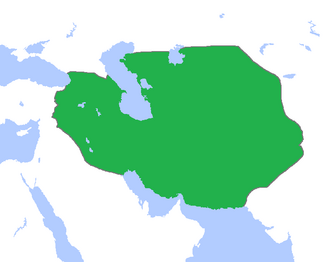
札剌亦儿王朝,是蒙古伊儿汗国解体后,札剌亦儿人在于1330年代伊朗西部与伊拉克成立的小汗国。该王朝延续约五十年,最终因帖木儿的征服及黑羊王朝(土库曼部族)的叛乱而衰败。帖木儿于1405年去世后,札剌亦儿王朝曾短暂尝试在伊拉克南部和胡哲斯坦地区重建政权。然而,该王朝最终于1432年被黑羊王朝彻底消灭。
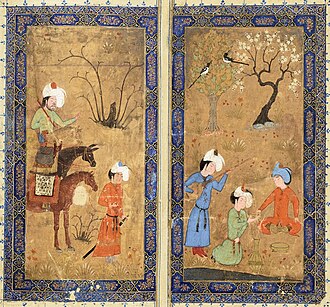
札剌亦儿人虽具蒙古血统,但深受突厥文化影响,并以突厥语系为主要语言。他们的统治显著加强了突厥人在伊拉克的影响力,使突厥语系成为仅次于阿拉伯语的第二大语言。此外,札剌亦儿王朝亦深受波斯文化熏陶,其统治时期在波斯艺术发展史上占据重要地位,确立了许多关键特征,为后来的波斯画派奠定基础。
正文摘自中文维基百科「札剌亦儿王朝」(删去了参考文献、表格和图片),按 CC BY-SA 4.0 使用
英文维基百科的更多内容
中文维基百科这一条比较短,下面是英文维基百科同一条目的节选,原文为英文,未翻译。
The Jalayirid Sultanate (Persian: جلایریان, romanized: Jalāyiriyān), also Ilka dynasty or Ilkanids, was a Mongol dynasty which ruled over modern-day Iraq and western Iran after the breakup of the Ilkhanate in the 1330s. It expanded for about fifty years, until disrupted by Timur's conquests and the revolts of the Qara Qoyunlu Turkoman. After Timur's death in 1405, there was a brief attempt to re-establish the sultanate in southern Iraq and Khuzistan. The Jalayirids were finally eliminated by the Qara Qoyunlu in 1432.
The Jalayirids originated from the Jalayir tribe, which was a prominent Mongolian tribe hailing from the area of the River Onon in eastern Mongolia, but in the 14th century in West Asia they became "largely Turkicized or at least Turkish-speaking". They are credited with bolstering Turkic influence in Arabic-speaking Iraq so much so that Turkic became the second-most-spoken language after Arabic. Still, the Jalayirid bureaucracy used Mongolian, Arabic and Persian in its documents. The Jalayirids were great contributors to Persianate culture: their role as artistic patrons marks an important period in the evolution of Persian art, where it developed major aspects that would serve as the basis of later Persian paintings.
History
The dynasty was also called the "Ilka dynasty" or "Ilkanids" after Hasan Buzurg's great-grandfather Ilka Noyan.
The history of the Sultanate of Jalayirid can be divided into four phases:
The first phase was during the early years when the dynasty was practically autonomous but theoretically accepted the authorization of the Ilkhanate state.
The second phase, corresponding to the rule of Shaykh Uways Jalayir (1356–1374), is the peak of the Jalayirids.
The third phase was a weakening period that began after the death of Uways.
The fourth phase was when the country became exposed to external attacks by Timur and the Qara Qoyunlu and where the dynasty came to an end.
Early years
During the disintegration years of the Ilkhanate after the death of Abu Sa'id Bahadur Khan in 1335, the family of emir Ilge (Īlgā) Noyan, known as Köke (Kukā, 'Blue') Ilge, descendants of the Jalayirid tribe, first emerged as the inheritors of the traditional governors of the southwestern lands of the Ilkhanate. The Jalairs hailed from pasturelands along the River Onon in Mongolia and produced several military commanders during the Mongol era.……
Government
The Jalayirid administration was modeled after Ilkhanate protocols, with documents in Persian and Mongolian. Its diplomatic correspondence also resembled the Ilkhanate's, using a red ink square seal with Islamic phrases in Arabic.
International influences in Jalayirid art
Jalayirid art was characterized by increased naturalism. Parallels have been noted with the contemporary naturalistic Late Gothic trends, and cross-cultural exchanges, both with the Latin West and Chinese art have been suggested. In effect, Christian communities of European merchants (Genoese, Venetian, Pisan, French, Catalan) had been thriving in the Ilkhanid capitals of Tabriz and Soltaniyeh, and although they faltered in the troubles after the end of the Ilkhanate and the Black Death (1348-1350), were still encouraged by the Jalayirid Sultan Uvays I through correspondence offering road
security and reduced taxes. The artist Dust Muhammad acknowledged China and Europe while describing the contributions of the great naturalistic artist Ahmad Musa, active at the end of the Ilkhanate and during the Jalayirid period:
The custom of portraiture flourished in the lands of Cathay and the Franks until sharp-penned Mercury scrivened the rescript of rule in the name of Sultan Abusaʿid Khudaybanda. Master Ahmad Musa, who was his father’s pupil, lifted the veil from the face of depiction, and the [style of] depiction that is now current was invented by him.……
正文摘自英文维基百科(原文为英文,未翻译)「Jalayirid Sultanate」(节选,删去了参考文献、表格和图片),按 CC BY-SA 4.0 使用;在维基百科读全文 ›
相关事件
- Siege of Baghdad1393 年 8 月 30 日—1393 年 11 月 8 日 · 战役 · 西亚
- Siege of Baghdad1401 年 · 战役 · 西亚
人物
同时期、同地区的政权