史鉴
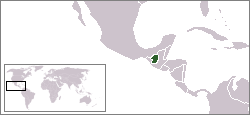
图:User Mixcoatl on nl.wikipedia · CC BY-SA 3.0 · 维基共享资源
- 存在时间
- 1838 年 2 月 2 日—1840 年 1 月
- 首都
- 克萨尔特南戈
- 货币
- Central American Republic real
- 类型
- 历史国家
- 所在大洲
- 北美洲
- 下辖
- 索洛拉省、韦韦特南戈省、克萨尔特南戈省、苏奇特佩克斯省、托托尼卡潘省、索科诺奇科
- 简述
- state of the Federal Republic of Central America
洛斯阿尔托斯国(西班牙语:Estado de Los Altos,“洛斯阿尔托斯”意为“高地”)是中美洲联邦共和国的第六个成员国(1838年—1840年),并在1848年—1849年短暂独立。首都是克萨尔特南戈,而其地区含括现今危地马拉的西部,及墨西哥恰帕斯州的部分地区。
这个州的建立的缘起可追溯到危地马拉市与克萨尔特南戈、与其他中美洲西部地区之政治分歧及紧张局势的纠葛里。且中美洲于1821年从西班牙独立后不久时,新政府讨论到洛斯阿尔托斯从危地马拉分离的问题。1824年联邦宪法议会通过了分离法案,不过在危地马拉市仍有为数不少的反对声音。
在1838年2月2日,官方宣布了洛斯阿尔托斯的独立。中美洲联合省政府也允许洛斯阿尔托斯作为联邦的第六个州,且在当年6月5日开始让洛斯阿尔托斯有了议会席次。洛斯阿尔托斯的旗帜修改自中美洲联邦的旗帜,以玉玺图案为中配以火山的图案作为背景,前面加放格查尔鸟(一种象征自由的当地鸟类)。这是第一面以格查尔鸟作为标志的中美洲旗帜,并自1871年开始就作为危地马拉的国旗。
随着联合省的崩溃,以及随之而来的内战,洛斯阿尔托斯脱离联合省独立。不过在1840年,大部分洛斯阿尔托斯的土地和克萨尔特南戈被拉斐尔·加雷拉的军队强制并入危地马拉。1840年4月2日,拉斐尔·加雷拉发布一道命令,将洛斯阿尔托斯大部分被捕的政府官员枪决。而在另一方面,墨西哥利用了这不稳定的局势吞并了现今位于恰帕斯州东部的中美洲地区。
在1844年、1848年和1849年,在这三年里反对独裁者伽雷拉政权之起义曾短暂的宣告洛斯阿尔托斯独立,不过均告失败。
该地区迄今为止还是很独特的,且“洛斯阿尔托斯”这名称仍就是危地马拉克萨尔特南戈周围地域的别名。同样地,原来本州地区属于墨西哥地域部分则被称为“恰帕斯州的洛斯阿尔托斯”。
正文摘自中文维基百科「洛斯阿尔托斯国」(删去了参考文献、表格和图片),按 CC BY-SA 4.0 使用
英文维基百科的更多内容
中文维基百科这一条比较短,下面是英文维基百科同一条目的节选,原文为英文,未翻译。
The State of Los Altos (Spanish: Estado de Los Altos), commonly known as Los Altos, was the 6th state of the Federal Republic of Central America from 1838 to 1840 and a short-lived independent republic from 1848 to 1849. Its capital was Quetzaltenango. Los Altos occupied eight departments in the west of present-day Guatemala as well as the Soconusco region in the Mexican state of Chiapas.
The state originated from the political differences and tensions between Guatemala City on one side, and Quetzaltenango and other parts of western Central America on the other. Debate about separation from Guatemala dated from shortly after Central American independence from Spain in 1821. Such a separate state was provided for by the Federal constitutional assembly of November 1824, but there was sizable opposition to the separation in Guatemala City.
As the liberal Federation crumbled into civil war due to the influence of the Guatemalan conservatives and the regular clergy, who had been expelled from Central America after Francisco Morazán's bloody invasion of Guatemala in 1829, Los Altos declared itself an independent republic.
The independence of Los Altos from Guatemala was officially proclaimed on 2 February 1838. The Federal government recognized Los Altos as the sixth state of the union and seated the representatives of Los Altos in the Federal Congress on 5 June of that year. The flag of Los Altos was a modification of that of the Central American Union, with a central seal showing a volcano in the background with a quetzal (a local bird symbolizing liberty) in front. This was the first Central American flag to use the quetzal as a symbol; since 1871, it has been on the present flag of Guatemala.
Administrative divisions
Los Altos consisted of three administrative regions:
Totonicapán (the modern Guatemalan departments of Totonicapán, Huehuetenango)
Quetzaltenango (the modern departments of Quetzaltenango and San Marcos)
Suchitepéquez-Sololá (the modern departments of Retalhuleu, Suchitepéquez, Sololá, and Quiché)
First period of separation
First invasion of Rafael Carrera
On April 2, 1838, in the city of Quetzaltenango, a secessionist group founded the independent State of Los Altos, which sought independence from Guatemala. The most important members of the Liberal Party of Guatemala and liberal enemies of the conservative regime moved to Los Altos, rather than needing to emigrate to El Salvador to live in a pro-liberal state.
The liberals in Los Altos began a harsh criticism of the Conservative government of Rivera Paz; they even had their own newspaper – El Popular, which contributed to the harsh criticism.
However, Los Altos was the most productive region with most economic activity of the former State of Guatemala; without Los Altos, conservatives lost many benefits that held the hegemony of the State of Guatemala in Central America.
The government of Guatemala tried to reach a peaceful solution, but "altenses", protected by the recognition by the Congress of the Central American Federation, did not accept this.……
Second invasion of Rafael Carrera
On March 18, 1840, liberal caudillo Francisco Morazán invaded Guatemala with 1500 soldiers to avenge the insult done in Los Altos and fearing that such action would end liberal efforts to hold together the Central American Federation.……
Second period of separation
Guatemala became a sovereign and independent republic on 21 March 1847. By 1848, the situation in Guatemala was chaotic: Serapio Cruz was attacking Quiché region, inciting revolts against the government; there were riots in the eastern part of the country; liberals and conservatives were in constant conflict. The liberals were able to force Carrera to resign on 17 August 1848 and into exile.
On Carrera's absence, the Quetzaltenango capitulars – led by general Agustín Guzmán, who occupied the city after Corregidor General Mariano Paredes was called to Guatemala City to take over the presidential office – declared that Los Altos was an independent state once again on 26 August 1848. The new state had the support of the government of El Salvador led by President Doroteo Vasconcelos and the rebel guerrilla army of Vicente and Cruz who were declared enemies of general Carrera. On 5 September, the criollos altenses chose a formal government led by Fernando Antonio Martínez.
正文摘自英文维基百科(原文为英文,未翻译)「Los Altos (state)」(节选,删去了参考文献、表格和图片),按 CC BY-SA 4.0 使用;在维基百科读全文 ›
同时期、同地区的政权