史鉴
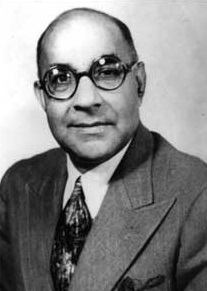
图:Liaquat Ali Khan · Public domain · 维基共享资源
- 生卒
- 1895 年 10 月 1 日—1951 年 10 月 16 日
- 出生地
- 卡尔纳尔
- 去世地
- 拉瓦尔品第、西巴基斯坦
- 国籍 / 所属
- 巴基斯坦、英属印度
- 身份
- 律师、政治人物、外交官
- 职位
- 巴基斯坦总理、印度财政部长、巴基斯坦外交部长、巴基斯坦国防部长、Federal Minister for States and Frontier Regions (Pakistan)、member of the Central Legislative Assembly
- 母亲
- Mahmoodah Begum
- 配偶
- 拉娜·利雅卡特·阿里·汗
- 原文名
- لیا قت علی خان
- 宗教
- 伊斯兰教
- 就读
- 牛津大学艾克赛特学院、Minto Circle、穆罕默德盎格鲁东方学院、Faculty of Law, Aligarh Muslim University
- 简述
- 巴基斯坦总理(1895-1951)
利雅卡特·阿里·汗(英语:Liaquat Ali Khan,乌尔都语:لیاقت علی خان,1895年10月1日—1951年10月16日),简称利雅卡特,巴基斯坦的政治家、律师和政治理论家,开国元勋之一。印度首任财政部长和联邦与克什米尔事务部长,1947年巴基斯坦独立后任首任总理兼国防、外交部长。1951年遇刺身亡。
利雅卡特出生于东旁遮普的卡尔纳尔,就读于印度的阿里格尔穆斯林大学,后留学英国的牛津大学。
他是英属印度议会中的一个伊斯兰民主政治理论家,被邀加入国大党后,他与穆罕默德·阿里·真纳一起领导穆斯林联盟,参与印度和巴基斯坦的独立运动。1946年印巴分治前担任印度过渡政府的首任财政部长,协助真纳创建一个穆斯林国家。1947年8月14日,巴基斯坦宣告独立,他出任首任总理。
虽然巴基斯有的外交政策是不结盟运动的一部分,但利雅卡特政府仍倾向于美国和西方国家。面临国内政治动荡,他的政府在左翼分子和策划政变的共产党艰难维持。尽管如此,真纳去世后他的影响力进一步增长。1951年他在拉瓦尔品第参加一个政治集会时,被刺客赛义德·阿克巴尔·巴布拉克刺杀而亡。
他是巴基斯坦任期最长的总理,为1524天,这个纪录至今已保持了63年。
正文摘自中文维基百科「利雅卡特·阿里·汗」(删去了参考文献、表格和图片),按 CC BY-SA 4.0 使用
英文维基百科的更多内容
中文维基百科这一条比较短,下面是英文维基百科同一条目的节选,原文为英文,未翻译。
Liaquat Ali Khan (1 October 1895 – 16 October 1951) was a Pakistani lawyer, politician and statesman who served as the first prime minister of Pakistan from 1947 until his assassination in 1951. He played a key role in consolidating the state of Pakistan, much as Muhammad Ali Jinnah did in founding it. A leading figure in the Pakistan Movement, he is revered as Quaid-e-Millat ("Leader of the Nation") and Shaheed-e-Millat ("Martyr of the Nation").
Khan was born in Karnal, Haryana, to a wealthy Rajput family. His grandfather, Nawab Ahmad Ali, provided significant support to the British during the Mutiny uprising of 1857–1858, earning him substantial rewards in the form of prestigious honours and complete remission of rent. Khan was educated at the Aligarh Muslim University and the University of Oxford. After first being invited to the Indian National Congress, he later opted to join the All-India Muslim League led by Muhammad Ali Jinnah, an Indian independence activist who later advocated for a separate Muslim nation-state out of Hindu-majority India. Khan assisted Jinnah in the campaign for what would become known as the Pakistan Movement and was known as his 'right hand'. He was a democratic political theorist who promoted parliamentarism in British India.
Khan's premiership oversaw the beginning of the Cold War, in which Khan's foreign policy sided with the United States-led Western Bloc over the Soviet Union-led Eastern Bloc. He promulgated the Objectives Resolution in 1949, which stipulated Pakistan to be an Islamic democracy. He also held cabinet portfolio as the first foreign minister, defence minister, and frontier regions minister from 1947 until his assassination in 1951.……
Early life and education
Nawabzada Liaquat Ali Khan was born on 1 October 1895 into a wealthy family belonging to the Mandal clan, in the Karnal, Punjab Province with roots in Talera Village of Jansath Tehsil in Muzaffarnagar District of present day-Uttar Pradesh.……
Political activism in British India
Khan returned to India in 1923, entering in national politics, determined to eradicate what he viewed as the injustice and ill-treatment of Indian Muslims under the British Indian Department and by the British government.……
United Province legislation
Khan was elected to the provisional legislative council in the 1926 elections from the rural Muslim constituency of Muzaffarnagar.……
Prime Minister of Pakistan (1947–1951)
After independence, Khan was appointed the first Prime Minister of Pakistan by the founding fathers of Pakistan.The country was born during the initial beginning of the extensive competition between the two world superpowers, the United States and Soviet Union.……
Assassination and funeral
On 16 October 1951, Khan was shot twice in the chest while he was addressing a gathering of 100,000 at Company Bagh (Company Gardens), Rawalpindi. The police immediately shot the presumed murderer who was later identified as professional assassin Said Akbar.……
Legacy
Khan is Pakistan's longest serving Prime Minister spending 1,524 days in power. His legacy was built up as a man who was the "martyr for democracy" in the newly founded country. Many in Pakistan saw him as a man who sacrificed his life to preserve the parliamentary system of government.……
Eponyms
Liaquat National Library, Pakistan's largest library and open-source library, named after him.
Liaquat University of Medical and Health Sciences, medical university established in the memory of Liaquat Ali Khan.
Liaquat National Hospital, government hospital named after Liaquat Ali Khan.
Assessment of foreign policy
Others argue that Khan had wanted Pakistan to remain neutral in the Cold War, as declared three days after Pakistan's independence when he declared that Pakistan would take no sides in the conflict of ideologies between the nations. Former serviceman Shahid M.……
正文摘自英文维基百科(原文为英文,未翻译)「Liaquat Ali Khan」(节选,删去了参考文献、表格和图片),按 CC BY-SA 4.0 使用;在维基百科读全文 ›
所属政权
同时代、同地区的人物



同时代、同身份的人物(帝王与政治)