史鉴
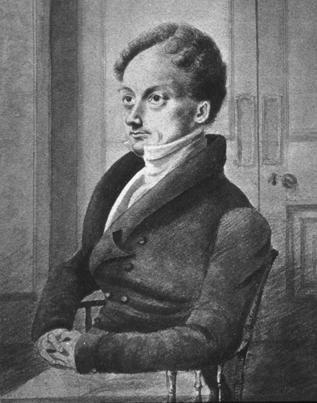
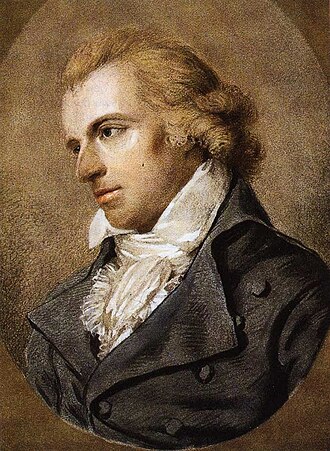
图:佚名 · Public domain · 维基共享资源
- 生卒
- 1773 年 4 月 6 日—1836 年 6 月 23 日
- 出生地
- 安格斯
- 去世地
- 肯辛顿特
- 国籍 / 所属
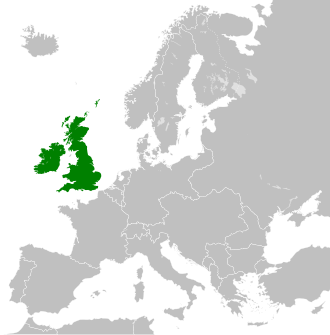
- 大不列颠及爱尔兰联合王国
- 身份
- 作家、政治人物、经济学家、历史学家、译者、神学家、政治学家、编辑
- 子女
- 约翰·斯图尔特·密尔
- 受影响于
- 杰里米·边沁、杜格尔德·斯图尔特、大卫·哈特利
- 原文名
- James Mill
- 家族
- Mill family
- 宗教
- 长老宗
- 就读
- 爱丁堡大学
- 领域
- 经济学
- 流派 / 运动
- 自由主义
- 简述
- Scottish historian, economist, political theorist and philosopher (1773-1836)
詹姆斯·穆勒(英语:James Mill,1773年4月6日—1836年6月23日),也译作詹姆斯·密尔,是一位苏格兰历史学家、经济学家、政治理论家、哲学家。他与大卫·李嘉图一同是古典经济学的创始人。他的儿子约翰·斯图尔特·穆勒也是著名哲学家。
正文摘自中文维基百科「詹姆斯·穆勒」(删去了参考文献、表格和图片),按 CC BY-SA 4.0 使用
英文维基百科的更多内容
中文维基百科这一条比较短,下面是英文维基百科同一条目的节选,原文为英文,未翻译。
James Mill (born James Milne; 6 April 1773 – 23 June 1836) was a Scottish historian, economist, and political theorist, who was a founder of the Ricardian school of economics. He wrote the influential The History of British India (1817) which divided Indian history into three parts: Hindu, Muslim and British.
Mill was the father of John Stuart Mill, the paradigmatic philosopher of liberalism.
Biography
James Milne, later known as James Mill, was born in Northwater Bridge, in the parish of Logie Pert, Angus, Scotland, the son of James Milne, a shoemaker and small farmer. His mother, Isabel Fenton, of a family that had suffered from connection with the Stuart rising, resolved that he should receive a first-rate education, and after the parish school they sent him on to the Montrose Academy, where he remained until the unusual age of seventeen and a half. He then entered the University of Edinburgh, where he distinguished himself as a Greek scholar.
In October 1789, he was ordained as a minister of the Church of Scotland, but met with little further success. According to John Stuart Mill's Autobiography, his father, though "educated in the creed of Scotch Presbyterianism, had, by his own studies and reflections, been early led to reject not only the belief in Revelation, but the foundations of what is commonly called Natural Religion." From 1790 to 1802, while supporting himself by various tutorships, he also pursued various historical and philosophical studies. With little prospect of a career in Scotland, in 1802, he went to London in company with Sir John Stuart of Fettercairn, then member of parliament for Kincardineshire, and devoted himself to his literary work.……
Intellectual legacy
The History of British India
Mill was a proponent of British imperialism, justifying it on utilitarian grounds. He considered it part of a civilising mission for Britain to impose its rule on India. Mill saw his own work for the East India Company as important for the improvement of Indian society. Mill portrayed Indian society as morally degraded and argued that Hindus had never possessed "a high state of civilisation".
Mill preferred to take a more theoretical approach to social subjects than the empirical one common at the time. His best known literary work is his History of British India, in which he describes the acquisition of the Indian Empire by England and later the United Kingdom. In the work, he characterises Indian society as barbaric and Indians as incapable of self-government. He also brings political theory to bear on the delineation of the Hindu civilization, and subjects the conduct of the actors in the successive stages of the conquest and administration of India to severe criticism. The work itself, and the author's official connection with India for the last seventeen years of his life, effected a complete change in the whole system of governance in the country. Mill never visited the Indian colony, relying solely on documentary material and archival records in compiling his work. This fact has led to severe criticism of Mill's History of India by notable economist Amartya Sen.
Major works
An essay of the impolicy of a bounty on the exportation of grain, 1804.
"Lord Lauderdale on Public Wealth", 1804, Literary Journal Vol. IV, No. 1
Commerce Defended, 1808.
"Thomas Smith on Money and Exchange", 1808, Edinburgh Review no. XXV, pp. 35–68
The History of British India, 3 vols., 1817 (and many later editions)
- "Government", 1820, Encyclopædia Britannica
- Elements of Political Economy, 1821
- "Liberty of the Press", 1825, Encyclopædia Britannica
Essays on Government, Jurisprudence, Liberty of the Press, Education, and Prisons and Prison Discipline, 1823.
Analysis of the Phenomena of the Human Mind, 2 vols., 1829. Revised edn, 2 vols, 1869.
Essay on the Ballot and Fragment on Mackintosh , 1830.
"Whether Political Economy is Useful", 1836, London Review, vol. II, pp. 553–572.
The Principles of Toleration, 1837.
正文摘自英文维基百科(原文为英文,未翻译)「James Mill」(节选,删去了参考文献、表格和图片),按 CC BY-SA 4.0 使用;在维基百科读全文 ›
亲属

所属政权
同时代、同地区的人物



同时代、同身份的人物(帝王与政治)