史鉴
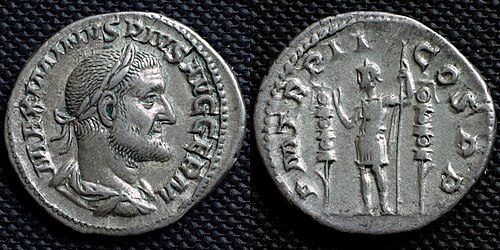
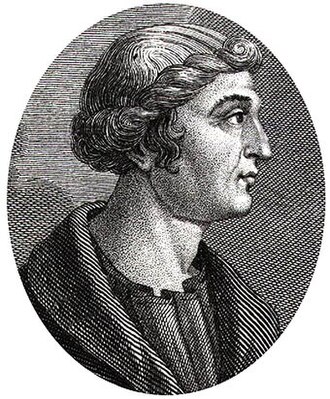
图:Johny SYSEL · CC BY-SA 3.0 · 维基共享资源
- 生卒
- 173 年—238 年 5 月 10 日 (日期为儒略历)
- 出生地
- 色雷斯
- 去世地
- 阿奎莱亚
- 国籍 / 所属
- 古罗马
- 身份
- 政治人物、士兵
- 职位
- 罗马皇帝、古罗马元老
- 母亲
- Ababa
- 配偶
- 凯奇利亚·保利娜
- 子女
- Gaius Julius Verus Maximus
- 原文名
- Gaius Iulius Verus Maximinus Thrax
- 宗教
- 古罗马宗教
- 简述
- 罗马帝国皇帝
盖乌斯·尤利乌斯·维鲁斯·马克西米努斯·“色雷克斯”(拉丁语:Gaius Iulius Verus Maximinus "Thrax",173年—238年),罗马帝国皇帝,于235年至238年在位。
详细介绍
生平
马克西米努斯·色雷克斯出身于色雷斯行省,是第一位蛮族出身的罗马皇帝。父亲在色雷斯当地从事畜牧业,不同于之前的罗马领导人,不是元老院所培育出来,不然就是行省菁英。
189年,马克西米努斯在十六岁时,就加入军团辅助兵。211年,马克西米努斯晋升为百夫长。235年,皇帝亚历山大·塞维鲁被军队推翻并杀害,马克西米努斯在军队的拥护下登基帝位。
马克西米努斯的继位被当作罗马帝国军营皇帝时期的开始。直到戴克里先重新统一罗马,罗马帝国混乱不已,几近崩溃。
马克西米努斯即位当初帝国各地就出现很多反对和敌视的声音。238年,阿非利加州总督戈尔迪安一世起兵叛乱,元老院宣称其为新皇帝。马克西米努斯正在多瑙河对阵哥特人,闻讯后立马回军意大利企图平叛。而此时戈尔迪安一世已经战败身亡,元老院重新选出两名新皇帝普皮恩努斯和巴尔比努斯,于意大利北部的阿奎莱亚与马克西米努斯展开激烈的攻防战。
就在阿奎莱亚久攻不下时,马克西米努斯的部队突然哗变,诛戮马克西米努斯与其全家。其部队随即归顺于元老院,罗马在风暴的序曲中获得短暂的和平。
正文摘自中文维基百科「马克西米努斯·色雷克斯」(删去了参考文献、表格和图片),按 CC BY-SA 4.0 使用
英文维基百科的更多内容
中文维基百科这一条比较短,下面是英文维基百科同一条目的节选,原文为英文,未翻译。
Maximinus I (Latin: Gaius Julius Verus Maximinus; c. 173 – 238), commonly called Maximinus Thrax, was Roman emperor from 235 to 238. Of Thracian origin – given the nickname Thrax ('the Thracian') – he rose up through the military ranks, ultimately holding high command in the army of the Rhine under Emperor Severus Alexander. After Severus was murdered in 235, Maximinus was proclaimed emperor by the army, beginning the Crisis of the Third Century, a 50-year period of instability and civil war. He is often remembered for his unusual height, although the veracity of this is disputed.
Maximinus was the commander of the Legio IV Italica when Severus Alexander was assassinated by his own troops in 235. The Pannonian army then elected Maximinus emperor. In 238 (which came to be known as the Year of the Six Emperors), a senatorial revolt broke out, leading to the successive proclamation of Gordian I, Gordian II, Pupienus, Balbinus, and Gordian III as emperors in opposition to Maximinus. Maximinus advanced on Rome to put down the revolt, but was halted at Aquileia, where he was assassinated by disaffected elements of the Legio II Parthica.
Maximinus is described by several ancient sources, though only Herodian's Roman History is contemporary. He was a so-called barracks emperor of the 3rd century; his rule is often considered to mark the beginning of the Crisis of the Third Century. Maximinus was the first emperor who hailed neither from the senatorial class nor from the equestrian class.
Background
The names "Gaius Julius" suggest that his family acquired Roman citizenship during the reign of the Julio-Claudian dynasty, as freedmen and newly integrated Romans always adopted the names of their former masters. His exact birth date is unknown, but the Chronicon Paschale and the epitome of Joannes Zonaras, both written centuries later, record that he died at the age of 65, implying a birth in 173.
Herodian writes that Maximinus was of Thraco-Roman origin. According to the notoriously unreliable Historia Augusta, he was born in Thrace or Moesia to a Gothic father and an Alanic mother;……
Rule
Consolidation of power
Maximinus began his rule by eliminating the close advisors of Alexander. His suspicions may have been justified; two plots against Maximinus were foiled. The first was during a campaign across the Rhine, when a group of officers, supported by influential senators, plotted to destroy a bridge across the river, in order to strand Maximinus in hostile territory. They planned to elect senator Magnus emperor afterwards, but the conspiracy was discovered and the conspirators executed. The second plot involved Mesopotamian archers who were loyal to Alexander.……
Infrastructure work
In 2019 Israeli researchers translated a milestone found in the Moshav Ramot village in the Golan Heights.……
Politics
Maximinus doubled the pay of soldiers; this act, along with virtually continuous warfare, required higher taxes. Tax collectors began to resort to violent methods and illegal confiscations, further alienating the governing class from everyone else.
According to early church historian Eusebius of Caesarea, the Imperial household of Maximinus's predecessor, Alexander, had contained many Christians. Eusebius states that, hating his predecessor's household, Maximinus ordered that the leaders of the churches should be put to death.……
Appearance
Ancient sources, ranging from the unreliable Historia Augusta to accounts of Herodian, speak of Maximinus as a man of significantly greater size than his contemporaries. He is, moreover, depicted in ancient imagery as a man with a prominent brow, nose, and jaw (symptoms of acromegaly).
According to Historia Augusta, "he was of such size, so Cordus reports, that men said he was eight-feet, one finger (c. 2.4 metres) in height".……
正文摘自英文维基百科(原文为英文,未翻译)「Maximinus Thrax」(节选,删去了参考文献、表格和图片),按 CC BY-SA 4.0 使用;在维基百科读全文 ›
亲属
所属政权
同时代、同地区的人物

同时代、同身份的人物(帝王与政治)