 史鉴
- 时间
- 1603 年—1714 年
- 国家 / 地区
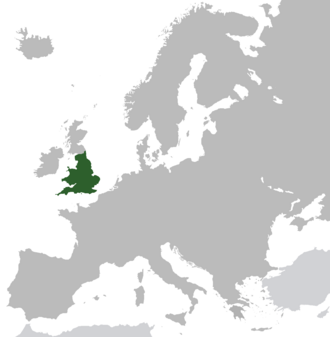
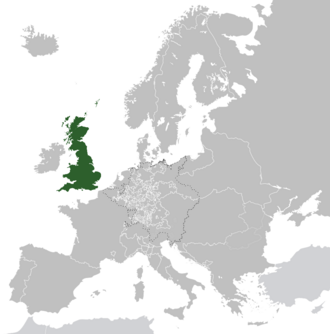
- 大不列颠王国、英格兰王国
- 前一事件
- 伊丽莎白时期
- 后一事件
- 乔治时代
- 类型
- 历史时期
- 简述
- period in British history coinciding with the reign of the House of Stuart
The Stuart period of British history lasted from 1603 to 1714 during the dynasty of the House of Stuart. The period was plagued by internal and religious strife, and a large-scale civil war which resulted in the execution of King Charles I in 1649. The Interregnum, largely under the control of Oliver Cromwell, is included here for continuity, even though the Stuarts were in exile. The Cromwell regime collapsed and Charles II had very wide support for his taking of the throne in 1660. His brother James II was overthrown in 1689 in the Glorious Revolution. He was replaced by his Protestant daughter Mary II and her Dutch husband William III. Mary's sister Anne was the last of the line. For the next half century James II and his son James Francis Edward Stuart and grandson Charles Edward Stuart claimed that they were the true Stuart kings, but they were in exile and their attempts to return with French aid were defeated. The period ended with the death of Queen Anne and the accession of King George I from the German House of Hanover.
详细介绍
Political history
James VI and I: 1603–1625
Rule of the upper-classes
England was ruled at the national level by royalty and nobility, and at the local level by the lesser nobility and the gentry. Together they comprised about 2% of the families, owned most of the good farmland, and controlled local government affairs. The aristocracy was growing steadily in numbers, wealth, and power. From 1540 to 1640, the number of peers (dukes, earls, marquises, viscounts, and barons) grew from 60 families to 160. They inherited their titles through primogeniture, had a favoured position in legal matters, enjoyed the highest positions in society, and held seats in the House of Lords. In 1611, the king looking for new revenue sources created the hereditary rank of baronet, with a status below that of the nobility, and no seat in Lords, and a price tag of about £1100. The vast land holdings seized from the monasteries under Henry VIII in the 1530s were sold mostly to local gentry, greatly expanding the wealth of that class of gentlemen. The gentry tripled to 15,000 from 5000 in the century after 1540. Many families died out, and others moved up, so that 6 out of 7
of the peers in 1714 had been created by Stuart kings since 1603.
Three kingdoms
James VI, king of Scotland, also became king of the entirely separate kingdom of England when Elizabeth I died.……
Social and economic history
Population
The total population of England grew steadily in the 17th century, from 1600 to about 1660, then declined slightly and stagnated between 1649 and 1714. The population was about 4.2 million in 1603, 5.2 million in 1649, 5.1 million in 1660, 4.9 million in 1688, and 5.3 million in 1714. By 1714 the Greater London area held about 674,000 people, or one in nine of England's population. The next cities in size were Norwich and Bristol (with a population of about 30,000 each). About 90% of the people lived in rural areas in 1500, compared to 80% of a much larger population in 1750.
Witchcraft and magic
Historians have recently placed stress on how people at the time dealt with the supernatural, not just in formal religious practice and theology, but in everyday life through magic and witchcraft. The persecution of witches began in England in 1563, and hundreds were executed. England was spared the frenzy on Continental Europe; with over 5% of Europe's population in 1600, England executed only 1% of the 40,000 witches killed in the period 1400–1800.
The government made witchcraft a capital crime under Queen Elizabeth I in 1563.……
Foreign policy
Stuart England was primarily consumed with internal affairs. King James I (reigned 1603–25) was sincerely devoted to peace, not just for his three kingdoms of England, Scotland and Ireland, but for Europe as a whole. He disliked Puritans and Jesuits alike, because of their eagerness for warfare. He called himself "Rex Pacificus" ("King of peace.") At the time, Europe was deeply polarised, and on the verge of the massive Thirty Years' War (1618–1648), with the smaller established Protestant states facing the aggression of the larger Catholic empires. On assuming the throne, James made peace with Catholic Spain, and made it his policy to marry his son to the Spanish Infanta (princess) Maria Anna in the "Spanish Match". The marriage of James' daughter Princess Elizabeth to Elector Frederick V of the Palatinate on 14 February 1613 was more than the social event of the era; the couple's union had important political and military implications. Across Europe, the German princes were banding together in the Protestant Union, headquartered in Heidelberg, the capital of the Electoral Palatinate.……
Timeline
The Stuart period began in 1603 with the death of Queen Elizabeth I and the accession of King James I. There was a break in the middle but the Stuarts were restored to the throne in 1660. It ended in 1714 (after 111 years) with the death of Queen Anne and the accession of King George I, the first king of the House of Hanover. The yellow bars show Stuart rule.
Monarchs
The House of Stuart produced six monarchs who ruled during this period.
正文摘自英文维基百科(原文为英文,未翻译)「Stuart period」(节选,删去了参考文献、表格和图片),按 CC BY-SA 4.0 使用;在维基百科读全文 ›
下属事件
- 詹姆斯一世时期1603 年—1625 年 · 时代与时期 · 欧洲
相关政权
同时期、同地区的大事
- 三十年战争1618 年—1648 年 · 战争 · 欧洲
- 巴洛克艺术16 世纪—1750 年代 · 时代与时期 · 欧洲
- 不列颠东印度公司1600 年 12 月 31 日—1874 年 6 月 1 日 · 时代与时期 · 欧洲
- 荷兰东印度公司1602 年—1799 年 · 时代与时期 · 欧洲
- 无敌舰队1588 年 4 月 25 日—1588 年 8 月 · 其他事件 · 欧洲
- 火药阴谋1605 年 11 月 5 日 · 其他事件 · 欧洲
- 波兰-莫斯科战争(1605年–1618年)1605 年—1618 年 · 战争 · 欧洲
- 十五年战争1593 年 7 月 29 日—1606 年 11 月 11 日 · 战争 · 欧洲
- 斯托尔博沃和约1617 年 3 月 7 日 · 条约与会议 · 欧洲
- 圈地运动1604 年 · 其他事件 · 欧洲
- 英格里亚战争1610 年—1617 年 · 战争 · 欧洲
- 驱逐摩里斯科人1609 年 4 月 9 日—1614 年 · 其他事件 · 欧洲
同时期的同类事件(时代与时期)
- 大英帝国1583 年—1997 年 · 时代与时期 · 欧洲
- 17世纪1601 年 1 月 1 日—1700 年 12 月 31 日 · 时代与时期
- 十三个殖民地1607 年 5 月 14 日—1776 年 7 月 4 日 · 时代与时期 · 北美洲
- 江户时代1603 年—1868 年 · 时代与时期 · 东亚
- 西属尼德兰1581 年—1714 年 · 时代与时期 · 欧洲
- 荷兰西印度公司1621 年 6 月 3 日—1792 年 · 时代与时期 · 欧洲
- 荷兰黄金时代1575 年—1675 年 · 时代与时期 · 欧洲
- 普利茅斯殖民地1620 年—1691 年 · 时代与时期 · 北美洲
- 俄罗斯混乱时期1598 年—1613 年 · 时代与时期
- 英属弗吉尼亚1607 年—1776 年 · 时代与时期 · 北美洲
- 八旗制度1601 年—1911 年 · 时代与时期 · 东亚
- 英属马里兰省1632 年 6 月 20 日—1776 年 · 时代与时期 · 北美洲