 史鉴

图:Guilherme Litran · Public domain · 维基共享资源
- 时间
- 1835 年 9 月 20 日—1845 年 3 月 1 日
- 地点
- 巴西南部
- 参与方
- 南里奥格兰德共和国、巴西帝国
- 属于
- Rebellions during the Regency Period in Brazil
- 类型
- 内战
- 简述
- 1835-1845 republicanism-revolt in southern Brazil
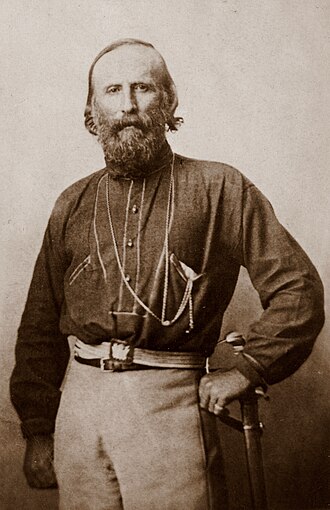
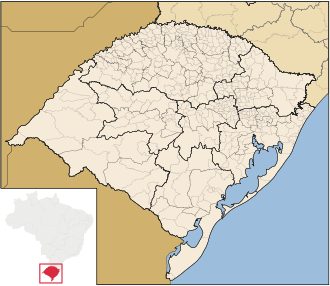
破衫汉战争(葡萄牙语:Guerra dos Farrapos),又称破衫汉革命(Revolução Farroupilha),是1835年在巴西南部的南里约格兰德省(今南里奥格兰德州)发生的一场共和主义起义。起义者建立了里奥-格兰德共和国。起义由本托·贡萨尔维斯·达·席尔瓦将军和安东尼奥·德·索萨·内托将军领导,并得到了意大利战士朱塞佩·加里波第的支持。战争在1845年双方签署“蓬乔韦尔德条约”后结束。
随着时间的推移,这场革命逐渐带有分离主义的性质,并影响了全国各地的分离主义运动,例如1842年圣保罗、里约热内卢和米纳斯吉拉斯的自由派叛乱,以及1837年巴伊亚的萨比纳达起义。
这场革命受到刚结束的西斯普拉廷战争的启发,并与乌拉圭领导人以及阿根廷独立省份(如科连特斯和圣菲)保持联系。它甚至扩展到了巴西海岸的拉古纳,并宣布成立胡利亚纳共和国,此外还扩展到圣卡塔琳娜高原的拉热斯地区。
废除奴隶制是法尔拉普斯运动的其中一个诉求。在破衫汉战争期间,许多奴隶组织了军队,其中最著名的是黑枪骑兵队,但在1844年的一次突袭中遭到歼灭,该事件被称为“波龙戈斯屠杀”。
正文摘自中文维基百科「破衫汉战争」(删去了参考文献、表格和图片),按 CC BY-SA 4.0 使用
英文维基百科的更多内容
中文维基百科这一条比较短,下面是英文维基百科同一条目的节选,原文为英文,未翻译。
The Ragamuffin War (Portuguese: Guerra dos Farrapos), also known as the Ragamuffin Revolution or Heroic Decade, was a republican uprising that began in southern Brazil during the regency period, centered in the province of Rio Grande do Sul and, for a time, extending into Santa Catarina. It began on 20 September 1835, when rebel forces seized Porto Alegre, and soon turned into a wider confrontation between Brazil's imperial government and a coalition led by Bento Gonçalves and Antônio de Sousa Neto, who proclaimed the secession of the province and the creation of the Riograndense Republic following the rebel victory at the battle of Seival in 1836.
The war is often situated within the political and institutional instability of Brazil's regency period, when several armed conflicts erupted across the country, exposing the fragility of the imperial authority amid disputes between the Central government and Brazil's provinces over the latter's degree of autonomy. In Rio Grande do Sul, whose economy relied on livestock and the production of jerked beef for the internal market, the immediate cause for revolt lay with the landowners dissatisfaction with high export taxes and import duties on salt imposed by the Imperial government, while Uruguay and Argentina benefited from more favorable taxation in Brazilian markets, thus making the local produce less competitive within the country, but it is also attributed to a desire for greater autonomy and opposition to the government's centralized control over the province.
Once proclaimed, the new republic operated from shifting inland capitals such as Piratini, as Porto Alegre remained in Imperial control for the remainder of the conflict after being recaptured in 1836.……
Etymology
In Portuguese, the term farrapo literally denotes a rag or torn piece of cloth, and by extension can refer to someone shabbily dressed (a "ragamuffin").……
History
Beginning of the war
The uprising is believed to have begun over the difference between the economy of Rio Grande do Sul and that of the rest of the country. Unlike the other provinces, the economy of Rio Grande do Sul focused on the internal market rather than exporting commodities. The province's main product, charque (dried and salted beef), suffered badly from competition from charque imported from Uruguay and Argentina.……
Declaration of independence
Pushing to consolidate their power, Antônio de Souza Neto declared the independence of the Riograndense, or the Republic of Piratini, on 11 September 1836, with Bento Gonçalves as president nominee.……
Participants
Ragamuffins
All of those who revolted against the imperial government were called Ragamuffins (Portuguese: Farrapos).
In 1832, the Ragamuffin Party was founded by Lieutenant Luís José dos Reis Alpoim, deported from Rio de Janeiro to Porto Alegre. The group used to meet at Major João Manuel de Lima e Silva's house. Lima e Silva's home also worked as the headquarters of Sociedade Continentino, the editor of the newspaper called O Continentino, which strongly criticized the Empire.
Minorities in the war
Indigenous
In the years before the Ragamuffin War, the indigenous people were seen as a subdivision of the free population and performed the same jobs as white and free men: livestock and war activities. The most famous village is called São Nicolau and is located in Rio Pardo, consisting of indigenous people from the eastern reductions.
Like the blacks, the indigenous people actively participated in the Ragamuffin War from the first to the last day.……
Legacy
The Brazilian Army reorganized itself to be a proper fighting force during the Ragamuffin War. The military defeated insurgencies that rose up during the Imperial Era of Brazil. However, this reformed military would prove disastrous against the Emperor when they rebelled to create a Republic.
正文摘自英文维基百科(原文为英文,未翻译)「Ragamuffin War」(节选,删去了参考文献、表格和图片),按 CC BY-SA 4.0 使用;在维基百科读全文 ›
相关人物
相关政权
同时期、同地区的大事
- 美墨战争1846 年 4 月 24 日—1848 年 2 月 2 日 · 战争 · 拉丁美洲
- 瓜达卢佩-伊达尔戈条约1848 年 2 月 2 日 · 条约与会议 · 拉丁美洲
- 阿亚库乔战役1824 年 12 月 9 日 · 战役 · 拉丁美洲
- 阿根廷邦联1831 年 1 月 4 日—1861 年 12 月 12 日 · 时代与时期 · 拉丁美洲
- 巴西独立1822 年 9 月 7 日 · 其他事件 · 拉丁美洲
- 乌拉圭内战1839 年 3 月 10 日—1851 年 10 月 8 日 · 战争 · 拉丁美洲
- 西斯普拉蒂纳战争1825 年 12 月 10 日—1828 年 8 月 27 日 · 战争 · 拉丁美洲
- 多米尼加共和国历史1844 年 · 其他事件 · 拉丁美洲
- 秘鲁独立战争1821 年—1824 年 · 战争 · 拉丁美洲
- 智利独立战争1827 年 · 战争 · 拉丁美洲
- 秘鲁-智利同盟战争1836 年 12 月 28 日—1839 年 8 月 15 日 · 战争 · 拉丁美洲
- 多米尼加独立战争1844 年—1856 年 · 战争 · 拉丁美洲
同时期的同类事件(战争)
- 南北战争1861 年 4 月 12 日—1865 年 4 月 9 日 · 战争 · 北美洲
- 克里米亚战争1853 年 10 月—1856 年 2 月 · 战争 · 欧洲
- 1812年战争1812 年 6 月 18 日—1815 年 2 月 18 日 · 战争 · 北美洲
- 俄法战争1812 年 6 月 24 日—1812 年 12 月 14 日 · 战争 · 中亚与北亚
- 第一次鸦片战争1839 年 3 月 18 日—1842 年 8 月 29 日 · 战争 · 东亚
- 希腊独立战争1821 年—1829 年 · 战争 · 西亚
- 太平天国运动1851 年 1 月 11 日—1864 年 8 月 · 战争 · 东亚
- 第二次鸦片战争1856 年—1860 年 · 战争 · 东亚
- 半岛战争1808 年 5 月 2 日—1814 年 4 月 17 日 · 战争 · 欧洲
- 巴拉圭战争1864 年 12 月 27 日—1870 年 3 月 1 日 · 战争 · 拉丁美洲
- 1848年匈牙利革命1848 年 3 月 15 日—1849 年 10 月 4 日 · 战争 · 欧洲
- 第三次反法同盟1805 年—1806 年 · 战争 · 欧洲