 史鉴

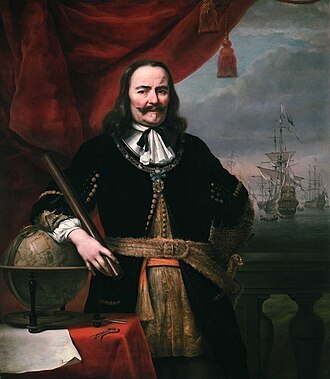
图:Willem van de Velde, de Jonge (1633 – 1707) · Public domain · 维基共享资源
- 时间
- 1672 年—1674 年
- 地点
- 北海
- 属于
- 英荷战争
- 类型
- 战争
- 简述
- military conflict between the Kingdom of England and the Dutch Republic (1672-1674)
第三次英荷战争(英语:Third Anglo-Dutch War)是英格兰王国和荷兰共和国之间的一次战争,持续时间为1672年4月7日至1674年2月19日,也是同时法荷战争的一部分。1670年,英国与法国签订《多佛密约》,两国密谋征服荷兰。1672年,法国入侵荷兰,起初获得胜利。后来,在威廉三世的领导下,荷兰人通过释放洪水延迟了法国人的进攻并成功离间英法,最终虽然在法荷战争中失利,但在第三次英荷战争中获得战争胜利,恢复了战争前的状态。
正文摘自中文维基百科「第三次英荷战争」(删去了参考文献、表格和图片),按 CC BY-SA 4.0 使用
英文维基百科的更多内容
中文维基百科这一条比较短,下面是英文维基百科同一条目的节选,原文为英文,未翻译。
The Third Anglo-Dutch War, began on 27 March 1672, and concluded on 19 February 1674. A naval conflict between the Dutch Republic and England, in alliance with France, it is considered a related conflict of the wider 1672 to 1678 Franco-Dutch War.
In the 1670 Secret Treaty of Dover, Charles II of England agreed to support an attack by Louis XIV of France on the Dutch Republic. By doing so, Louis hoped to gain control of the Spanish Netherlands, while Charles sought to restore the damage to his prestige caused by the 1667 Raid on the Medway. Under the treaty, Charles also received secret payments which he hoped would make him financially independent of Parliament.
The French offensive in May and June 1672 quickly overran most of the Republic, with the exception of the core province of Holland, where they were halted by water defences. In early June, the Anglo-French fleet was badly damaged by the Dutch under Michiel de Ruyter at the Battle of Solebay. Shortly thereafter, Johan de Witt resigned as Grand Pensionary, and Charles' nephew William III of Orange was appointed Stadtholder. William rebuffed attempts by Charles to make peace, knowing the French alliance was unpopular in England, while French success brought him support from Emperor Leopold and Spain.
By the end of 1672, the Dutch had regained much of the territory lost in May, and with hopes of a quick victory gone, Parliament refused to continue funding the war. Between June and July 1673, the Dutch and Anglo-French fleets fought four separate battles, which ended any prospect of an English landing. The English merchant fleet meanwhile suffered heavy losses to Dutch privateers. In addition, Louis now focused on taking the Spanish Netherlands, an objective as harmful to English interests as it was to Dutch.……
Background
The 1652–1654 First Anglo-Dutch War was the result of commercial rivalry and Orangist support for the exiled Charles II, uncle of William of Orange. Peace terms agreed in 1654 with the English Protectorate included the permanent exclusion of the House of Orange-Nassau from public office, ensuring Republican political control.……
Preparations
Louis instructed de Pomponne, his ambassador in The Hague, to continue negotiations with De Witt as a delaying tactic while he finalised invasion plans. The English envoy, Sir William Temple, was entrusted by Charles with the same mission.……
The war in 1672
Overview
When the French invaded the Dutch Republic in May 1672, it initially seemed as if they had won an overwhelming victory. By the end of June, only the Dutch Water Line stood between them and the core province of Holland; by opening the sluices, the Dutch managed to stop the French advance. Dutch survival depended on control of the sea lanes, which ensured they could bring in vital supplies and keep trade routes open.……
French success: May to June
The speed with which the Republic was over-run in 1672 means it is still referred to as the Rampjaar or 'Year of disaster'.……
1673
Overview
After the French failed to breach the Holland Water Line, the Anglo-French fleet was tasked with defeating the Dutch navy, allowing them to blockade the Dutch coast and threaten the Republic with starvation, or land an invasion force. However, poor co-ordination meant they failed to exploit their numerical advantage, and De Ruyter was able to prevent his fleet being overwhelmed.……
Naval battles
In the first two wars, both navies, particularly the Dutch, employed aggressive tactics that often resulted in heavy ship losses for the defeated side.……
Second Peace of Westminster
In this situation Charles felt that continuing the alliance was a grave threat to his personal position and that Parliament would no longer fund a war. He informed the French ambassador Colbert de Croissy that to his regret, he had to terminate the English war effort.……
正文摘自英文维基百科(原文为英文,未翻译)「Third Anglo-Dutch War」(节选,删去了参考文献、表格和图片),按 CC BY-SA 4.0 使用;在维基百科读全文 ›
下属事件
- 肖纳费尔德之战1635 年 6 月 · 战役 · 欧洲
相关人物

同时期、同地区的大事
- 伦敦大火1666 年 9 月 2 日—1666 年 9 月 6 日 · 其他事件 · 欧洲
- 维也纳之战1683 年 9 月 12 日 · 战役 · 欧洲
- 大土耳其战争1683 年—1699 年 · 战争 · 欧洲
- 法荷战争1672 年 4 月 6 日—1678 年 9 月 17 日 · 战争 · 欧洲
- 比利牛斯条约1659 年 11 月 7 日 · 条约与会议 · 欧洲
- 查理二世复辟 (英格兰)1660 年—1685 年 · 时代与时期 · 欧洲
- 罗斯基勒条约1658 年 2 月 28 日 · 条约与会议 · 欧洲
- 伦敦大瘟疫1665 年—1666 年 · 灾难与瘟疫 · 欧洲
- 第二次俄土战争1686 年—1700 年 · 战争 · 欧洲
- 俄土战争1676 年—1681 年 · 战争 · 欧洲
- 第二次英荷战争1665 年 3 月 4 日—1667 年 7 月 31 日 · 战争 · 欧洲
- 欧里亚条约1660 年 5 月 3 日 · 条约与会议 · 欧洲
同时期的同类事件(战争)
- 英国内战1642 年—1651 年 9 月 3 日 · 战争 · 欧洲
- 大北方战争1700 年 2 月 22 日—1721 年 9 月 10 日 · 战争 · 欧洲
- 西班牙王位继承战争1701 年 3 月—1714 年 9 月 7 日 · 战争 · 跨地区
- 大同盟战争1688 年 9 月—1697 年 9 月 · 战争 · 跨地区
- 英荷战争1652 年—1784 年 · 战争 · 欧洲
- 投石党乱1648 年—1653 年 · 战争 · 欧洲
- 第二次北方战争1655 年—1660 年 · 战争 · 欧洲
- 俄波战争1654 年—1667 年 · 战争 · 欧洲
- 遗产战争1667 年 5 月 24 日—1668 年 5 月 2 日 · 战争 · 欧洲
- 大洪水时代1655 年—1660 年 · 战争 · 欧洲
- 克里特战争 (1645–1669)1645 年 6 月 23 日—1669 年 · 战争 · 欧洲
- 首次英荷战争1652 年—1654 年 · 战争 · 欧洲