史鉴
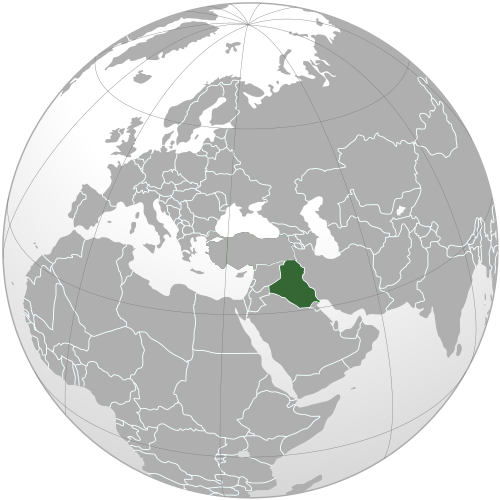
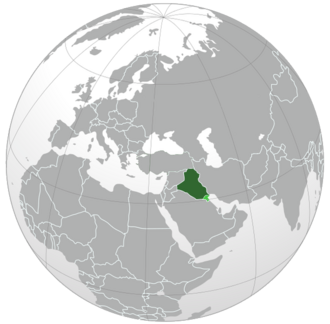
图:Iraq (orthographic projection).svg Turkey (orthographic projection).svg: The Emi · CC BY-SA 3.0 · 维基共享资源
- 存在时间
- 2003 年—2004 年
- 首都
- 巴格达
- 政体
- 临时政府
- 官方语言
- 阿拉伯语
- 货币
- 伊拉克第纳尔
- 后继
- 伊拉克、伊拉克临时政府
- 类型
- 临时政府、历史国家
- 所在大洲
- 亚洲
- 简述
- 占领军军事过渡托管阶段的行政当局管治团队
联盟驻伊拉克临时管理当局(阿拉伯语:سلطة الائتلاف المؤقتة;英语:Coalition Provisional Authority,缩写为CPA),又称重建和人道救援办公室 (Office for Reconstruction and Humanitarian Assistance)或联军临时管理当局(新华社译法),是指自2003年3月20日伊拉克战争爆发以来,在美英联军推翻伊拉克萨达姆政权之后,由美国政府成立暂时履行管理伊拉克国家事务、负责伊拉克重建和人道救援、重建伊拉克政府的临时机构。负责人由美国驻伊拉克最高文职行政长官、美国资深外交官保罗·布雷默兼任。该机构和伊拉克临时管理委员会至2004年6月28日向文人执政的伊拉克临时政府完全移交权力以后解散。
2003年4月9日,美军攻占巴格达,萨达姆政权被推翻。
2003年5月1日,美国总统小布什宣布伊拉克主要战事结束。
2003年5月6日,美总统布什任命美前外交官保罗·布雷默为“联盟驻伊拉克临时管理当局”最高行政长官,负责伊拉克重建事务。
2003年7月13日,由来自伊拉克政界、宗教界和各个部落人员组成的伊拉克临时管理委员会(“伊临管会”)成立,受“联盟驻伊拉克临时管理当局”监管。
2004年6月1日,由文官组成的伊拉克临时政府宣誓就职。2004年6月28日,“联盟驻伊拉克临时管理当局”向“伊拉克临时政府”移交权力。
正文摘自中文维基百科「联盟驻伊拉克临时管理当局」(删去了参考文献、表格和图片),按 CC BY-SA 4.0 使用
英文维基百科的更多内容
中文维基百科这一条比较短,下面是英文维基百科同一条目的节选,原文为英文,未翻译。
Iraq came under United States military occupation following the invasion of the country on 20 March 2003 by U.S.-led Coalition forces that marked the fall of the Ba'athist regime led by Saddam Hussein. As a result, the U.S. formed the Coalition Provisional Authority (CPA) that served as the transitional government established in May 2003 under the United Nations Security Council Resolution 1483 (2003) and the laws of war, and vested itself with executive, legislative, and judiciary authority over the Iraqi government from the period of the CPA's inception on 21 April 2003 until its dissolution on 28 June 2004.
The CPA was heavily criticized for its mismanagement of funds allocated to the reconstruction of post-invasion Iraq, with over $8 billion of these unaccounted for, including over $1.6 billion in cash that emerged in a bunker in Lebanon. The CPA has been described as a puppet government of the United States.
History of the CPA
The Office for Reconstruction and Humanitarian Assistance (ORHA) was established on 20 January 2003 by the United States government two months before the 2003 invasion of Iraq. It was intended to act as a caretaker administration in Iraq until the creation of a democratically elected civilian government.
Structure of the CPA
The CPA's structure was divided into four geographic regions. CPA North was headquartered in the northern Iraqi city of Erbil, CPA Central in Baghdad at Saddam's former Republican Palace, CPA South Central in the Iraqi city of Hillah near the ruins of Babylon and CPA South in the southern Iraqi city of Basra. Each region operated semi-autonomously, and all four had the same common goals for reconstruction of the country.……
CPA Program Review Board
The Program Review Board (PRB) was an eleven-member board that consisted of ten staff members from the CPA and one member of the Iraqi Governing Council.……
Privatization of Iraq's economy
Prior to US occupation, Iraq had a centrally planned economy. Among other things, it prohibited foreign ownership of Iraqi businesses, ran most large industries as state-owned enterprises, and imposed large tariffs to keep out foreign goods. After the invasion of Iraq, the CPA quickly began issuing many binding orders privatizing Iraq's economy and opening it up to foreign investment.
Criticism of financial management
In May 2003, the CPA took over the responsibility for administering the Development Fund for Iraq (DFI). Established from the earlier UN oil-for-food program, the CPA was authorized to manage the DFI, which took in approximately $20 billion in the year after the invasion.……
Human Rights under the CPA
Human rights under the CPA and American occupation suffered. During the counter-insurgency, US soldiers were reported of executing wounded or captured rebels, using excessive force against civilians and forcing civilians into battle zones, resulting in what Mabon was the breakdown of Iraqi social fabric. The Iraqi Interim Government created by the CPA was authoritarian.……
Reconstruction
Although the CPA awarded contracts for essential reconstruction to American firms, some critics claim those firms did relatively little work. Bechtel, for instance, was awarded the contract to repair the Iraqi sewage and drinking water plants. Yet as of 2019, many Iraqis remain without safe drinking water or adequate supplies of electricity.……
Administrators of the CPA
Jay Garner (21 April 2003 – 12 May 2003)as Director of the Office for Reconstruction and Humanitarian Assistance
Paul Bremer (12 May 2003 – 28 June 2004)
Richard Jones (U.S. diplomat), Deputy Administrator
Rear Admiral David J. Nash, U.S. Navy (ret.), Director of the Program Management Office
Major General Ronald L. Johnson, U.S. Army, Deputy Director of the Program Management Office
正文摘自英文维基百科(原文为英文,未翻译)「Coalition Provisional Authority」(节选,删去了参考文献、表格和图片),按 CC BY-SA 4.0 使用;在维基百科读全文 ›