史鉴

图:Blank map of South Europe and North Africa.svg: historicair 23:27, 8 August 2007 · CC BY-SA 3.0 · 维基共享资源
- 存在时间
- 270 年—273 年
- 首都
- 帕尔米拉
- 官方语言
- 巴尔米拉阿拉姆语
- 前身
- Kingdom of Palmyra
- 元首
- Palmyrene emperor
- 类型
- 历史国家
- 所在大洲
- 亚洲
- 简述
- 罗马帝国的分裂政权
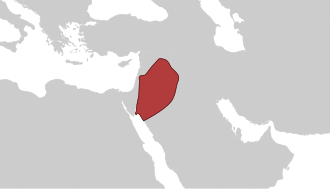
巴尔米拉帝国(拉丁语:Imperium Palmyrenum;260年—273年)是罗马帝国处于三世纪危机时分裂出去的割据政权。帝国以通商都市巴尔米拉为首都,支配叙利亚-巴勒斯坦行省、埃及行省与大部分的小亚细亚行省。
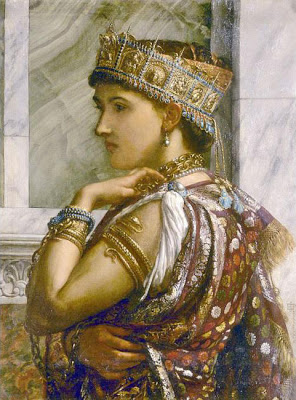
在罗马帝国三世纪危机时期,巴尔米拉王子奥登纳图斯(Septimius Odaenathus)被暗杀后,他的妻子芝诺比娅(Zenobia)掌权,并宣布独立于罗马帝国。
芝诺比娅扩大了巴尔米拉的领土,控制了从黑海到尼罗河的大片地区,但不久就在公元273年被罗马皇帝奥勒良(Aurelian)击败并俘虏。
正文摘自中文维基百科「帕米拉帝国」(删去了参考文献、表格和图片),按 CC BY-SA 4.0 使用
英文维基百科的更多内容
中文维基百科这一条比较短,下面是英文维基百科同一条目的节选,原文为英文,未翻译。
The Palmyrene Empire was a short-lived breakaway state from the Roman Empire resulting from the Crisis of the Third Century. Named after its capital city, Palmyra, its territory included the Roman provinces of Syria Palaestina, Arabia Petraea, and Egypt, as well as large parts of Asia Minor.
The Palmyrene Empire was ruled by Queen Zenobia, officially as regent for her son Vaballathus, who inherited the throne in 267 at age ten. In 270, Zenobia rapidly conquered most of the Roman east, attempting to maintain relations with Rome as a legitimate power. In 271, she claimed the imperial title for both herself and her son, fighting a short war with the Roman emperor Aurelian, who conquered Palmyra and captured Zenobia. A year later the Palmyrenes rebelled, which led Aurelian to raze Palmyra.
Despite its brief existence, the Palmyrene Empire is remembered for having been ruled by one of the most ambitious and powerful women in antiquity. It is also hailed in modern-day Syria, where it plays an important role as an icon in Syrian nationalism.
Background
Following the murder of Roman emperor Alexander Severus in 235, general after general squabbled over control of the empire, the frontiers were neglected and subjected to frequent raids by Carpians, Goths and Alemanni, in addition to outright attacks from the aggressive Sassanids in the east. Finally, Shapur I of Persia inflicted a disastrous defeat upon the Romans at the Battle of Edessa in 260, capturing the Roman emperor Valerian and soon, Quietus and Macrianus rebelled against Valerian's son Gallienus and usurped the imperial power in Syria.
The Palmyrene leader Odaenathus was declared king, and remained nominally loyal to Gallienus, forming an army of Palmyrenes and Syrian peasants to attack Shapur.……
Establishment
Zenobia started an expedition against the Tanukhids in the spring of 270, during the reign of emperor Claudius Gothicus aided by her generals, Septimius Zabbai (a general of the army) and Septimius Zabdas (the chief general of the army).
Zabdas sacked Bosra, killed the Roman governor, and marched south securing Roman Arabia. According to the Persian geographer Ibn Khordadbeh, Zenobia herself attacked Dumat Al-Jandal but could not conquer its castle. However, Ibn Khordadbeh likely confused Zenobia with al-Zabbā, a semi-legendary Arab queen whose story is often confused with Zenobia's story.
In October of 270, a Palmyrene army of 70,000 invaded Egypt, and declared Zenobia queen of Egypt.……
Reconquest by Rome
In 272, Aurelian crossed the Bosphorus and advanced quickly through Anatolia. According to one account, Marcus Aurelius Probus regained Egypt from Palmyra, while the emperor continued his march and reached Tyana. The fall of Tyana lent itself to a legend; Aurelian to that point had destroyed every city that resisted him, but he spared Tyana after having a vision of the great philosopher Apollonius of Tyana, whom he respected greatly, in a dream. Apollonius implored him, stating: "Aurelian, if you desire to rule, abstain from the blood of the innocent! Aurelian, if you will conquer, be merciful!". Whatever the reason for his clemency, Aurelian's sparing of Tyana paid off;……
Aftermath
Aurelian spared the city and stationed a garrison of 600 archers led by a certain Sandarion, as a peacekeeping force.……
Evaluation and legacy
The ultimate motive behind the revolt is debated; when dealing with the rise of Palmyra and the rebellion of Zenobia, historians most often interpreted the ascendancy as an indication of cultural, ethnic or social factors. Andreas Alföldi viewed the rebellion as a completely native ethnic opposition against Rome. Irfan Shahîd considered Zenobia's revolt a pan-Arab movement that was a forerunner of the Arab expansion of the Caliphates; an opinion shared by Franz Altheim, and an almost universal view amongst Arab and Syrian scholars such as Philip Khuri Hitti.……
正文摘自英文维基百科(原文为英文,未翻译)「Palmyrene Empire」(节选,删去了参考文献、表格和图片),按 CC BY-SA 4.0 使用;在维基百科读全文 ›
相关事件
- Palmyrene invasion of Egypt270 年 10 月—271 年 2 月 · 战役 · 非洲
- Battle of Immae272 年 · 战役 · 西亚
- Battle of Emesa272 年 · 战役 · 西亚
人物
同时期、同地区的政权