史鉴
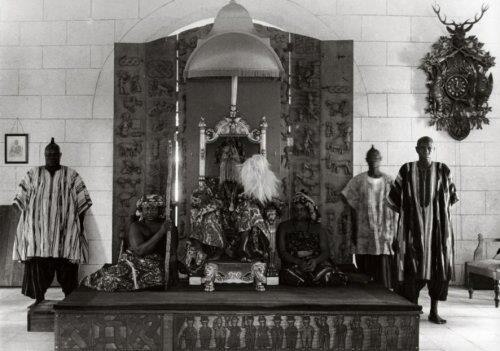
图:The African History · Public domain · 维基共享资源
- 存在时间
- 1400 年—1905 年
- 首都
- Oyo-Ile
- 宗教
- 约鲁巴宗教
- 类型
- 历史国家
- 所在大洲
- 非洲
- 简述
- former imperial state
奥约帝国是中世纪非洲的约鲁巴人帝国,位于现在的尼日利亚西部和北部。帝国建于14世纪,后借由约鲁巴人卓越的组织能力、丰厚的贸易所得以及帝国强健的骑兵军力,逐渐扩展版图,成为西非最大的帝国。奥约帝国是17世纪中期至18世纪晚期西非地区政治上最重要的国家,它不仅掌控现代尼日利亚、贝南和多哥等地的政权,也统治其他非洲王国,包括丰族所建的达荷美王国(今贝南)。
正文摘自中文维基百科「奥约帝国」(删去了参考文献、表格和图片),按 CC BY-SA 4.0 使用
英文维基百科的更多内容
中文维基百科这一条比较短,下面是英文维基百科同一条目的节选,原文为英文,未翻译。
The Oyo Empire was a Yoruba empire in West Africa. It was located in present-day western Nigeria (including the South West zone and the western half of the North Central zone) and Benin. It grew to become the largest Yoruba-speaking state through the organizational and administrative efforts of the Yoruba people, trade, as well as the military use of cavalry. The Oyo Empire was one of the most politically important states in Western Africa from the late-16th to the early 18th century and held sway not only over most of the other kingdoms in Yorubaland, but also over nearby African states, notably the Fon Kingdom of Dahomey in modern Benin to its west.
History
Legend of origin
The legendary origins of the Oyo Empire lie with Ọranyan (also known as Ọranmiyan), the last prince of the Yoruba Kingdom of Ile-Ife (Ife). According to oral traditions, Ọranmiyan made an agreement with his brother to launch a punitive raid on their northern neighbors for insulting their father Oduduwa, the first Ooni of Ife. On the way to the battle, the brothers quarreled and the army split up. Oranmiyan's force was too small to make a successful attack, so he wandered the southern shore of the Niger River until reaching Bussa. There, the local chief entertained him and provided a large snake with a magic charm attached to its throat.
Political structure
The Oyo Empire developed a highly sophisticated political structure to govern its territorial domains. Scholars have not determined how much of this structure existed before the Nupe invasion. After reemerging from exile in the early 17th century, Oyo took on a noticeably more militant character. The influence of an aggressive Yoruba culture is exemplified in the standards placed on the oba (king) and the roles of his council.
The Alaafin of Oyo
The oba (meaning 'king' in the Yoruba language) at Oyo, who was referred to as the Alaafin of Oyo (Alaafin means 'owner of the palace' in Yoruba), was the head of the empire and supreme overlord of the people.……
The Bashorun
The Basorun was a key political office in the Oyo (often likened to the role of the Prime Minister and Chancellor of the Kingdom) during the 16th to 18th centuries, controlled by Ibariba families.……
Territory
At the beginning, the people were concentrated in metropolitan Oyo. With imperial expansion, Oyo reorganized to better manage its vast holdings within and outside of Yorubaland. It was divided into four layers defined by relation to the core of the empire. These layers were Metropolitan Oyo, southern Yorubaland, the Egbado Corridor, and Ajaland.
Metropolitan Oyo
Metropolitan Oyo corresponded, more or less, to the Oyo state prior to the Nupe invasion. This was the hub of the empire, where the Yoruba spoke the Oyo dialect. Metropolitan Oyo was divided into six provinces, with three on the west side of the Ogun River and three to the river's east.……
Yorubaland
The second layer of the empire was composed of the towns closest to Oyo-Ile, which were recognized as brothers.……
Military
There was a high degree of professionalism in the army of the Oyo Empire. Its military success was due in large part to its cavalry, its renowned archers, as well as the leadership and courage of Oyo officers and warriors. The people of Oyo had a reputation for being the "best bowmen in Africa", according to Hugh Clapperton. Starting from a young age, boys would practise and quickly become excellent with the bow. Skill refinements were culturally incorporated as games where individuals would take on the task of discharging arrows into a small hole from over 100 yards away. A feat many accomplished successive times.……
Cavalry
The Oyo Empire was one of the only Yoruba states to adopt cavalry;……
Culture
Commerce
Oyo became the southern emporium of the Trans-Saharan trade. Exchanges were made in salt, leather, horses, kola nuts, ivory, cloth and slaves. The Yoruba of metropolitan Oyo were also highly skilled in craft making and iron work. Aside from taxes on trade products coming in and out of the empire, Oyo also became wealthy off the taxes imposed on its tributaries. Taxes on the kingdom of Dahomey alone brought in an amount estimated at 14 million US dollars a year. In pre colonial times, Esusu was a type of rotating savings and credit association among the Yoruba.……
Architecture
The architecture within the Oyo Empire, exhibited an intricate built environment.……
正文摘自英文维基百科(原文为英文,未翻译)「Oyo Empire」(节选,删去了参考文献、表格和图片),按 CC BY-SA 4.0 使用;在维基百科读全文 ›
同时期、同地区的政权