史鉴
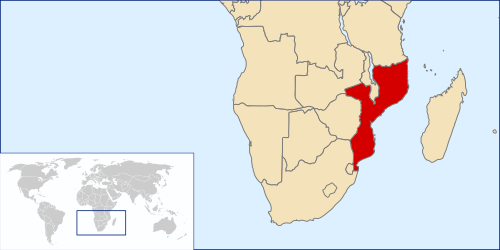
图:By Rei-artur pt en Rei-artur blog · CC BY-SA 3.0 · 维基共享资源
- 存在时间
- 1975 年 6 月 25 日—1990 年 12 月 1 日
- 首都
- 马普托
- 政体
- 社会主义国家、议会共和制
- 官方语言
- 葡萄牙语
- 后继
- 莫桑比克
- 类型
- 人民共和国、历史国家
- 所在大洲
- 非洲
- 简述
- 历史国家
莫桑比克人民共和国(葡萄牙语:República Popular de Moçambique),是莫桑比克于1975年6月25日脱离葡萄牙独立后,至1990年12月1日间的国号,是一个一党制的社会主义国家。执政党是莫桑比克解放阵线党。
详细介绍
外交关系
莫桑比克人民共和国在其短暂的历史中与COMECON成员国,特别是苏联和古巴享有密切的军事、政治和经济联系。两国在内战期间都在莫桑比克部署了军事特派团,为解放莫桑比克(FPLM)的人民部队提供咨询、培训和装备。1978年,部署在该国的苏联和古巴军人多达1000人。 还部署了大型文职技术特遣队;在1980年代后期,多达600名古巴和650名苏联技术人员在该国,致力于发展采矿和铁路基础设施和渔业。 两国还以特别优厚的条件向莫桑比克国民提供职业培训和大学奖学金。例如,1987年,4000名莫桑比克人获得奖学金到古巴学习,800人在那里接受职业教育。 1977年至1990年间,苏联向莫桑比克提供了1.05亿美元的财政援助。 在20世纪80年代,它是该国最大的海外贸易伙伴,以信贷方式供应莫桑比克的多种进口商品和所有石油。 苏联的许多进口商品都是直接用来交换莫桑比克农民生产的农产品的。
尽管莫桑比克人民共和国和南非公开反共的国民党政府之间外交关系冷淡,但经济现实确保了某些实际联系始终得到保留。 在整个内战期间,莫桑比克将卡布拉巴萨上的水力发电站出售给南非,南非投资者在该国港口设施中始终持有显著股份。
20世纪80年代末,随着苏联经济影响力的减弱,莫桑比克人民共和国与国际货币基金组织缔结了第一项重大协议,加入了洛美公约,并与苏联集团以外的一些国家,即西德建立了外交关系。
教育
公立学校缺乏基本的供给,筹款工作由美国的莫桑比克教育基金等组织开始。
正文摘自中文维基百科「莫桑比克人民共和国」(删去了参考文献、表格和图片),按 CC BY-SA 4.0 使用
英文维基百科的更多内容
中文维基百科这一条比较短,下面是英文维基百科同一条目的节选,原文为英文,未翻译。
The People's Republic of Mozambique (Portuguese: República Popular de Moçambique) was the Mozambican socialist state that existed in present-day Mozambique from 1975 to 1990. It was established when the country gained independence from Portugal in June 1975 and the Mozambican Liberation Front ("FRELIMO") established a socialist state led by President Samora Machel. The state enjoyed close political and military ties with the Soviet Union, which was one of the first nations to provide diplomatic recognition and financial support to the fledgling FRELIMO government. For the duration of its history, the People's Republic of Mozambique remained heavily dependent on Soviet aid, both in financial terms as well as with regard to food security, fuel, and other vital economic necessities. From 1977 to 1992, the country was devastated by a deadly civil war which pitted the armed forces against the anti-communist Mozambique National Resistance (RENAMO) insurgency, backed by neighbouring Rhodesia and South Africa.
The People's Republic of Mozambique enjoyed close relations with the People's Republic of Angola, Cuba, and the German Democratic Republic (East Germany), all of which were socialist states at the time. The People's Republic of Mozambique was also an observer of the COMECON ("Council for Mutual Economic Assistance"), an economic organization of socialist and communist states. Mozambique made a bid to formally join COMECON as a member state in the early 1980s but was rebuffed, despite East German sponsorship and endorsements.……
History
Background
Portugal fought a long and bitter counter-insurgency campaign in Mozambique from 1964 to 1974 against the Frente de Libertação de Moçambique (FRELIMO), an anti-colonial African nationalist movement which initially operated out of external sanctuaries in neighbouring Tanzania. FRELIMO had begun forming a guerrilla army to resist Portuguese rule by early 1963, with most of the insurgents being trained in Algeria and provided with arms by both the Soviet Union and the People's Republic of China.……
Climate
The People's Republic of Mozambique had a tropical climate with two seasons, a wet season from October to March and a dry season from April to September. Climatic conditions varied depending on altitude. Rainfall was typically heavy along the coast and decreased in the north and south. Annual precipitation varied from 500 to 900 mm (20 to 35 in) depending on the region, with an average of 590 mm (23 in). Cyclones were common during the wet season.……
Foreign relations
The People's Republic of Mozambique enjoyed close military, political, and economic ties with the member states of COMECON during its brief history, particularly the Soviet Union and Cuba. Both countries deployed military missions in Mozambique during the civil war to advise, train, and equip the People's Forces for the Liberation of Mozambique (FPLM). In 1978, there were up to 1,000 Soviet and Cuban military personnel deployed in the country. There were also large civilian technical contingents deployed;……
Armed forces
Upon independence in 1975 the guerilla forces of FRELIMO, the People's Forces for the Liberation of Mozambique (Forças Populares de Libertação de Moçambique - FPLM) was reorganised into the Armed Forces of Mozambique (Forças Armadas de Moçambique - FAM), the official designation being "Forças Armadas de Moçambique - FPLM."
The FAM was initially organised along similar lines to its predecessor, with no formal ranks besides from a system of "comandantes" who were elected to the position by fellow soldiers.……
Education
Public schools lacked basic supplies, and fundraising efforts began by groups like the Mozambique Educational Fund in the United States.
正文摘自英文维基百科(原文为英文,未翻译)「People's Republic of Mozambique」(节选,删去了参考文献、表格和图片),按 CC BY-SA 4.0 使用;在维基百科读全文 ›
相关事件
同时期、同地区的政权