史鉴
- 存在时间
- 1921 年 9 月 18 日—1926 年 5 月 27 日
- 首都
- 阿杰迪尔
- 政体
- 共和制
- 官方语言
- 阿拉伯语
- 货币
- riffan mamoun
- 前身
- 西属摩洛哥
- 后继
- 西属摩洛哥
- 元首
- 阿卜杜·克里姆
- 类型
- 历史国家
- 所在大洲
- 非洲
- 简述
- self-proclaimed state established between 1921 and 1926 by Mohamed El-Khattabi
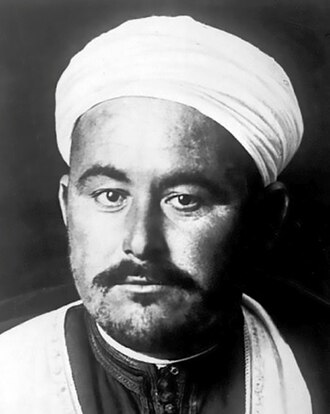
里夫共和国(阿拉伯语:جمهورية الريف),正式名称为里夫部落联邦共和国,是居住在西属摩洛哥的柏柏尔人(里夫人)建立的国家。1921年9月18日宣布独立。首都阿杰迪尔,货币为Riffan,国庆日为9月18日,人口估计有18,350人。独立时埃米尔为阿卜杜·克里姆 。但共和国正式的建立为1923年2月1日,总统为阿卜杜·克里姆,1923年7月至1926年5月27日的总理为Ben Hajj Hatmi。1926年5月27日在法国和西班牙的干涉下解散。
详细介绍
历史
柏柏尔人曾积极地抵抗西班牙人和法国人对沙漠的侵略。但是他们无法团结,部落之间不断内讧和分裂,1912年,由于部落联盟的破碎,他们对法国的殖民抗争彻底失败。1912年11月,法国把摩洛哥北部“转租”给西班牙。西班牙军队涣散,军方与高级专员之间殖民路线冲突,一直没有建立起有效的保护国统治。
阿卜杜·克里姆是其中一个部落的一位军阀和领导者,1921年7月22日取得阿纽尔战役全胜,歼灭西班牙军队9000人,击毙西班牙殖民军总司令西尔韦斯特,夺取了5000多平方千米的农村地区,西班牙十年经营一朝作废。利用其对西班牙的胜利去尝试创造一个有实权的独立国家,1923年2月,阿卜杜·克里姆在阿杰迪尔创建里夫共和国。
1923年9月13日,里维拉在马德里发动军事政变,建立军事独裁统治,在摩洛哥问题上希望与英国媾和,命令西班牙军队撤退到里夫沿海地区。
1925年夏,贝当指挥法军发起对里夫共和国的军事进攻。1925年9月,西班牙军在胡塞马登陆,并从梅利利亚向西进攻。里夫共和国南北东被三面夹击。1926年5月23日,里夫共和国最后据点陷落,联邦灭亡。
法国国内的知识分子谴责法国统治阶级的帝国主义。游击队与法军一直持续战斗直到1927年。
正文摘自中文维基百科「里夫共和国」(删去了参考文献、表格和图片),按 CC BY-SA 4.0 使用
英文维基百科的更多内容
中文维基百科这一条比较短,下面是英文维基百科同一条目的节选,原文为英文,未翻译。
The Republic of the Rif (Arabic: جمهورية الريف, romanized: Jumhūriyyatu r-Rīf; Tarifit: Tagududa n Rif) was a confederate republic in the Rif, Morocco, that existed between 1921 and 1926. It was created in September 1921, when a coalition of Riffians and Jebala led by Abd el-Krim revolted in the Rif War against the Spanish protectorate in Morocco. The French would intervene on the side of Spain in the later stages of the conflict.
A protracted struggle for independence killed many Rifians and Spanish–French soldiers, and witnessed the use of chemical weapons by the Spanish army—their first widespread deployment since the end of the World War I. The eventual Spanish–French victory was owed to the technological and manpower advantages despite their lack of morale and coherence. Following the war's end, the Republic was ultimately dissolved in 1926.
History
Background
The French and Spanish empires both colonized Morocco, and in 1912 the Treaty Between France and Spain Regarding Morocco established Spanish and French protectorates there.
France's general approach to governing the protectorate of Morocco was a policy of indirect rule, where they co-opted existing governance systems to control the protectorate. Specifically, the Moroccan elite and the sultans of Morocco were both left in control while being strongly influenced by the French government.
French and Spanish colonialism in Morocco was discriminatory against the native Rifians and Sahrawis and was highly detrimental to the Moroccan economy. Moroccans were treated as second-class citizens and discriminated against in all aspects of colonial life.
Infrastructure was discriminatory in colonial Morocco. The French colonial government built 36.5 kilometers of sewers in the new neighborhoods created to accommodate new French settlers, while only 4.3 kilometers of sewers were built in indigenous Moroccan communities. Additionally, land in Morocco was far more expensive for Moroccans than for French settlers. For example, while the average Moroccan had a plot of land 50 times smaller than their French settler counterparts, Moroccans were forced to pay 24% more per hectare. Moroccans were additionally prohibited from buying land from French settlers.
Colonial Morocco's economy was designed to benefit French businesses at the detriment of Moroccan laborers. Morocco was forced to import all of its goods from France despite higher costs.……
Government and politics
The Riffian National Council held several sessions, approving a constitution of 40 articles based on the principle of popular authority. The members of the government were accountable to the National Assembly. Therefore, Abd-el-Krim was appointed President of the Council. According to Achtatou—cited by Salafranca—this constitution, along with numerous other documents, was burned by Spanish troops when they captured Ajdir. The Riffian state was named Dawlat Aljumhuriya Rifiya (Riffian Republican State). The next step was the formation of a modern government to put an end to the old traditional structures and introduce a democratic model based on a highly representative administration. It was composed of the President or Emir, the Vice President (M'hamed Abd el-Krim, brother of Abd-el-Krim), and four ministers (of Finance, Foreign Affairs and Navy, Defense, and Interior), in addition to two secretaries and three inspectors and paymasters. The spirit of change and modernity is reflected in the fact that most of these members were young men under the age of 45; Qaid Sedik, Abd-el-Krim's private secretary, was only 22 years old. All of them had higher education and language proficiency, serving as a tool for communication with representatives of other countries and for delivering their message to the international community.
Diplomacy
There were two primary objectives that the Riffian leaders attempted to achieve through their diplomatic strategies.……
正文摘自英文维基百科(原文为英文,未翻译)「Republic of the Rif」(节选,删去了参考文献、表格和图片),按 CC BY-SA 4.0 使用;在维基百科读全文 ›
相关事件
- 第二次摩洛哥战争1911 年 6 月 8 日—1927 年 7 月 8 日 · 战争 · 非洲
- Battle of Ouergha1925 年 4 月 13 日—1925 年 7 月 20 日 · 战役 · 非洲
人物
同时期、同地区的政权