史鉴
- 存在时间
- 1752 年—1885 年
- 首都
- 瑞保、曼德勒、阿马拉布拉、阿瓦
- 政体
- 君主制
- 宗教
- 上座部佛教
- 类型
- 历史国家
- 简述
- 缅甸历史王朝
贡榜王朝(缅甸语:ကုန်းဘောင်ခေတ်, 发音:[kóʊɰ̃bàʊɰ̃ kʰɪʔ])是缅甸最后一个的王朝,为雍笈牙创立,因此也称为雍笈牙王朝。贡榜王朝存在于1752年到1885年,期间不但统一全缅甸,也对外四处用兵扩张疆土,于1767年消灭暹罗阿瑜陀耶王国,并多次和中国清朝发生战争。19世纪中期,南缅甸受到大英帝国入侵,该王朝前后与英爆发三次英缅战争,终于在1885年遭受英国全面占领,贡榜王朝亦覆灭。其领土则被并入英属印度。
详细介绍
王室仪式
- 有14种王室灌顶仪式(abhiseka):
- 即位灌顶(ရာဇဘိသိက်) - 国王即位
- 佛誓灌顶(မုဒ္ဓဘိသိက်) - 国王为弘扬佛法的正式誓词,即位后5年举行
- 立储灌顶(ဥပရာဇဘိသေက) - 册立王储
- 立后灌顶(မဟေသီဘိသေက) - 册立王后
- 白象灌顶(မင်္ဂလာဘိသေက) - 庆祝获得白象的所有权
- 君威灌顶(သီရိယဘိသေက) - 恢复国王的荣耀,不定期举行
- 长寿灌顶(အာယုဒီဃဘိသေက) - 获得长寿,不定期举行
- 胜利灌顶(ဇေယျာဘိသေက) - 确保战争的胜利和成功
- 繁荣灌顶(မဟာဘိသေက) - 增加经济繁荣,即位后7年举行
- 和平灌顶(သကလာဘိသေက) - 确保王国的和平
- 克敌灌顶(ဝိဇယဘိသေက) - 征服敌人
- 大婚灌顶(Manda beittheit) - 迎娶有王室血统的王后候选人
守法灌顶(Thenga beittheit) - 再次对国王作出遵守法律的承诺,随之授予国家政府及行政部门完全的权力。
正文摘自中文维基百科「贡榜王朝」(删去了参考文献、表格和图片),按 CC BY-SA 4.0 使用
英文维基百科的更多内容
中文维基百科这一条比较短,下面是英文维基百科同一条目的节选,原文为英文,未翻译。
The Konbaung dynasty (Burmese: ကုန်းဘောင်မင်းဆက်), also known as the Third Burmese Empire (တတိယမြန်မာနိုင်ငံတော်), was the last dynasty that ruled Burma from 1752 to 1885. It created the second-largest empire in Burmese history and continued the administrative reforms begun by the Toungoo dynasty, laying the foundations of the modern state of Burma. The reforms, however, proved insufficient to stem the advance of the British Empire, which defeated the Burmese in all three Anglo-Burmese Wars over a six-decade span (1824–1885) and ended the millennium-old Burmese monarchy in 1885.
Pretenders to the dynasty claim descent from Myat Phaya Lat, one of Thibaw's daughters.
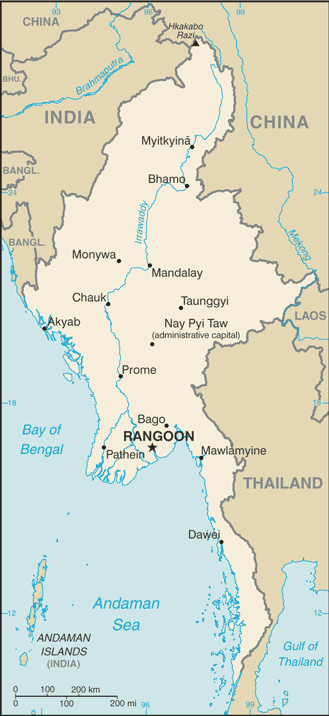
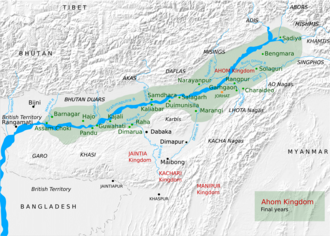
An expansionist dynasty, the Konbaung kings waged campaigns against the Lushai Hills, Manipur, Assam, Arakan, the Mon kingdom of Pegu, Siam, and the Qing dynasty of China—thus establishing the Third Burmese Empire. Subject to later wars and treaties with the British, the modern state of Myanmar can trace its current borders to these events.
Throughout the Konbaung dynasty, the capital was relocated several times for religious, political, and strategic reasons.
History
Establishment
The dynasty was founded by a village chief, who later became known as Alaungpaya, in 1752 to challenge the Restored Hanthawaddy Kingdom which had just toppled the Taungoo dynasty. By 1759, Alaungpaya's forces had reunited all of Burma (and Manipur) and driven out the French and the British who had provided arms to Hanthawaddy.
Alaungpaya's second son, Hsinbyushin, came to the throne after a short reign by his elder brother, Naungdawgyi (1760–1763). He continued his father's expansionist policy and finally took Ayutthaya in 1767, after seven years of fighting.
Relations with Siam
In 1760, Burma began a series of wars with Siam that would last well into the middle of the 19th century.……
Relations with China
In the defence of its realm, the dynasty fought four wars successfully against the Qing dynasty of China, which saw the threat of the expansion of Burmese power in the East.……
Government
The Konbaung dynasty was an absolute monarchy. As in the rest of Southeast Asia, the traditional concept of kingship aspired to the Chakravartin (Universal Monarchs) creating their own mandala or field of power within the Jambudipa universe, along with the possession of the white elephant which allowed them to assume the title Hsinbyushin or Hsinbyumyashin (Lord of the White Elephants), played a significant role in their endeavours. Of more earthly importance was the historical threat of periodic raids and aiding of internal rebellions as well as invasion and imposition of overlordship from the neighbouring kingdoms of the Mon, Tai Shans and Manipuris.
Administrative divisions
The kingdom was divided into provinces called myo (မြို့).……
Socioeconomic governance
Social classes
During the Konbaung dynasty, Burmese society was highly stratified. Loosely modelled on the four Hindu varnas, Konbaung society was divided into four general social classes (အမျိုးလေးပါး) by descent:
Rulers (မင်းမျိုး) or Khattiya (ခတ္တိယ)
Ritualists (ပုဏ္ဏားမျိုး) or Brahmana (ဗြာဟ္မဏ)
Merchants (သူဌေးမျိုး) or Vessa (ဝေဿ)
Commoners (ဆင်းရဲသားမျိုး) or Tudda (သုဒ္ဒ)
Society also distinguished between the free and slaves (ကျွန်မျိုး), who were indebted persons or prisoners of war (including those brought back from military campaigns in Arakan, Ayuthaya, and Manipur), but could belong to one of the four classes. There was also distinction between taxpayers and non-taxpayers.……
Sumptuary laws
Sumptuary laws called yazagaing dictated life and consumption for Burmese subjects in the Konbaung kingdom, everything from the style of one's house to clothing suitable to one's social standing from regulations concerning funerary ceremonies and the coffin to be used to usage of various speech forms based on rank and social status.……
Rulers
Note: Naungdawgyi was the eldest brother of Hsinbyushin and Bodawpaya, who was the grandfather of Bagyidaw, who was Mindon's elder uncle. They were known by these names to posterity, although the formal titles at their coronation by custom ran to some length in Pali; Mintayagyi paya (Lord Great King) was the equivalent of Your/His Majesty whereas Hpondawgyi paya (Lord Great Glory) would be used by the royal family.
Pretenders
After the abolition of the monarchy, the title of Royal Householder of the Konbaung dynasty nominally passed to Myat Phaya Lat, Thibaw's second daughter, as the King's eldest daughter had renounced her royal titles to be with an Indian commoner.
正文摘自英文维基百科(原文为英文,未翻译)「Konbaung dynasty」(节选,删去了参考文献、表格和图片),按 CC BY-SA 4.0 使用;在维基百科读全文 ›
相关事件
- 贡榜-汉达瓦底战争1752 年 4 月 20 日—1757 年 5 月 6 日 · 战争
- 泰缅战争 (1759年-1760年)1759 年 12 月—1760 年 5 月 · 战争 · 东南亚
- 清缅战争1765 年 12 月—1769 年 12 月 22 日 · 战争 · 东南亚
- 缅甸暹罗战争1765 年 8 月 23 日—1767 年 4 月 7 日 · 战争 · 东南亚
- 泰缅战争1775 年 10 月—1776 年 9 月 · 战争
- 九军战争1785 年 1 月—1786 年 1 月 · 战争
- 缅甸暹罗战争1809 年 6 月—1812 年 1 月 · 战争 · 东南亚
- 第一次英缅战争1824 年 3 月 5 日—1826 年 2 月 24 日 · 战争 · 东南亚
- 第二次英缅战争1852 年 4 月 5 日—1852 年 12 月 20 日 · 战争 · 东南亚
- 第三次英缅战争1885 年 11 月 7 日—1885 年 11 月 29 日 · 战争 · 东南亚
人物
同时期、同地区的政权