史鉴

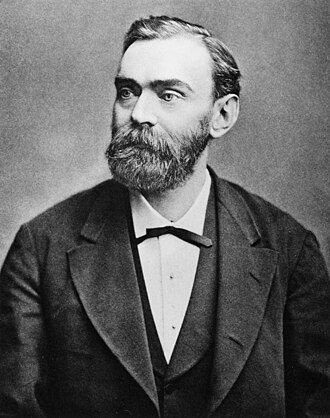
图:Harris & Ewing Collection · Public domain · 维基共享资源
- 生卒
- 1852 年 11 月 11 日—1925 年 8 月 25 日
- 出生地
- Penzing
- 去世地
- 巴特梅根特海姆
- 国籍 / 所属
- 奥地利、奥匈帝国
- 身份
- 军官
- 职位
- Member of the House of Lords (Austria)
- 参与
- 第一次世界大战、勃鲁西洛夫攻势、第二次伊松佐河之役、卡波雷托战役、Battle of Asiago、第一次伊松佐河之役、第三次伊松佐河之役、加利西亚战役、戈尔利采─塔尔努夫进攻、Carpathian Front、第四次伊松佐河之役、第六次伊松佐河之役 等 15 项
- 原文名
- Franz Xaver Josef Graf Conrad von Hötzendorf
- 就读
- 特蕾西亚军事学院、philosophy faculty of the German university of Prague
- 军种
- 帝国军
- 军衔
- 将军、元帅、General of the Infantry
- 简述
- 奥匈帝国元帅
弗朗茨·康拉德·冯·赫岑多夫伯爵(德语:Franz Graf Conrad von Hötzendorf;1852年11月11日—1925年8月25日),奥匈帝国陆军将领,最高军衔为陆军元帅,于1906年至1917年间任奥匈帝国总参谋长,是第一次世界大战期间最重要的军政领导人之一。部分历史学者认为其在1914年七月危机间主导决策。
康拉德多年来屡次主张进攻塞尔维亚王国,以挽救他认为濒临解体的奥匈多民族帝国。第一次世界大战爆发后,其指挥的奥匈军队素质低劣、准备不足,未能击败塞尔维亚。与此同时,其部在加利西亚战役被俄军击败。1915年夏,奥德联军在戈尔利采—塔尔努夫攻势中收复加利西亚与波兰,并于10月在保加利亚协助下征服塞尔维亚。自1915年起,他的部队日益依赖德国支援与指挥。
1917年3月,弗朗茨·约瑟夫一世皇帝驾崩后,康拉德因阿夏戈之战失利被新任皇帝卡尔一世免职,转任意大利战线的一个集团军群,直至1918年夏退休。1925年,康拉德逝世,享寿72岁。
正文摘自中文维基百科「法兰兹·康拉德·冯·赫岑多夫」(删去了参考文献、表格和图片),按 CC BY-SA 4.0 使用
英文维基百科的更多内容
中文维基百科这一条比较短,下面是英文维基百科同一条目的节选,原文为英文,未翻译。
Franz Xaver Josef Conrad von Hötzendorf (after 1919 Franz Conrad; 11 November 1852 – 25 August 1925), sometimes anglicised as Hoetzendorf, was an Austrian general who played a central role in World War I. He served as K.u.k. Feldmarschall (field marshal) and Chief of the General Staff of the military of the Austro-Hungarian Army and Navy from 1906 to 1917. He was in charge during the July Crisis of 1914 that caused World War I.
For years he had repeatedly called for preemptive war against Serbia to rescue the multiethnic Austro-Hungarian Empire, which was, he believed, nearing disintegration. Later on, he came to believe that the Dual Monarchy had taken action at the eleventh hour. The army was also unprepared and he had resorted to politics to further his goals. He was unaware that Germany would relocate the majority of its forces to the Eastern Front, rather than in the Balkans.
Conrad was anxious about invading Russia and when the Tsar's armies had captured the Carpathian mountain passes and were on the verge of invading Hungary, Italy entered the war on the side of the Allies. The Austro-Germans cleared Galicia and Poland during the Gorlice–Tarnów Offensive in the summer of 1915 and later conquered Serbia in October with the help of Bulgaria. From 1915 on his troops were increasingly reliant on German support and command. Without support from its German allies the Austro-Hungarian Army was an exhausted force.
In March 1917, Emperor Charles I dismissed him as Chief of Staff after Franz Joseph I died and Conrad's Trentino Offensive had failed to achieve its objective; he then commanded an army group on the Italian Front until he retired in the summer of 1918. He died in 1925.
Life
Conrad was born in Penzing, a suburb of Vienna, to an Austrian officers' family. His great-grandfather Franz Anton Conrad (1738–1827) had been ennobled and added to his name the nobiliary particle von Hötzendorf as a predicate in 1815, referring to the surname of his first wife who descended from the Bavarian Upper Palatinate region.……
Military career
Conrad joined the cadet corps of the Hainburg garrison and was educated at the Theresian Military Academy in Wiener Neustadt. He developed a strong interest in natural science, especially in Charles Darwin's theory of evolution.……
Strategies and performance
Conrad's legacy as a commander remains controversial, with earlier historians regarding him as a military genius, while more recent works characterize him as an utter failure. One mid-20th-century military historian considered him to be "probably the best strategist of the war." Taking the opposing view, early 21st-century U.S.……
Legacy
In the years after the war, he was revered, largely as a symbol of lost imperial glory, by other former officers. After his death in 1925, his second wife and former mistress similarly burnished and defended his reputation.……
Decorations and awards
National
Knight of the Imperial Order of the Iron Crown, 1st Class with War Decoration, 1908
Grand Cross of the Austrian Imperial Order of Leopold, with War Decoration, 1911
Military Merit Cross, 1st Class with War Decoration, 8 December 1914
Grand Cross of the Military Order of Maria Theresa, 1917
Gold Military Merit Medal ("Signum Laudis")
- War Medal
- Medal for 35 years of military service for officers
- Bronze Medal for the 50th year of the reign of Franz Joseph
- Foreign
- Kingdom of Prussia:
- Grand Cross of the Order of the Red Eagle
正文摘自英文维基百科(原文为英文,未翻译)「Franz Conrad von Hötzendorf」(节选,删去了参考文献、表格和图片),按 CC BY-SA 4.0 使用;在维基百科读全文 ›
参与的事件
- 第一次世界大战1914 年 7 月 28 日—1918 年 11 月 11 日 · 战争 · 跨地区
- 加利西亚战役1914 年 8 月 23 日—1914 年 9 月 11 日 · 战役 · 欧洲
- Carpathian Front1914 年 12 月—1915 年 3 月 · 战役 · 欧洲
- 戈尔利采─塔尔努夫进攻1915 年 5 月 2 日—1915 年 6 月 · 战役 · 欧洲
- 第一次伊松佐河之役1915 年 6 月 23 日—1915 年 7 月 7 日 · 战役 · 欧洲
- 第二次伊松佐河之役1915 年 7 月 18 日—1915 年 8 月 3 日 · 战役 · 欧洲
- 第三次伊松佐河之役1915 年 10 月 18 日—1915 年 11 月 3 日 · 战役 · 欧洲
- 第四次伊松佐河之役1915 年 11 月 10 日—1915 年 12 月 2 日 · 战役 · 欧洲
- 勃鲁西洛夫攻势1916 年 5 月 22 日—1916 年 9 月 7 日 · 战役 · 欧洲
- Battle of Asiago1916 年 5 月 15 日—1916 年 6 月 10 日 · 战役 · 欧洲
- 第六次伊松佐河之役1916 年 8 月 6 日—1916 年 8 月 17 日 · 战役 · 欧洲
- 第五次伊松佐河之役1916 年 3 月 9 日—1916 年 3 月 15 日 · 战役 · 欧洲
- 第七次伊松佐河之役1916 年 9 月 14 日—1916 年 9 月 18 日 · 战役 · 欧洲
- 第九次伊松佐河之役1916 年 10 月 31 日—1916 年 11 月 4 日 · 战役 · 欧洲
- 卡波雷托战役1917 年 10 月 24 日—1917 年 11 月 19 日 · 战役 · 欧洲
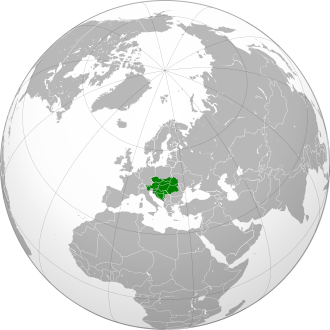
所属政权
同时代、同地区的人物







同时代、同身份的人物(军事)