史鉴
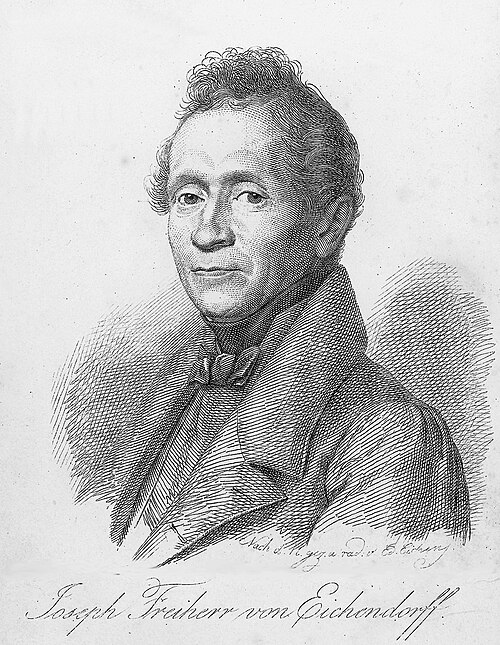
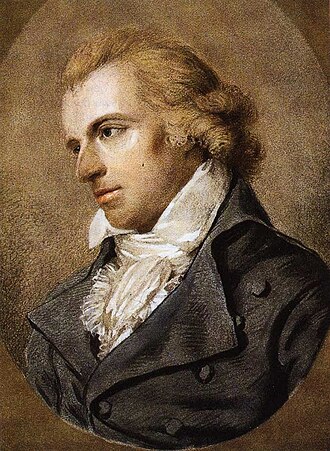
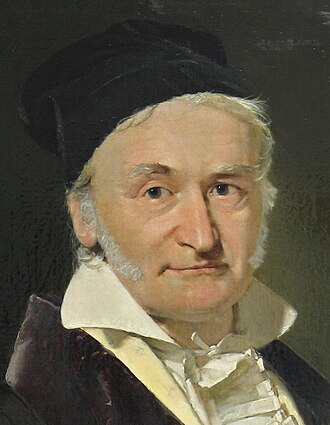
图:E. Eichens · Public domain · 维基共享资源
- 生卒
- 1788 年 3 月 10 日—1857 年 11 月 26 日
- 出生地
- Castle Lubowitz
- 去世地
- 尼斯
- 国籍 / 所属
- 普鲁士王国
- 身份
- 作家、诗人、法学家、剧作家、译者、解说人、poet lawyer、小说家
- 父亲
- Adolph von Eichendorff
- 母亲
- Karoline von Eichendorff
- 配偶
- Aloysia von Eichendorff
- 子女
- Hermann Eichendorff、Therese von Eichendorff Besserer-Dahlfinger、Rudolf von Eichendorff
- 代表作
- Aus dem Leben eines Taugenichts、The Marble Statue
- 本名
- Joseph Karl Benedikt von Eichendorff
- 原文名
- Joseph von Eichendorff
- 家族
- Eichendorff
- 宗教
- 天主教会
- 就读
- 哈雷-维滕贝格大学、海德堡大学、维也纳大学、Catholic Secondary School of St. Matthias in Wrocław
- 流派 / 运动
- 浪漫主义、德国浪漫主义、浪漫主义文学
- 死因
- 肺炎
- 简述
- 德国诗人及小说家
约瑟夫·冯·艾兴多夫男爵(德语:Joseph Freiherr von Eichendorff,1788年3月10日—1857年11月26日),德国诗人,小说家。约瑟夫被视为德国最重要的浪漫主义作家,他的作品从诞生之初到现代在德国都很流行。
详细介绍
生平
(1788-03-10)1788年3月10日,约瑟夫·冯·艾兴多夫在普鲁士王国上西里西亚拉齐布日出生。他的父亲是阿道夫·冯·艾兴多夫男爵(Adolf Freiherr von Eichendorff ),一名普鲁士军官。他的母亲是卡罗利妮(Karoline,出生名Freiin von Kloche),来自天主教会贵族家庭。自1805年起,约瑟夫分别在哈雷和海德堡学习法律。1808年,他走遍欧洲,访问巴黎与维也纳。1810年,他回到家乡帮助父亲经营家族地产。同年,他在柏林结识了海因里希·冯·克莱斯特与约翰·戈特利布·费希特等。1813年到1815年,他参加拿破仑战争,在吕措陆战队中当志愿军。
从1816年起,约瑟夫在普鲁士担任行政工作。起初他在弗罗茨瓦夫的司法机关里工作。1821年,他在格但斯克担任学校检察员,1824年在柯尼斯堡担任此职。1831年,他举家迁往柏林,在那里为几个部门工作后,于1844年退休。1857年11月26日(1857-11-26),约瑟夫在上西里西亚尼斯逝世。
正文摘自中文维基百科「约瑟夫·冯·艾兴多夫」(删去了参考文献、表格和图片),按 CC BY-SA 4.0 使用
英文维基百科的更多内容
中文维基百科这一条比较短,下面是英文维基百科同一条目的节选,原文为英文,未翻译。
Joseph Karl Benedikt Freiherr von Eichendorff (German: [fɔn ˈaɪçn̩dɔʁf]; 10 March 1788 – 26 November 1857) was a German poet, novelist, playwright, literary critic, translator, and anthologist. Eichendorff was one of the major writers and critics of Romanticism. Ever since their publication and up to the present day, some of his works have been very popular in German-speaking Europe.
Eichendorff first became famous for his 1826 novella Aus dem Leben eines Taugenichts (freely translated: Memoirs of a Good-for-Nothing) and his poems. The Memoirs of a Good-for-Nothing is a typical Romantic novella whose main themes are wanderlust and love. The protagonist, the son of a miller, rejects his father's trade and becomes a gardener at a Viennese palace where he subsequently falls in love with the local duke's daughter. As, with his lowly status, she is unattainable for him, he escapes to Italy – only to return and learn that she is the duke's adopted daughter, and thus within his social reach. With its combination of dream world and realism, Memoirs of a Good-for-Nothing is considered to be a high point of Romantic fiction. One critic stated that Eichendorff's Good-for-Nothing is the "personification of love of nature and an obsession with hiking." Thomas Mann called Eichendorff's Good-for-Nothing a combination of "the purity of the folk song and the fairy tale."
Many of Eichendorff's poems were first published as integral parts of his novellas and stories, where they are often performed in song by one of the protagonists. The novella Good-for-Nothing alone contains 54 poems.
Biography
Origin and early youth
Eichendorff, a descendant of an old noble family, was born in 1788 at Lubowitz Castle in Lubowitz near Ratibor in Upper Silesia, at that time part of the Kingdom of Prussia (now Łubowice near Racibórz, Poland).……
College days
Together with his brother Wilhelm, Joseph studied law and the humanities in Halle an der Saale (1805–1806), a city near Jena, which was a focal point of the Frühromantik (Early Romantics).……
Growth of a Romanticist
Artistic influences
The two writers who had the greatest early influence on Eichendorff's artistic development were Friedrich Schlegel, who established the term romantisch (romantic) in German literature, and Joseph Görres.……
Eichendorff's poetical style
Range
Although Eichendorffs poetry includes many metric forms ranging from very simple elegiac couplets and stanzas to sonnets, his main artistic focus was on poems imitating folk songs.
A comparison of forms shows that Eichendorff's lyricism is "directly influenced by Brentano and Arnim".
Naturalness and artificiality
Following the model of Des Knaben Wunderhorn, Eichendorff uses simple words ('naturalness'), adding more meaning ('artificiality') than dictionary definitions would indicate.……
Religiosity
For a long time it had been argued that Eichendorff's view of Romanticism had been subordinate to religious beliefs. More recently, however, Christoph Hollender has noted that Eichendorff's late religious and political writings were commissioned works, while his poetry represents a highly personal perspective.
Eichendorff's own résumé
Eichendorff summed up the Romantic epoch stating that it "soared like a magnificent rocket sparkling up into the sky, and after shortly and wonderfully lighting up the night, it exploded overhead into a thousand colorful stars."
Works
Volumes of poetry
First publication of some Poems in Ast's Zeitschrift für Wissenschaft und Kunst, under the pseudonym «Florens»; Heidelberg, (1808),
Gedichte von Joseph Freiherrn von Eichendorff, Verlag Duncker & Humblot, Berlin, (1837)
Julian, story in verses, (1853)
Robert und Guiscard, epic poem, (1855)
Lucius, epic poem, (1855)
Narrative texts
Novels
Ahnung und Gegenwart.……
Novellas
Die Zauberei im Herbste, (1808/09), published posthumously in 1906,
正文摘自英文维基百科(原文为英文,未翻译)「Joseph Freiherr von Eichendorff」(节选,删去了参考文献、表格和图片),按 CC BY-SA 4.0 使用;在维基百科读全文 ›
所属政权
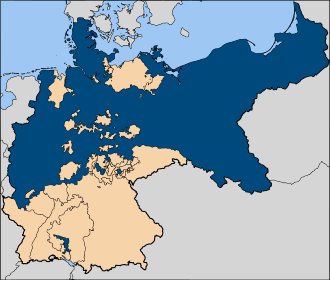
同时代、同地区的人物



同时代、同身份的人物(军事)