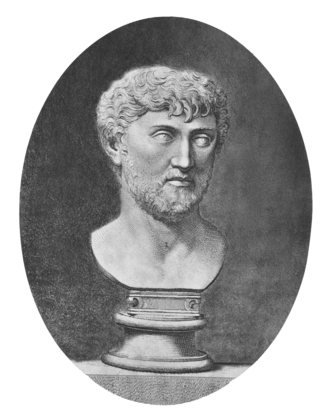
史鉴
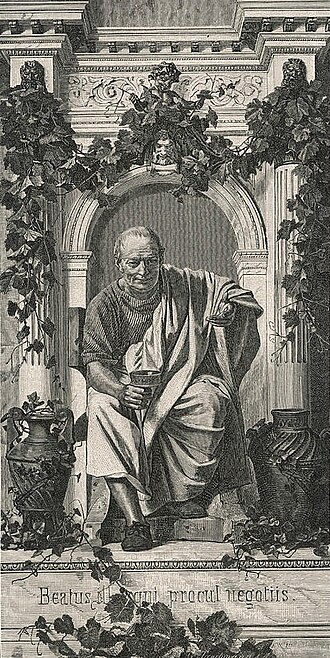
图:Anton von Werner · Public domain · 维基共享资源
- 生卒
- 公元前 65 年 12 月 8 日—公元前 8 年 11 月 27 日 (日期为儒略历)
- 出生地
- 韦诺萨
- 去世地
- 罗马
- 国籍 / 所属
- 古罗马
- 身份
- 作家、诗人、哲学家
- 代表作
- 诗学、诗经 (贺拉斯)、讽刺诗、书信集、时代之歌、纪元
- 原文名
- Q. Horatius Flaccus
- 简述
- 罗马抒情诗人
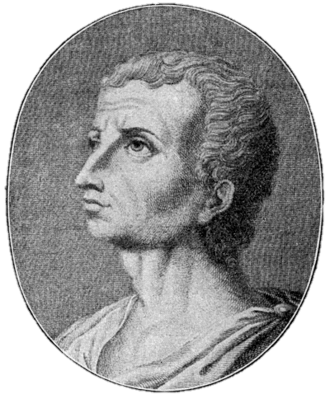
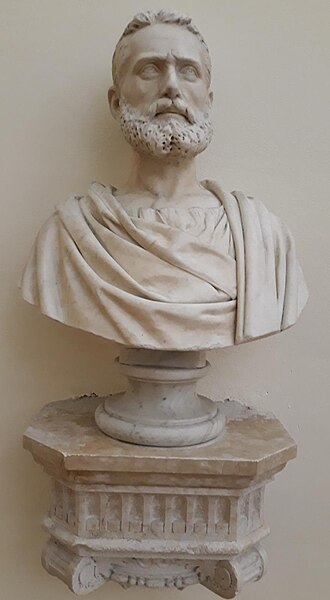
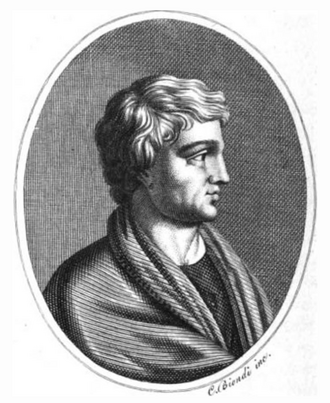
昆图斯·贺拉提乌斯·弗拉库斯(拉丁语:Quintus Horatius Flaccus、希腊语:Οράτιος,前65年12月8日—前8年11月27日),通称贺拉斯,奥古斯都时期的著名诗人、批评家、翻译家,代表作有《诗艺》等。他是古罗马文学“黄金时代”的代表人之一。
详细介绍
观点
作为翻译家,受西塞罗的文学批评和理论的影响,用相当的篇幅谈了创作中语言的使用和翻译问题。综合起来,主要有以下两点:
翻译必须坚持活译,摒弃直译;
本族语可通过译借外来词加以丰富。
他在《诗艺》中说过:“忠实原作的译者不会逐词死译”。
正文摘自中文维基百科「贺拉斯」(删去了参考文献、表格和图片),按 CC BY-SA 4.0 使用
英文维基百科的更多内容
中文维基百科这一条比较短,下面是英文维基百科同一条目的节选,原文为英文,未翻译。
Quintus Horatius Flaccus (Classical Latin: [ˈkʷiːntʊs (h)ɔˈraːtiʊs ˈfɫakːʊs]; 8 December 65 BC – 27 November 8 BC), commonly known in the English-speaking world as Horace ( HORR-iss), was the leading Roman lyric poet during the time of Augustus (also known as Octavian). The rhetorician Quintilian regarded his Odes as the only Latin lyrics worth reading: "He can be lofty sometimes, yet he is also full of charm and grace, versatile in his figures, and felicitously daring in his choice of words."
Horace also crafted elegant hexameter verses (Satires and Epistles) and caustic iambic poetry (Epodes). The hexameters are amusing yet serious works, friendly in tone, leading the ancient satirist Persius to comment: "as his friend laughs, Horace slyly puts his finger on his every fault; once let in, he plays about the heartstrings".
His career coincided with Rome's momentous change from a republic to an empire. An officer in the republican army defeated at the Battle of Philippi in 42 BC, he was befriended by Octavian's right-hand man in civil affairs, Maecenas, and became a spokesman for the new regime. For some commentators, his association with the regime was a delicate balance in which he maintained a strong measure of independence (he was "a master of the graceful sidestep") but for others he was, in John Dryden's phrase, "a well-mannered court slave".
Life
In his writings, Horace tells us far more about himself, his character, his development, and his way of life, than any other great poet of antiquity. Some of the biographical material contained in his work can be supplemented from the short but valuable "Life of Horace" by Suetonius (in his Lives of the Poets).
Childhood
He was born on 8 December 65 BC, in what later became Lucania et Bruttium under Augustus. His home town, Venusia, lay on a trade route in the region of Lucania at the border with Apulia. Various Italic dialects were spoken in the area and this perhaps enriched his feeling for language.……
Works
The dating of Horace's works is only approximately known, and scholars often debate the precise order in which they were first "published". There are persuasive arguments for the following chronology:
Satires 1 (c. 35–34 BC)
Satires 2 (c. 30 BC)
Epodes (30 BC)
Odes 1–3 (c. 23 BC)
Epistles 1 (c. 21 BC)
Carmen Saeculare (17 BC)
Epistles 2 (c. 11 BC)
Odes 4 (c. 11 BC)
Ars Poetica (c. 10–8 BC)
Historical context
Horace composed in traditional metres borrowed from archaic Greece, employing hexameters in his Satires and Epistles, and iambs in his Epodes, all of which were relatively easy to adapt into Latin forms.……
Reception
The reception of Horace's work has varied from one epoch to another and varied markedly even in his own lifetime. Odes 1–3 were not well received when first 'published' in Rome, yet Augustus later commissioned a ceremonial ode for the Centennial Games in 17 BC and also encouraged the publication of Odes 4, after which Horace's reputation as Rome's premier lyricist was assured.……
Antiquity
Horace's influence can be observed in the work of his near contemporaries, Ovid and Propertius. Ovid followed his example in creating a completely natural style of expression in hexameter verse, and Propertius cheekily mimicked him in his third book of elegies.……
Translations
The Ars Poetica was first translated into English by Thomas Drant in 1556, and later by Ben Jonson and Lord Byron.
John Dryden, Sylvæ; or, The second Part of Poetical Miscellanies (London: Jacob Tonson, 1685) with adaptations of three of the Odes, and one Epode.
Philip Francis, The Odes, Epodes, and Carmen Seculare of Horace (Dublin, 1742; London, 1743)
——— The Satires, Epistles, and Art of Poetry of Horace (1746) Samuel Johnson favoured these translations.
C. S. Calverley, Verses and Translations (1860; rev. 1862) Included versions of ten of the Odes.
John Conington, The Odes and Carmen Sæculare of Horace (1863; rev. 1872)
正文摘自英文维基百科(原文为英文,未翻译)「Horace」(节选,删去了参考文献、表格和图片),按 CC BY-SA 4.0 使用;在维基百科读全文 ›
受其影响的人物
所属政权
同时代、同地区的人物