史鉴

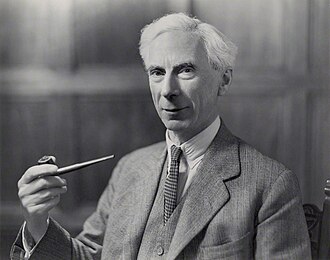
图:佚名 · CC BY-SA 3.0 de · 维基共享资源
- 生卒
- 1855 年 9 月 9 日—1927 年 1 月 9 日
- 出生地
- 南海城
- 去世地
- 拜雷乌特
- 国籍 / 所属
- 魏玛共和国、大不列颠及爱尔兰联合王国
- 身份
- 作家、政治人物、政治学家、哲学家、散文家、种族理论家
- 父亲
- William Charles Chamberlain
- 母亲
- Eliza Jane Hall
- 配偶
- 伊娃·张伯伦、Anna Chamberlain、Anna Horst
- 原文名
- Houston Stewart Chamberlain
- 就读
- 切尔滕纳姆学院、日内瓦大学、斯塔冰顿预备学校
- 领域
- 哲学、反犹太主义、政治学、literary activity、race policy
- 简述
- British-German racialist philosopher (1855–1927)
休斯顿·斯图尔特·张伯伦(英语:Houston Stewart Chamberlain,1855年9月9日—1927年1月9日)德国英国裔政治哲学、自然科学及瓦格纳传记作家。《牛津国家人物传记大辞典》中称他为“种族主义作家”。1908年,与瓦格纳的女儿结婚。他创作的《十九世纪的基础》(Die Grundlagen des neunzehnten Jahrhunderts )成为二十世纪泛日耳曼主义运动的重要参考文献,也是后来纳粹种族政策的重要文献来源。
正文摘自中文维基百科「休斯顿·斯图尔特·张伯伦」(删去了参考文献、表格和图片),按 CC BY-SA 4.0 使用
英文维基百科的更多内容
中文维基百科这一条比较短,下面是英文维基百科同一条目的节选,原文为英文,未翻译。
Houston Stewart Chamberlain (; 9 September 1855 – 9 January 1927) was a British-German-French philosopher. His writings on political philosophy and natural science influenced Adolf Hitler, among many others, attributing all world accomplishments to the Germanic race. Chamberlain promoted German ethnonationalism, antisemitism, scientific racism, and Nordicism; he has been described as a "racialist writer". His best-known book, the two-volume Die Grundlagen des neunzehnten Jahrhunderts (The Foundations of the Nineteenth Century), published in 1899, became highly influential in the pan-Germanic Völkisch movements of the early 20th century, and later influenced the antisemitism of Nazi racial policy. In the early 1920s, Chamberlain met and encouraged Hitler.
Born in Hampshire, he immigrated to Dresden in adulthood out of an adoration for composer Richard Wagner. He married Eva von Bülow, Wagner's biological daughter, in December 1908, twenty-five years after Wagner's death. As a long admirer of French culture, he settled in Paris in 1884. He was later naturalised as a French citizen in 1914. During World War I, Chamberlain sided with Germany against his country of birth. He took German citizenship in 1916.
Though they share the same surname, he is not related to contemporary British politician Neville Chamberlain.
Early life and education
Houston Stewart Chamberlain was born in Southsea, Hampshire, England, the son of Rear Admiral William Charles Chamberlain. His mother, Eliza Jane, daughter of Captain Basil Hall, died before he was a year old, leading to his being brought up by his grandmother in France.……
Cheltenham College
Chamberlain's education began at a lycée in Versailles and continued mostly in continental Europe, but his father had planned a military career for his son.……
Wagnerite
An ardent Francophile in his youth, Chamberlain had a marked preference for speaking French over English.……
Champion of Wagnerism
In 1889, he moved to Austria. During this time it is said his ideas on race began taking shape, influenced by the concept of Teutonic supremacy he believed embodied in the works of Wagner and the French racist writer Arthur de Gobineau.……
Vienna years
In September 1891, Chamberlain visited Bosnia and Herzegovina. Chamberlain had been commissioned by the Austrian government to write propaganda glorying its colonial rule of Bosnia-Herzegovina for a Geneva newspaper.……
Die Grundlagen (The Foundations)
In February 1896, the Munich publisher Hugo Bruckmann, a leading völkisch activist who was later to publish Mein Kampf, commissioned Chamberlain to write a book summarizing the achievements of the 19th century.
Peoples defined as Aryans
Chamberlain grouped all European peoples – not just Germans, but Celts, Slavs, Greeks, and Latins – into the "Aryan race", a race built on the ancient Proto-Indo-European culture.……
Evangelist of race
Visit to England and attack on its Jews
In 1900, for the first time in decades, Chamberlain visited Britain. Writing to Cosima Wagner from London, Chamberlain stated sadly that his Britain, the Britain of aristocratic rule, hard work and manly courage, the romanticized "Merry Old England" of his imagination was no more;……
Kaiser Wilhelm II
In early 1901, the German Emperor Wilhelm II read The Foundations and was immensely impressed.……
Propagandist of the World War
Health and paralysis
In August 1914, he started suffering from a progressive paralysis of the limbs. At the end of the war, Chamberlain's paralysis had already befallen much of his body; his chronically bad health had reached its final stage.
Taking Germany's side
When World War I started in 1914, Chamberlain tried to enlist in the German Army, but was turned down on account of his age (then 58) and bad health.……
Hitler's mentor
November Revolution
In November 1918, Chamberlain was completely shattered by Germany's defeat in the war, a defeat he believed to be impossible, as well as by the November Revolution, which had toppled his beloved monarchy.……
Admiring Hitler
In January 1921, Stolzing-Cerny, who joined the NSDAP in December 1920, wrote to Chamberlain about the new man on the political scene, "one Adolf Hitler, an Austrian worker, a man of extraordinary oratorical talents and an astonishingly rich political knowledge who knows marvelously how to thrill the masses".……
Impact of The Foundations
During his lifetime Chamberlain's works were read widely throughout Europe, and especially in Germany. His reception was particularly favourable among Germany's conservative elite.……
Works
(1892). Das Drama Richard Wagners. Eine Anregung, Breitkopf & Härtel.
(1895). Richard Wagner, F. Bruckmann.
(1899). Die Grundlagen des neunzehnten Jahrhunderts, Bruckmann.
(1903). Dilettantismus - Rasse - Monotheismus - Rom, Bruckmann.
(1905). Arische Weltanschauung, Bruckmann.
Works in English translation
(1897). Richard Wagner, J.M. Dent & Co. (translated by G. Ainslie Hight)
正文摘自英文维基百科(原文为英文,未翻译)「Houston Stewart Chamberlain」(节选,删去了参考文献、表格和图片),按 CC BY-SA 4.0 使用;在维基百科读全文 ›
受其影响的人物

所属政权

同时代、同地区的人物






同时代、同身份的人物(帝王与政治)