史鉴

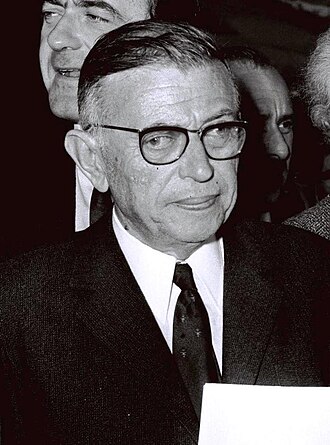
图:Elena Ancu Damian · CC0 · 维基共享资源
- 生卒
- 1907 年 3 月 9 日—1986 年 4 月 22 日 (日期为儒略历)
- 出生地
- 布加勒斯特
- 去世地
- 芝加哥
- 国籍 / 所属
- 美国、罗马尼亚王国、罗马尼亚人民共和国
- 身份
- 作家、外交官、历史学家、剧作家、传记作家、教育学家、大学教师、新闻工作者
- 配偶
- Christinel Eliade、Nina Mareş
- 受影响于
- 巴尔扎克、安德烈·纪德、鲁道夫·奥托、尼古拉·约尔加、尤利乌斯·埃佛拉、雷内·格农、乔瓦尼·帕皮尼、纳耶·约内斯库 等 10 项
- 原文名
- Mircea Eliade
- 宗教
- 正教会
- 就读
- 布加勒斯特大学、加尔各答大学
- 任职机构
- 芝加哥大学、布加勒斯特大学
- 所属组织
- 美国文理科学院、罗马尼亚研究院、比利时皇家法语语言文学学院
- 领域
- 宗教学
- 简述
- 罗马尼亚宗教史学家(Mircea Eliade,1907-1986)
米尔恰·伊利亚德(罗马尼亚语:Mircea Eliade,1907年3月13日—1986年4月22日),罗马尼亚宗教史学家、科幻小说作家、哲学家,美国芝加哥大学教授。他对宗教的解读开风气之先,成为宗教研究影响至今的范例。其基于宗教提出的“圣显”(hierophanies)理论将人类对现实的体验分为圣与俗两部分。
详细介绍
中文译本
- 《神圣与世俗》,王建光译,华夏出版社,2001年1月
- 《圣与俗—宗教的本质》,杨素娥译、胡国桢校,台北:桂冠图书股份有限公司,2006年
- 《神圣的存在:比较宗教的范型》,晏可佳、姚蓓琴译,桂林:广西师范大学出版社,2008年
正文摘自中文维基百科「米尔恰·伊利亚德」(节选,删去了参考文献、表格和图片),按 CC BY-SA 4.0 使用;在维基百科读全文 ›
英文维基百科的更多内容
中文维基百科这一条比较短,下面是英文维基百科同一条目的节选,原文为英文,未翻译。
Mircea Eliade (Romanian: [ˈmirt͡ʃe̯a eliˈade]; 13 March [O.S. 28 February] 1907 – April 22, 1986) was a Romanian historian of religion, fiction writer, philosopher, and professor at the University of Chicago. One of the most influential scholars of religion of the 20th century and interpreter of religious experience, he established paradigms in religious studies. His theory that hierophanies form the basis of religion, splitting the human experience of reality into sacred and profane space and time, has proved influential. One of his most instrumental contributions to religious studies was his theory of eternal return, which holds that myths and rituals do not simply commemorate hierophanies, but (at least in the minds of the religious) actually participate in them.
Eliade's literary works belong to the fantastic and autobiographical genres. The best known are the novels Maitreyi ('La Nuit Bengali' or 'Bengal Nights', 1933), Noaptea de Sânziene ('The Forbidden Forest', 1955), Isabel și apele diavolului ('Isabel and the Devil's Waters'), and Romanul Adolescentului Miop ('Novel of the Nearsighted Adolescent', 1989); the novellas Domnișoara Christina ('Miss Christina', 1936) and Tinerețe fără tinerețe ('Youth Without Youth', 1976); and the short stories Secretul doctorului Honigberger ('The Secret of Dr. Honigberger', 1940) and La Țigănci ('With the Gypsy Girls', 1963).
Early in his life, Eliade was a journalist and essayist, a disciple of Romanian philosopher and journalist Nae Ionescu, and a member of the literary society Criterion. In the 1940s, he served as cultural attaché of the Kingdom of Romania to the United Kingdom and Portugal. Several times during the late 1930s, Eliade publicly expressed his support for the Iron Guard, a Romanian Christian fascist organization.……
Biography
Childhood
Born in Bucharest, he was the son of Romanian Land Forces officer Gheorghe Eliade (whose original surname was Ieremia) and Jeana née Vasilescu.……
Adolescence and literary debut
After completing his primary education at the school on Mântuleasa Street, Eliade attended the Spiru Haret National College in the same class as Arșavir Acterian, Haig Acterian, and Petre Viforeanu (and several years the senior of Nicolae Steinhardt, who eventually became a close friend of Eliade's).……
Work
The general nature of religion
In his work on the history of religion, Eliade is most highly regarded for his writings on Alchemy, Shamanism, Yoga and what he called the eternal return—the implicit belief, supposedly present in religious thought in general, that religious behavior is not only an imitation of, but also a participation in, sacred events, and thus restores the mythical time of origins.……
Philosophy
Early contributions
In addition to his political essays, the young Mircea Eliade authored others, philosophical in content. Connected with the ideology of Trăirism, they were often prophetic in tone, and saw Eliade being hailed as a herald by various representatives of his generation.……
Criticism of Eliade's scholarship
Overgeneralization
Eliade cites a wide variety of myths and rituals to support his theories. However, he has been accused of making overgeneralizations: many scholars think he lacks sufficient evidence to put forth his ideas as universal, or even general, principles of religious thought.……
Lack of empirical support
Several researchers have criticized Eliade's work as having no empirical support.……
Literary works
Generic traits
Many of Mircea Eliade's literary works, in particular his earliest ones, are noted for their eroticism and their focus on subjective experience. Modernist in style, they have drawn comparisons to the contemporary writings of Mihail Sebastian, I. Valerian, and Ion Biberi.……
Controversy: antisemitism and links with the Iron Guard
Early statements
The early years in Eliade's public career show him to have been highly tolerant of Jews in general, and of the Jewish minority in Romania in particular.……
Cultural legacy
Tributes
An endowed chair in the History of Religions at the University of Chicago Divinity School was named after Eliade in recognition of his wide contribution to the research on this subject; the first holder of this chair is Wendy Doniger, who was succeeded by Brook Ziporyn in 2020.
Selected bibliography
A History of Religious Ideas. Vol. 1: From the Stone Age to the Eleusinian Mysteries. Trans. Willard R. Trask. Chicago: U of Chicago P, 1978. (Histoire des croyances et des idées religieuses. 3 vols. 1976–83.)
Images and Symbols: Studies in Religious Symbolism (trans.……
正文摘自英文维基百科(原文为英文,未翻译)「Mircea Eliade」(节选,删去了参考文献、表格和图片),按 CC BY-SA 4.0 使用;在维基百科读全文 ›
受其影响的人物

所属政权
同时代、同地区的人物





同时代、同身份的人物(帝王与政治)