史鉴
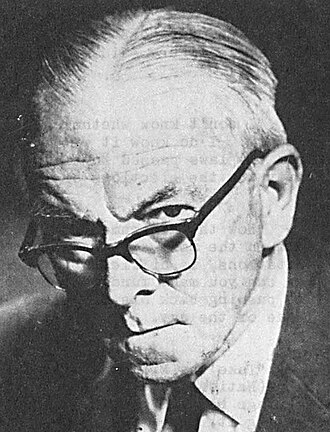
图:Crown Studios The original uploader was Perijove at Swahili Wikipedia. · Public domain · 维基共享资源
- 生卒
- 1903 年 1 月 11 日—1988 年 4 月 12 日
- 出生地
- 彼得马里茨堡
- 去世地
- 德班
- 国籍 / 所属
- 南非
- 身份
- 编剧、作家、教师、政治人物、自传作者
- 代表作
- 哭吧,我心爱的祖国
- 原文名
- Alan Paton
- 宗教
- 圣公宗
- 就读
- 纳塔尔大学
- 简述
- South African writer and activist (1903-1988)
艾伦·斯图尔特·佩顿(1903年1月11日-1988年4月12日)是一位南非作家和反种族隔离活动家。他是《哭吧,亲爱的祖国》的作者。1953年5月9日,南非自由党成立,艾伦·佩顿是该党创始成员,后来担任该党主席。
正文摘自中文维基百科「艾伦·佩顿」(删去了参考文献、表格和图片),按 CC BY-SA 4.0 使用
英文维基百科的更多内容
中文维基百科这一条比较短,下面是英文维基百科同一条目的节选,原文为英文,未翻译。
Alan Stewart Paton (11 January 1903 – 12 April 1988) was a South African writer, anti-apartheid activist, and educator. His works include the novels Cry, the Beloved Country (1948), Too Late the Phalarope (1953), and the short story The Waste Land. He was posthumously awarded the Order of Ikhamanga in Gold for his literary contributions to the anti-apartheid movement.
Early life
Paton was born in Pietermaritzburg in the Colony of Natal (now South Africa's KwaZulu-Natal province). He was the son of James Paton, a civil servant and Scottish immigrant, and Eunice Warder Paton (née James), a schoolteacher of English descent. Both of his parents were deeply religious, raising him in the Christadelphian faith, and neither was highly educated.……
Early career
Paton served as the principal of Diepkloof Reformatory for young (native African) offenders from 1935 to 1949. A year before he started as principal, the South African parliament transferred reformatory institutions for juveniles from the Department of Prisons to the Union Education Department, opening up principal positions at several reformatories.……
Later career
Paton volunteered for military service with the British Commonwealth forces during World War II, but was refused by the South African authorities. After the war he took a journey, at his own expense, to tour correctional facilities across the world. He toured Scandinavia, Britain, continental Europe, Canada, and the United States.……
Opposition to apartheid
In 1948, four months after the publication of Cry, the Beloved Country, the right-wing National Party was elected to power in South Africa. Black South Africans did not receive the vote until 1994 so were unable to oppose this directly. The legislature soon passed laws to formally establish apartheid, a system of racial segregation.
Paton, together with Margaret Ballinger, Edgar Brookes, and Leo Marquard, formed the Liberal Association in early 1953.……
Other works
Paton continued to explore racial themes and apartheid in his second and third novels, Too Late the Phalarope (1953) and Ah, but Your Land Is Beautiful (1981), and his collected short stories, Tales From a Troubled Land (1961).
Ah, but Your Land Is Beautiful was built on parallel life stories, letters, speeches, news and records in legal proceedings.……
Personal life
While at Ixopo, Paton met Dorrie Francis Lusted. They married in 1928, and remained together until her death from emphysema in 1967. Their life together is documented in Paton's memoir Kontakion for You Departed, (1969). They had two sons, Jonathan and David.
In 1969, Paton remarried, to Anne Hopkins. This marriage lasted until Paton's death in 1988.
Paton was a Christian. His faith was one of the reasons he was so strongly opposed to apartheid.
Adaptations
Cry, the Beloved Country was twice adapted for films, in 1951 and 1995. It was the basis for the Broadway musical Lost in the Stars, which was adapted by American playwright Maxwell Anderson with music by Kurt Weill.
Selected works
Cry, The Beloved Country, 1948 – made into a film in 1951, directed by Zoltan Korda with a screenplay by Paton himself; in 1995, directed by Darrell Roodt; also a musical and an opera
Lost in the Stars 1950 – a musical based on the above work (book and lyrics by Maxwell Anderson, music by Kurt Weill)
- Too Late the Phalarope, 1953
- The Land and People of South Africa, 1955
- South Africa in Transition, 1956
- Debbie Go Home, 1960
- Tales from a Troubled Land, 1961
Awards and honours
In 20 April 2006, Paton was posthumously awarded the Order of Ikhamanga in Gold for his "exceptional contribution to literature, exposing the apartheid oppression through his work and fighting for a just and democratic society."
正文摘自英文维基百科(原文为英文,未翻译)「Alan Paton」(节选,删去了参考文献、表格和图片),按 CC BY-SA 4.0 使用;在维基百科读全文 ›
同时代、同地区的人物




同时代、同身份的人物(帝王与政治)