史鉴
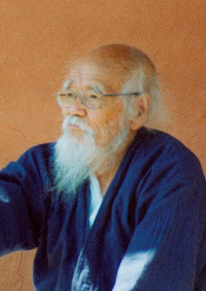
图:naturalfarming.org · CC BY-SA 2.5 · 维基共享资源
- 生卒
- 1913 年 2 月 2 日—2008 年 8 月 16 日
- 出生地
- 伊予市
- 去世地
- 伊予市
- 国籍 / 所属
- 日本、大日本帝国
- 身份
- 作家、教师、农民、农学家、植物学家、环保人士、微生物学家、哲学家
- 代表作
- The One-Straw Revolution
- 原文名
- 福岡正信
- 领域
- 哲学、生态学、微生物学、agriculture、自然农法
- 简述
- Japanese farmer and philosopher (1913-2008)
福冈正信(1913年2月2日—2008年8月16日)是日本农学家、哲学家,自然农法的创始人、提倡者之一。他是不施肥、不施农药及除草剂的传统耕作方式的拥护者,亦是在此基础上他创立了广为人知的自然农法。
详细介绍
人物
福冈正信出生于爱媛县伊予郡南山崎村(现伊予市),毕业于旧制松山中学校岐阜高等农林学校(现岐阜大学应用生物科学部)。
青年时期的福冈就任于横滨海关的植物检查科,从事植物病理研究。不久因罹患急性肺炎住院。住院期间,他领悟了“一切无用(この世には何もない)”的思想,继而辞去工作,回乡务农。他致力于探寻“无为而治(やらなくてもいい)”的、也就是否定“科学农法”的农业道路,经历多次失败后,最终创立了自然农法。
然而,尽管他在著作的序文中大力提倡推行不耕作、无肥料、无农药、不除草的自然农法、著作中却仍有使用肥料及农药(除草剂、除虫剂)的记述。
1988年,他获得了由洛克菲勒兄弟财团出资设立的拉蒙·麦格塞塞奖。
据报道,年届90的福冈正信曾飞抵中国,不顾年事已高,步行困难,,现场亲自指导粘土团子的有关技术。
简历
- 1913年 - 出生于爱媛县
- 1931年 - 从松山中学毕业
- 1933年 - 岐阜高农农学科毕业
- 1934年 - 任职于横滨海关植物检查课
- 1937年 - 短暂回乡务农,开始自然农法试验
1939年 - 任职于高知县农业试験场(现高知县农业技术中心)。
1947年 - 再次回乡务农,开始专心研究自然农法。
1975年 - 出版《自然农法・一根稻草的革命》
1988年 - 获得拉蒙·麦格塞塞奖的公共服务奖项和维斯瓦·巴拉蒂大学的Desikottam奖。
1997年 - 获得首届Earth Council奖。
2008年 - 8月16日上午逝世。
正文摘自中文维基百科「福冈正信」(删去了参考文献、表格和图片),按 CC BY-SA 4.0 使用
英文维基百科的更多内容
中文维基百科这一条比较短,下面是英文维基百科同一条目的节选,原文为英文,未翻译。
Masanobu Fukuoka (Japanese: 福岡 正信, Hepburn: Fukuoka Masanobu; 2 February 1913 – 16 August 2008) was a Japanese farmer and philosopher celebrated for his natural farming and re-vegetation of desertified lands. He was a proponent of no-till, herbicide and pesticide-free cultivation methods from which he created a particular method of agriculture, commonly referred to as "natural farming" or "do-nothing farming".
Fukuoka was the author of several books, scientific papers and other publications, and was featured in television documentaries and interviews from the 1970s onwards. His influences went beyond farming to inspire individuals within the natural food and lifestyle movements. He was an outspoken advocate of the value of observing nature's principles.
Life
Fukuoka was born on 2 February 1913 in Iyo, Ehime, Japan, the second son of Kameichi Fukuoka, an educated and wealthy land owner and local leader. He attended Gifu Prefecture Agricultural College and trained as a microbiologist and agricultural scientist, beginning a career as a research scientist specialising in plant pathology. He worked at the Plant Inspection Division of the Yokohama Customs Bureau in 1934 as an agricultural customs inspector.……
Natural farming
Fukuoka called his agricultural philosophy shizen nōhō (自然農法), most commonly translated into English as "natural farming". It is also referred to as "the Fukuoka Method", "the natural way of farming" or "Do-Nothing Farming".
The system is based on the recognition of the complexity of living organisms that shape an ecosystem and deliberately exploiting it.……
Clay seed balls
Fukuoka re-invented and advanced the use of clay seed balls. Clay seed balls were originally an ancient practice in which seeds for the next season's crops are mixed together, sometimes with humus or compost for microbial inoculants, and then are rolled within clay to form into small balls. This method is now commonly used in guerilla gardening to rapidly seed restricted or private areas.
Awards
In 1988, Fukuoka received the Visva-Bharati University's Desikottam Award as well as the Ramon Magsaysay Award for Public Service in the Philippines, often considered "Asia's Nobel Prize".
In March 1997, the Earth Summit+5 forum in Rio de Janeiro presented him with the Earth Council Award, received in person at a ceremony in Tokyo on 26 May of that year, honouring him for his contributions to sustainable development.
Influence
In the international development of the organic farming movement, Fukuoka is considered to be amongst the "five giant personalities who inspired the movement" along with Austrian Rudolf Steiner, German-Swiss Hans Müller, Lady Eve Balfour in the United Kingdom and J. I. Rodale in the United States.
His books are considered both farming compendiums and guides to a way of life.
Reception
In the preface to the US editions of The One-Straw Revolution, Wendell Berry wrote that Fukuoka's techniques are not "directly applicable to most American farms", but ultimately concludes that it would be "a mistake to assume that the practical passages of this book are worthless..." suggesting that Natural Farming would require farmers to have fresh eyes and the right kind of concern for their land in order to come up with methods relevant to their own farms.
Selected works
Documentaries
1982 – The Close To Nature Garden; produced by Rodale Press. 24 minutes. In English.
1997 – Fukuoka Masanobu goes to India; produced by Salbong. 59/61 minutes. Available in Japanese or dubbed English.
2015 - Final Straw: Food, Earth, Happiness; directed/produced by Patrick M. Lydon and Suhee Kang. 74 minutes. Subtitled in English.
正文摘自英文维基百科(原文为英文,未翻译)「Masanobu Fukuoka」(节选,删去了参考文献、表格和图片),按 CC BY-SA 4.0 使用;在维基百科读全文 ›
所属政权
同时代、同地区的人物



同时代、同身份的人物(思想与学术)