史鉴
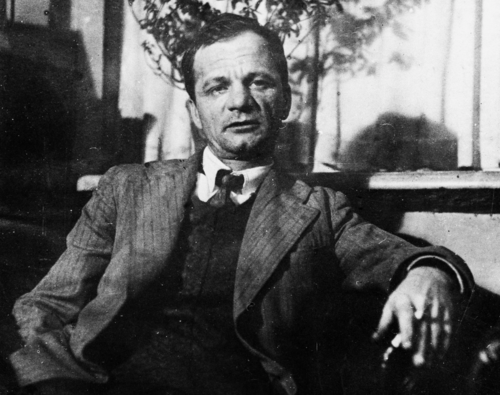
图:佚名 · Public domain · 维基共享资源
- 生卒
- 1899 年 8 月 16 日—1951 年 1 月 5 日 (日期为儒略历)
- 出生地
- 沃罗涅日
- 去世地
- 莫斯科
- 国籍 / 所属
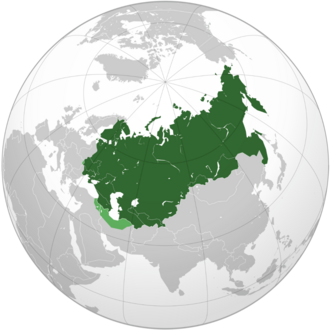
- 苏联、俄罗斯帝国、俄罗斯共和国、苏维埃俄国
- 身份
- 作家、诗人、剧作家、评论家、小说家、散文家、科幻作家
- 子女
- M. A. Platonova、Platon Platonov
- 参与
- 苏德战争
- 代表作
- Chevengur、The Foundation Pit、Happy Moscow
- 本名
- Андрей Платонович Климентов
- 原文名
- Андрей Платонович Платонов
- 死因
- 结核病
- 简述
- Russian author (1899–1951)
安德烈·普拉东诺夫(俄语:Андре́й Плато́нов;1899年8月28日(旧历8月16日)—1955年1月5日)是苏联作家、哲学家、剧作家、诗人,他的作品出现于存在主义之前。虽然普拉东诺夫加入了苏联共产党,但是由于他对农业集体化和其他斯大林主义政策的怀疑态度,有生之年他的大部分作品都遭到了查禁。
正文摘自中文维基百科「安德烈·普拉东诺夫」(删去了参考文献、表格和图片),按 CC BY-SA 4.0 使用
英文维基百科的更多内容
中文维基百科这一条比较短,下面是英文维基百科同一条目的节选,原文为英文,未翻译。
Andrei Platonovich Platonov (Russian: Андрей Платонович Платонов, IPA: [ɐnˈdrʲej plɐˈtonəvʲɪtɕ plɐˈtonəf]; né Klimentov [Климе́нтов]; 28 August [O.S. 16 August] 1899 – 5 January 1951) was a Soviet Russian novelist, short story writer, philosopher, playwright, and poet. Although Platonov regarded himself as a communist, his principal works were banned until thirty years after his death because of their skeptical attitude toward collectivization of agriculture (1929–1940) and other Stalinist policies, as well as for their experimental, avant-garde form infused with existentialism which was not in line with the dominant socialist realism doctrine. His famous works include the novels The Foundation Pit (1930), Soul (1935) and Chevengur (1928).
Early life and education
Platonov was born in the settlement of Yamskaya Sloboda on the outskirts of Voronezh in the Chernozem Region of Central Russia.
His father was a metal fitter (and amateur inventor) employed in the railroad workshops and his mother was the daughter of a watchmaker.
Early career
Meanwhile, Platonov had begun to write poems, submitting them to papers in Moscow and elsewhere. He was also a prolific contributor to local periodicals. These included Zheleznyi put ("Railroad"), the paper of the local railway workers' union; the Voronezh Region Communist Party newspapers Krasnaia derevnia ("Red countryside") and Voronezhskaia kommuna ("Voronezh commune");……
Chevengur, The Foundation Pit and For Future Use
When he returned to writing prose in 1926, a number of critics and readers noted the appearance of a major and original literary voice. Moving to Moscow in 1927, he became, for the first time, a professional writer, working with a number of leading magazines.
Official support and censure
In 1934, Maksim Gorky arranged for Platonov to be included in a "writers' brigade" sent to Central Asia with the intention of publishing a collective work in celebration of ten years of Soviet Turkmenistan.……
Stalin's ambivalence and Platonov's son
Stalin was ambivalent about Platonov's worth as a writer. The same informer's report in July 1931 claimed that he also referred to the writer as "brilliant, a prophet". For his part, Platonov made hostile remarks about Trotsky, Rykov, and Bukharin but not about Stalin, to whom he wrote letters on several occasions.……
Legacy
Platonov's influence on later Russian writers is considerable. Some - but not all - of his work was published or republished during the 1960s' Khrushchev Thaw.
Style and subject matter
One of the most striking distinguishing features of Platonov's work is the original language, which has no analogues in world literature. It is often called "primitive", "ungainly", "homemade".
Platonov actively uses the technique of ostraneny, his prose is replete with lexical and grammatical "errors" characteristic of children's speech.
Tribute
Asteroid 3620 Platonov discovered in 1981 by Soviet astronomer L. G. Karachkina was named after Platonov.
Works
Novels
Chevengur – 1928 (1972)
The Foundation Pit – 1930 (1969)
Happy Moscow (unfinished) – 1933–1936 (1991)
Short fiction
- "The Motherland of Electricity" – 1926
- "The Lunar Bomb" – 1926
- Yepifan Sluices (novella) – 1927
- "Meadow Craftsmen" – 1928
- "The Innermost Man" – 1928
"Che-Che-O" (Central Chernozem Oblast) - 1928, written together with Boris Pilnyak
- "The City of Gradov" - 1929
- "Makar the Doubtful" – 1929
Other
Blue Depths (verse) – 1922
正文摘自英文维基百科(原文为英文,未翻译)「Andrei Platonov」(节选,删去了参考文献、表格和图片),按 CC BY-SA 4.0 使用;在维基百科读全文 ›
参与的事件
- 苏德战争1941 年 6 月 22 日—1945 年 5 月 7 日 · 战争 · 欧洲
所属政权


同时代、同地区的人物





同时代、同身份的人物(科学与发明)