史鉴
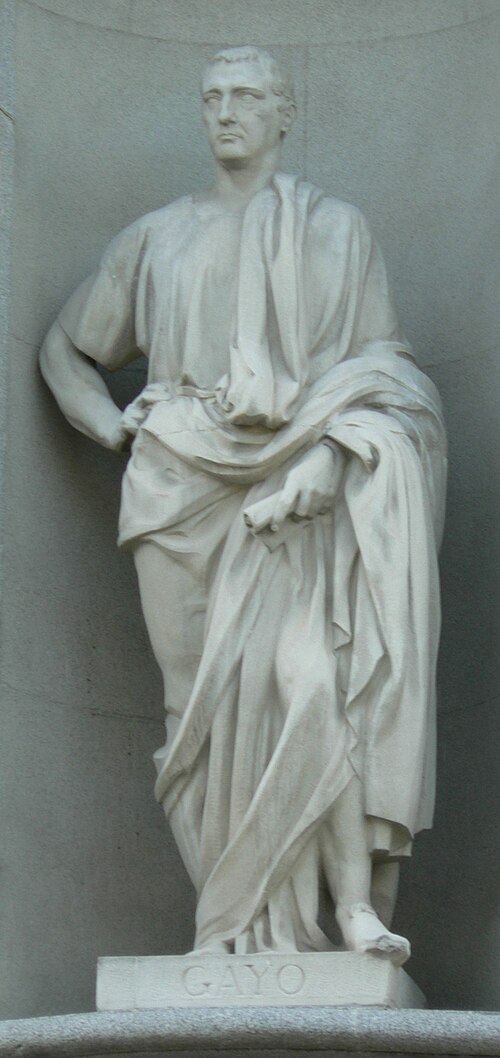
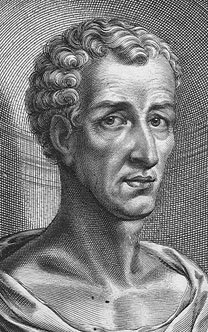
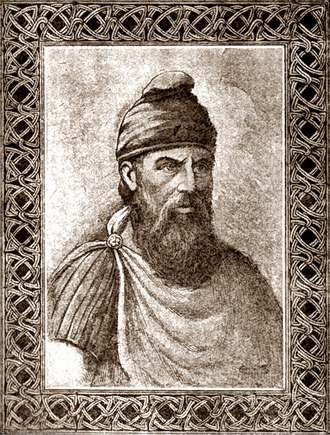
图:Basilio · CC BY-SA 3.0 · 维基共享资源
- 生卒
- 120 年代—180 年 (Wikidata 的生卒只记到十年,非确切年份)
- 国籍 / 所属
- 古罗马
- 身份
- 作家、法学家
- 代表作
- Institutes
- 原文名
- Gaius
- 领域
- 法学
- 简述
- Roman jurist (2nd century AD)
盖约(拉丁语:Gaius 130年—180年)知名古罗马法学家,所知生平有限,参与制定了《法学阶梯》,成为后来罗马法的重要来源之一。此外他还写有其他相关的法学著作,涉及罗马法的起源和法律评论。后世的《查士丁尼法典》大量借鉴了其著作。
正文摘自中文维基百科「盖约」(删去了参考文献、表格和图片),按 CC BY-SA 4.0 使用
英文维基百科的更多内容
中文维基百科这一条比较短,下面是英文维基百科同一条目的节选,原文为英文,未翻译。
Gaius (; fl. AD 130–180) was a Roman jurist. Little is known about his personal life, including his name (Gaius or Caius being merely his personal name or praenomen). It is also difficult to ascertain the span of his life, but it is assumed he lived from AD 130 to at least AD 179, as he wrote on legislation passed within that time.
From internal evidence in his works it may be gathered that he flourished in the reigns of the emperors Hadrian, Antoninus Pius, Marcus Aurelius and Commodus. His works were thus composed between the years 130 and 180. After his death, however, his writings were recognized as of great authority, and the emperor Theodosius II named him in the Law of Citations, along with Papinian, Ulpian, Modestinus and Paulus, as one of the five jurists whose opinions were to be followed by judicial officers in deciding cases. The works of these jurists accordingly became most important sources of Roman law.
Besides the Institutes, which are a complete exposition of the elements of Roman law, Gaius was the author of treatises on the Edicts of the Magistrates, on the Twelve Tables (Ad Legem XII Tabularum), on the important Lex Papia Poppaea, and on several other topics. His interest in the antiquities of Roman law is apparent, and for this reason his work is most valuable to the historian of early institutions. In the disputes between the two schools of Roman jurists he generally attached himself to that of the Sabinians, who were said to be followers of Ateius Capito, of whose life we have some account in the Annals of Tacitus, and to advocate a strict adherence as far as possible to ancient rules, and to resist innovation.……
The Institutes
The Institutes of Gaius, written about the year AD 161, was an introductory textbook of legal institutions divided into four books: the first treating of persons and the differences of the status they may occupy in the eye of the law; the second of things, and the modes in which rights over them may be acquired, including the law relating to wills; the third of intestate succession and of obligations; and the fourth of actions and their forms.
Another circumstance which renders the work of Gaius more interesting to the historical student than that of Justinian, is that Gaius lived at a time when actions were tried by the system of formulae, or formal directions given by the praetor before whom the case first came, to the judex to whom he referred it. Without a knowledge of the terms of these formulae it is impossible to solve the most interesting question in the history of Roman law, and show how the rigid rules peculiar to the ancient law of Rome were modified by what has been called the equitable jurisdiction of the praetors, and made applicable to new conditions, and brought into harmony with the notions and the needs of a more developed society. It is clear from evidence of Gaius that this result was obtained, not by an independent set of courts administering, as in England previous to the Judicature Acts, a system different from that of the ordinary courts, but by the manipulation of the formulae. In the time of Justinian the work was complete, and the formulary system had disappeared.
The work was lost to modern scholars, until, in 1816, a palimpsest was discovered by B. G. Niebuhr in the chapter library of Verona, in which some of the works of St. Jerome were written over some earlier writings, which proved to be the lost work of Gaius. The greater part of the palimpsest has, however, been deciphered with the help of August von Bethmann-Hollweg, and the text is now fairly complete. More recently, two sets of papyrus fragments have been found.……
Relief
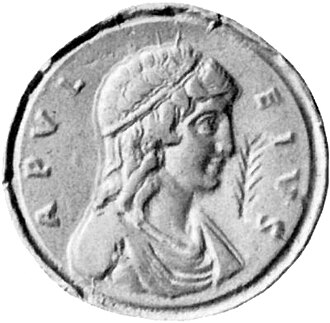
In the 1950s, the Polish-American sculptor Joseph Kiselewski was commissioned to create four marble reliefs located over the gallery doorway at the Chambers of the U.S. House of Representatives in Washington D.C. They are each 28" in diameter. The relief of Gaius is one of the four.
正文摘自英文维基百科(原文为英文,未翻译)「Gaius (jurist)」(节选,删去了参考文献、表格和图片),按 CC BY-SA 4.0 使用;在维基百科读全文 ›
所属政权
同时代、同地区的人物

同时代、同身份的人物(思想与学术)