史鉴
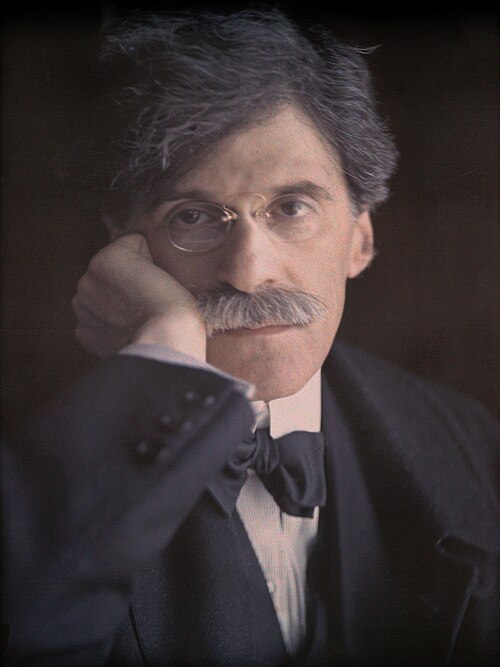
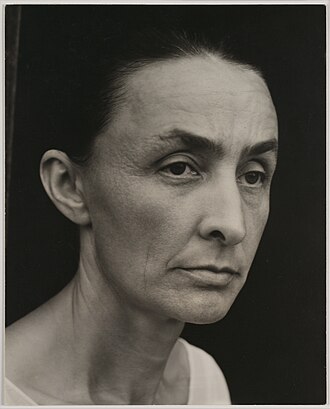
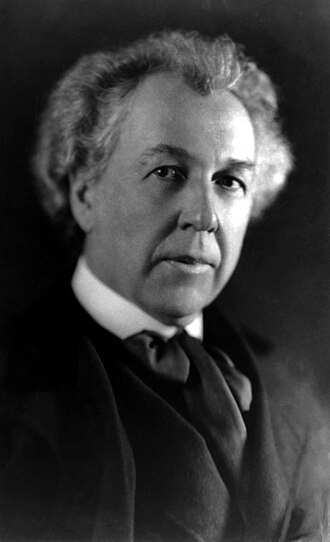
图:Alfred Stieglitz · Public domain · 维基共享资源
- 生卒
- 1864 年 1 月 1 日—1946 年 7 月 13 日
- 出生地
- 霍博肯
- 去世地
- 曼哈顿
- 国籍 / 所属
- 美国
- 身份
- 摄影师、展览策展人、出版人、photography critic、画廊主
- 父亲
- Edward Stieglitz
- 配偶
- 乔治亚·欧姬芙、Emmeline Stieglitz
- 子女
- Katherine Stieglitz
- 原文名
- Alfred Stieglitz
- 就读
- 柏林工业大学、纽约市立学院
- 所属组织
- 摄影分离派、The Linked Ring、White and Stieglitz
- 领域
- 摄影
- 流派 / 运动
- 摄影分离派、纯粹摄影
- 简述
- American photographer (1864–1946)
Alfred Stieglitz (; January 1, 1864 – July 13, 1946) was an American photographer and modern art promoter who was instrumental over his 50-year career in making photography an accepted art form. In addition to his photography, Stieglitz was known for the New York art galleries that he ran in the early part of the 20th century, where he introduced many avant-garde European artists to the U.S. He was married to painter Georgia O'Keeffe.
详细介绍
Early life and education
Stieglitz was born in Hoboken, New Jersey, the first son of German Jewish immigrants Edward Stieglitz (1833–1909) and Hedwig Ann Werner (1845–1922). His father was a lieutenant in the Union Army and worked as a wool merchant. He had five siblings, Flora (1865–1890), twins Julius (1867–1937) and Leopold (1867–1956), Agnes (1869–1952) and Selma (1871–1957). Alfred Stieglitz, seeing the close relationship of the twins, wished he had a soul mate of his own during his childhood.
Stieglitz attended Charlier Institute, a Christian school in New York, in 1871. The following year, his family began spending the summers at Lake George in the Adirondack Mountains, a tradition that continued into Stieglitz's adulthood.
So that he could qualify for admission to the City College of New York, Stieglitz was enrolled in a public school for his junior year of high school, but found the education inadequate.……
Early interest in photography
In 1884, his parents returned to America, but 20-year-old Stieglitz remained in Germany and collected books on photography and photographers in Europe and the U.S. He bought his first camera, an 8 × 10 plate film camera, and traveled through the Netherlands, Italy and Germany. He took photographs of landscapes and workers in the countryside. Photography, he later wrote, "fascinated me, first as a toy, then as a passion, then as an obsession."
Through his self-study, he saw photography as an art form. In 1887, he wrote his very first article, "A Word or Two about Amateur Photography in Germany", for the new magazine Amateur Photographer.
He won first place for his photograph The Last Joke, Bellagio from Amateur Photographer in 1887.……
Career
New York and the Camera Club (1891–1901)
Stieglitz considered himself an artist, but he refused to sell his photographs. His father purchased a small photography business for him so that he could earn a living in his chosen profession. Because he demanded high quality images and paid his employee high wages, the Photochrome Engraving Company rarely made a profit.
In late 1892, Stieglitz bought his first hand-held camera, a Folmer and Schwing 4×5 plate film camera. Stieglitz gained a reputation for his photography and his magazine articles about how photography is a form of art. In the spring of 1893, he became co-editor of The American Amateur Photographer. In order to avoid the appearance of bias in his opinions and because Photochrome was now printing the photogravures for the magazine, Stieglitz refused to draw a salary.
Key set
Stieglitz produced more than 2,500 mounted photographs over his career. After his death, O'Keeffe assembled a set of what she considered the best of his photographs that he had personally mounted. In some cases she included slightly different versions of the same image, and these series are invaluable for their insights about Stieglitz's aesthetic composition. In 1949, she donated the first part of what she called the "key set" of 1,317 Stieglitz photographs to the National Gallery of Art in Washington, DC. In 1980, she added to the set another 325 photographs taken by Stieglitz of her, including many nudes. Now numbering 1,642 photographs, it is the largest, most complete collection of Stieglitz's work. In 2002 the National Gallery published a two-volume, 1,012-page catalog that reproduced the complete key set along with detailed annotations about each photograph.
Legacy
Stieglitz explained in 1934:
"Personally I like my photography straight, unmanipulated, devoid of all tricks; a print not looking like anything but a photograph, living through its own inherent qualities and revealing its own spirit."
"Alfred Stieglitz (1864–1946) is perhaps the most important figure in the history of visual arts in America. That is certainly not to say that he was the greatest artist America has ever produced. Rather, through his many roles – as a photographer, as a discoverer and promoter of photographers and of artists in other media, and as a publisher, patron, and collector – he had a greater impact on American art than any other person has had."
"Alfred Stieglitz had the multifold abilities of a Renaissance man. A visionary of enormously wide perspective, his accomplishments were remarkable, his dedication awe-inspiring.……
正文摘自英文维基百科(原文为英文,未翻译)「Alfred Stieglitz」(节选,删去了参考文献、表格和图片),按 CC BY-SA 4.0 使用;在维基百科读全文 ›
亲属
同时代、同地区的人物






同时代、同身份的人物(艺术与音乐)