史鉴
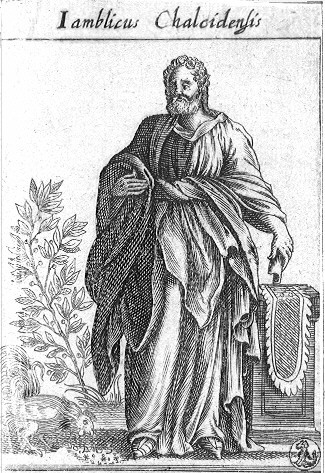
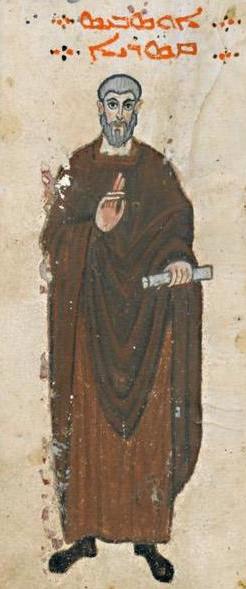
图:佚名 · Public domain · 维基共享资源
- 生卒
- 245 年—325 年
- 出生地
- 金纳斯林
- 国籍 / 所属
- 古罗马
- 身份
- 作家、哲学家
- 代表作
- Life of Pythagoras、Geography
- 受影响于
- 柏拉图、普罗提诺、波菲利
- 原文名
- 𐡉𐡌𐡋𐡊𐡅、Ἰάμβλιχος
- 领域
- 哲学、占星术、毕达哥拉斯主义、柏拉图主义、神通术、算命 等 7 项
- 流派 / 运动
- 新柏拉图主义
- 简述
- Syrian Neoplatonist philosopher (c. 245 – c. 325)
杨布里科斯(Iamblichus,约250年—约330年),有时被称为卡尔基斯的杨布里科斯(Iamblichus of Chalcis)。
杨布里科斯是新柏拉图主义哲学的重要人物,该学派叙利亚分支的创始人。他致力把新柏拉图主义创始人普罗提诺的哲学,和各种宗教的一切礼拜形式、神话、神祇结合起来,发展成一种神学体系。在新柏拉图主义者中,他是第一个用巫术和魔法来取代普罗提诺的纯精神和灵智的神秘主义。他认为在普罗提诺学说中“善”的同义语“太一”之外,还有一个超出人类认识范围的、无法形容的“一”。
除了新柏拉图主义的三种伦理德行(政治的、道德净化的、模范的)之外,他又加上了一种忏悔祈祷的德行。而居于这四种之上的,是适用于教士的、以及所有人类的统一德行。人们凭这种德行就可以愉快地与“一”结合。
正文摘自中文维基百科「杨布里科斯」(删去了参考文献、表格和图片),按 CC BY-SA 4.0 使用
英文维基百科的更多内容
中文维基百科这一条比较短,下面是英文维基百科同一条目的节选,原文为英文,未翻译。
Iamblichus ( eye-AM-blik-əs; Ancient Greek: Ἰάμβλιχος, romanized: Iámblichos; Aramaic: 𐡉𐡌𐡋𐡊𐡅, romanized: Yamlīkū; c. 245 – c. 325) was a Syrian Arab Neoplatonic philosopher who determined a direction later taken by Neoplatonism. Iamblichus was also the biographer (or hagiographer) of the Greek mystic, philosopher, and mathematician Pythagoras. In addition to his philosophical contributions, his Protrepticus is important for the study of the sophists because it preserved about ten pages of an otherwise unknown sophist, whose name is not mentioned and who is currently known as "Anonymus Iamblichi" ("Iamblichus's Anonymous").
Life
According to the Suda and Iamblichus's biographer, Eunapius, Iamblichus was born in Chalcis (later called Qinnašrīn) in Coele Syria, now in northwest Syria. Iamblichus was descended from the Emesene dynasty. He initially studied under Anatolius of Laodicea and later studied under Porphyry, a pupil of Plotinus (the founder of Neoplatonism). Iamblichus disagreed with Porphyry about theurgy, reportedly responding to Porphyry's criticism of the practice in On the Mysteries of the Egyptians, Chaldeans, and Assyrians.
He returned to Coele Syria around 304 to found a school in Apamea (near Antioch), a city known for its Neoplatonic philosophers. Iamblichus designed a curriculum for studying Plato and Aristotle, and wrote commentaries on the two which survive only in fragments. Pythagoras was his supreme authority, and he wrote the ten-volume Collection of Pythagorean Doctrines with extracts from several ancient philosophers;……
Philosophy
Iamblichus detailed Plotinus's Neoplatonic formal divisions, applied Pythagorean number symbolism more systematically, and (influenced by other Near East systems) interpreted Neoplatonic concepts mythically. Unlike Plotinus, who broke from Platonic tradition by positing a separate soul, Iamblichus re-affirmed the soul's embodiment in matter and believed that matter was as divine as the rest of the cosmos.
Cosmology and theology
Iamblichus placed the Monad at the head of his system, from which emanates the Nous (intellect, or demiurge) and the psyche. Plotinus represented the Nous as three stages: objective being, subjective life, and realized intellect. Iamblichus divided them into two spheres: intelligible (the objects of thought) and intellective (the domain of thought).
Iamblichus and Proclus may have introduced a third sphere between the two worlds, separating and uniting them.……
Reception
Iamblichus was praised by his followers, and contemporaries credited him with miraculous powers. The Roman emperor Julian, not content with Eunapius's modest eulogy that Iamblichus was inferior to Porphyry only in style, regarded him as second only to Plato and said that he would give all the gold in Lydia for one of his letters. During the 15th- and 16th-century revival of interest in his philosophy, Iamblichus's name was rarely mentioned without the epithet "divine" or "most divine".
Works
Only a fraction of Iamblichus's books have survived; knowledge of his system is preserved in fragments of writings preserved by Stobaeus and others: notes by his successors (especially Proclus), his five extant books and sections of his work on Pythagoreanism. In addition to these, Proclus attributed to him the On the Mysteries of the Egyptians, Chaldeans, and Assyrians, also known as The Theurgia or On the Egyptian Mysteries. Although stylistic and doctrinal differences exist between this book and Iamblichus's other works, it originated from his school at least. Iamblichus also completed a coherent polytheist theological system under the Egyptian pseudonym Abammon.
Editions and translations
On the Mysteries (De mysteriis), ed. Gustav Parthey, Teubner, 1857; ed. Edouard des Places, Collection Budé, 1989.
- The Life of Pythagoras
- English translation: Thomas Taylor, 1818
On the Pythagorean Way of Life (De vita pythagorica), ed. Theophil Kießling, Leipzig, 1816; ed.……
正文摘自英文维基百科(原文为英文,未翻译)「Iamblichus」(节选,删去了参考文献、表格和图片),按 CC BY-SA 4.0 使用;在维基百科读全文 ›