史鉴
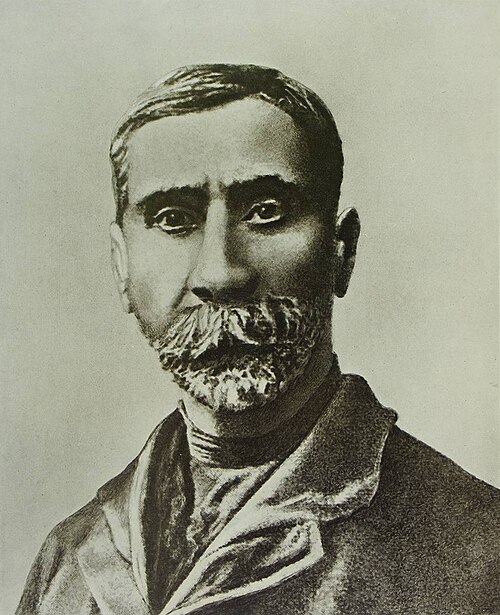
图:Eduard Klar, 1861-1922 first upload in de wikipedia on 13:22, 14. Sep 2005 by Ch · Public domain · 维基共享资源
- 生卒
- 1862 年 5 月 5 日—1918 年 4 月 7 日
- 出生地
- Mirzaani
- 去世地
- 第比利斯
- 国籍 / 所属
- 格鲁吉亚
- 身份
- 画家
- 原文名
- ნიკო ფიროსმანი
- 领域
- 绘画
- 流派 / 运动
- 素人艺术
- 死因
- 营养不良、肝脏衰竭
- 简述
- Georgian artist (1862-1918)
尼科·皮罗斯马尼(格鲁吉亚语:ნიკო ფიროსმანი,罗马化:Niko Pirosmani,1862年—1918年),全名尼科洛兹·皮罗斯马纳什维利(格鲁吉亚语:ნიკოლოზ ფიროსმანაშვილი,罗马化:Nikoloz Pirosmanashvili),帝俄时期格鲁吉亚画家。皮罗斯马尼的绘画风格被归类为原始主义,他偏好描绘自然和乡村生活,绘画主题涵盖动物、静物、人物、室内画、风景画、历史画和宗教主题。据说他一生画了近2,000幅作品,但至今仅存约220幅。
皮罗斯马尼一生的大部分时间都相对贫困,曾从事多种职业维生,包括绘制招牌或肖像。1918年4月,在流感大流行期间,他因营养不良和肝衰竭而去世,享年55岁,确切的死亡日期和埋葬地点仍不为人所知。他又被称为“流浪画家”或“孤独画家”。
皮罗斯马尼去世后,其作品才逐渐受到关注,从而赢得了国际声誉。1918年,他的画作参加了第一届格鲁吉亚画家大型展览。第一本关于皮罗斯马尼的专著于1926年以格鲁吉亚语、俄语和法语出版。
正文摘自中文维基百科「尼科·皮罗斯马尼」(删去了参考文献、表格和图片),按 CC BY-SA 4.0 使用
英文维基百科的更多内容
中文维基百科这一条比较短,下面是英文维基百科同一条目的节选,原文为英文,未翻译。
Nikoloz Pirosmanashvili (Georgian: ნიკოლოზ ფიროსმანაშვილი; 1862–1918) or Niko Pirosmani (Georgian: ნიკო ფიროსმანი), simply referred to as Nikala (Georgian: ნიკალა), was a Georgian painter who posthumously rose to prominence. Relatively poor for most of his life, he worked a variety of ordinary jobs. His rustic, everyday scenes are celebrated today for their depiction of the Georgia of Pirosmani's lifetime, and he has become one of the country's most beloved artistic figures.
Biography
Pirosmani was born in the Georgian village of Mirzaani to a peasant family in modern-day Kakheti province. His parents, Aslan Pirosmanashvili and Tekle Toklikishvili, were farmers, who owned a small vineyard, with a few cows and oxen. He was later orphaned and left in the care of his two elder sisters, Mariam and Pepe. He moved with them to Tbilisi in 1870. In 1872, while living in a little apartment not far from Tbilisi railway station, he worked as a servant to wealthy families and learned to read and write Russian and Georgian. In 1876, he returned to Mirzaani and worked as a herdsman.
Pirosmani gradually taught himself to paint. One of his specialties was painting directly onto black oilcloth. In 1882, with self-taught George Zaziashvili, he opened a painting workshop, where they made signboards. In 1890, he worked as a railroad conductor. In 1893, he co-founded a dairy farm in Tbilisi, which he left in 1901. Throughout his life, Pirosmani, who was poor, was willing to take ordinary jobs including housepainting and whitewashing buildings.……
Work
Pirosmani's paintings were influenced by the social conditions of his time and place. There are many works about merchants, shopkeepers, workmen, and noblemen groups. Pirosmani was fond of nature and rural life. He rarely employed city landscapes. He made many animal paintings. He was the only Georgian animalist. Pirosmani also was attracted by historical figures and themes such as Shota Rustaveli, King Tamar, Giorgi Saakadze, as well as ordinary Georgian people and their everyday lives.
Usually, Pirosmani painted on oilcloth. Unlike other artists, Niko didn't aim at a pure imitation of the nature and paid no attention to details. Some of his paintings are monochrome. His paintings demonstrate the author's sharp compositional consideration. Placements of the figures are frontal, while faces do not demonstrate a specific mood.
In the 1910s, he won the enthusiasm of the Russian poet Mikhail Le-Dantyu and the artist Kirill Zdanevich and his brother Ilia Zdanevich. Ilia Zhdanevich wrote a letter about Pirosmani to the newspaper Zakavkazskaia Rech, which it published on February 13, 1913. He undertook to publicise Pirosmani's painting in Moscow.……
Posthumous reputation
After his death, Pirosmani gained international reputation when he became admired as a 'naïve' painter in Paris and elsewhere. His paintings were represented at the first big exhibition of Georgian painters in 1918. From 1920 onwards, a number of articles were published about him. The first monograph on Pirosmani was published in 1926 in Georgian, Russian, and French.
Interest in Pirosmani increased in the 1950s.
In 1969, a film about him was made, titled Pirosmani. He inspired a portrait sketch by Pablo Picasso (1972). Pirosmani is also depicted on a Georgian lari bill (although this bill is rarely seen in circulation today, since 1 lari coins are far more common). A periodic newspaper titled Pirosmani is published in two languages in Istanbul. In 1983 Edward Kuznetsov produced the first catalogue raisonné on Pirosmani's work, entitled Niko Pirosmani, 1862-1918.
正文摘自英文维基百科(原文为英文,未翻译)「Niko Pirosmani」(节选,删去了参考文献、表格和图片),按 CC BY-SA 4.0 使用;在维基百科读全文 ›
受其影响的人物
同时代、同地区的人物



同时代、同身份的人物(艺术与音乐)