史鉴
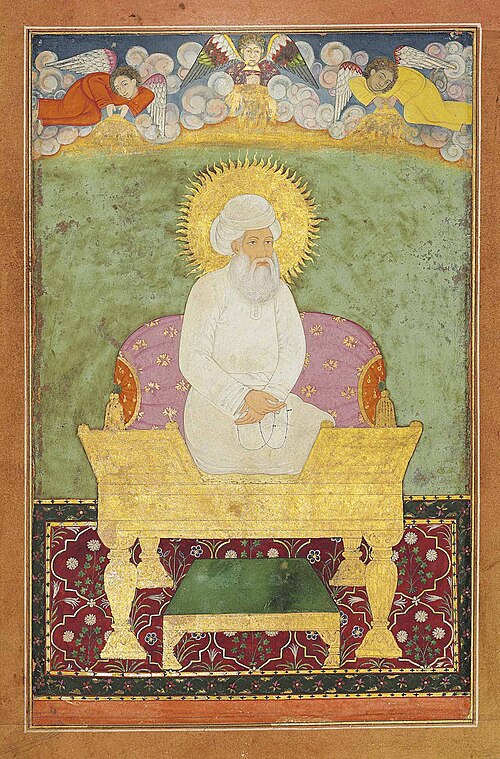
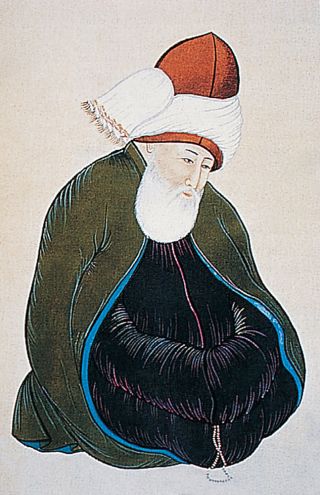
图:Christies.com · Public domain · 维基共享资源
- 生卒
- 1078 年—1166 年 2 月 14 日 (日期为儒略历)
- 出生地
- 吉兰省
- 去世地
- 巴格达
- 国籍 / 所属
- 阿拔斯王朝
- 身份
- 神学家、法基赫、法律学者
- 父亲
- Abu Saleh
- 子女
- Abdul Razzaq Gilani
- 代表作
- Al-Fath Ar-Rabbani、Al-Ghunya、Futuh al-Ghayb、Al-Fuyudat al-Rabbaniyya
- 原文名
- عبد القادر الجيلاني、عبدالقادر گیلانی
- 家族
- 巴努哈希姆
- 宗教
- 伊斯兰教、逊尼派
- 领域
- 苏非主义、伊斯兰教法学
- 流派 / 运动
- 卡迪林耶派
- 简述
- Sunni Muslim preacher, mystic and jurist (1078–1166)
阿卜杜勒·卡迪尔·吉拉尼(波斯语:عبدالقادر گیلانی 1078年3月17日—1166年2月21日)伊斯兰教逊尼派宣教士、演说家、神秘主义者和神学家,以建立伊斯兰教苏菲派教团卡迪里耶而知名。波斯人,生于今伊朗西吉兰,死于今伊拉克巴格达。
正文摘自中文维基百科「阿卜杜勒·卡迪尔·吉拉尼」(删去了参考文献、表格和图片),按 CC BY-SA 4.0 使用
英文维基百科的更多内容
中文维基百科这一条比较短,下面是英文维基百科同一条目的节选,原文为英文,未翻译。
Abd al-Qadir al-Gilani (c. 1077 or 1078 – c. 1166), was a Persian Hanbali jurist, preacher, and Sufi mystic leader based in Baghdad. He is regarded as the eponym and founding figure of the Qadiriyya, one of the oldest Sufi orders. He is also known by the honorific Muhyi al-Dīn (Reviver of the Faith), and in later Sufi tradition, by the titles including Gawth al-Azam (the Greatest Succour) denoting his higher status among the Sufi saints.
Gilani spent most of his adult life in Baghdad, where he studied Islamic jurisprudence and hadith, taught at a madrasa, and became known for his sermons on religious observances, ethical conduct and spiritual discipline. His reputation as a religious authority grew during the later part of his life, while accounts of his spiritual powers and elevated spiritual status became prominent in later hagiographical literature.
Early life
Gilani was born around c. 1077 or 1078 in Gilan, a region on the southwestern shore of the Caspian Sea in present-day Iran. Some sources identify his birthplace more specifically as Na'if near present-day Rezvanshahr. According to the 15th-century historian Ibn Taghribirdi (d. 1470), Gilani was born in Jil in Iraq, but this account is questioned by French historian Jacqueline Chabbi. Modern historians (including Lawrence) consider Gilan to be his birth place.……
Education
Gilani travelled to Baghdad in 1095, where he studied Islamic jurisprudence, Hadith and other religious sciences.……
Teaching and preaching
In 1127, Gilani returned to Baghdad and began preaching publicly. He joined the teaching staff of the school established by his teacher, al-Makhzoomi, and developed a substantial following. His teaching encompassed several branches of Islamic learning. He taught Hadith, Tafsir (exegesis of Quran), and jurisprudence, while also delivering sermons concerning spiritual discipline, repentance, ethical conduct and the virtues of the Quran.
Religious thought
Jurisprudence
Gilani adhered to the Hanbali school of Islamic jurisprudence. He is reported to have treated Shafi'i school of jurisprudence on an equal footing with the Hanbali school, issuing fatwas according to both schools of jurisprudence. Al-Nawawi, in his book Bustan al-'Arifin (transl. Garden of the Spiritual Masters), praised Gilani for this approach, noting that "we have never known anyone more dignified than Baghdad's Sheikh Muhyi al-Din 'Abd al-Qadir al-Gilani, the Sheikh of Shafi'is and Hanbalis in Baghdad."
Theology
In al-Ghunya li-Talibi Tariq al-Haqq, a work attributed to him, Gilani presented a conception of God that emphasized divine transcendence.……
Sufism
Qadiriyyah
Later accounts describe Gilani's relationship with his disciples through bay'ah an oath of allegiance or commitment to a spiritual guide (murshid). Within Sufi tradition, such an arrangement was understood as establishing a continuing relationship between teacher and disciple, through which the disciple received instruction in religious practice, ethical conduct and spiritual discipline.
Gilani is regarded as the eponym and traditional founding figure of the Qadiriyyah Sufi order.……
Hagiographical tradition
Gilani's reputation developed considerably after his death.……
Death
Gilani died in Baghdad in 1166 CE, corresponding to 561 AH. Traditional biographical sources differ on the precise date of his death, variously placing it on the night preceding 8 or 10 Rabi' al-thani. He was buried at night in the precincts of his schoolhouse near Bab al-Azaj in Baghdad.
His urs (death anniversary) is traditionally observed annually on 11 Rabi' al-Thani.
Shrine
Gilani's tomb in Baghdad became and important site of pilgrimage. During the reign of the Safavid Shah Ismail I, the shrine was destroyed in 1508.……
Works
A number of works are traditionally attributed to Gilani. The authenticity and authorship of individual works vary, and some texts associated with his name were transmitted or compiled after his lifetime.
Among the works attributed to him are:
Al-Ghunya li-Talibi Tariq al-Haqq (transl. Sufficient Provision for Seekers of the Path of Truth): a work dealing with Islamic belief, jurisprudence, ethics, and Sufi practice.
正文摘自英文维基百科(原文为英文,未翻译)「Abdul Qadir Gilani」(节选,删去了参考文献、表格和图片),按 CC BY-SA 4.0 使用;在维基百科读全文 ›
受其影响的人物

所属政权
同时代、同地区的人物



同时代、同身份的人物(思想与学术)