史鉴
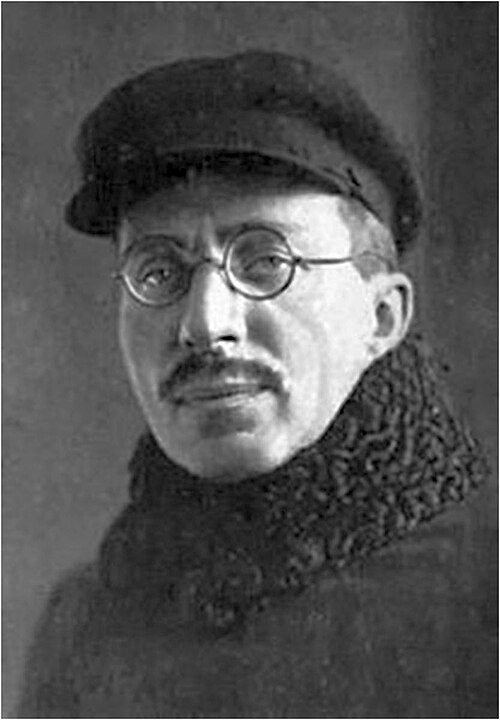
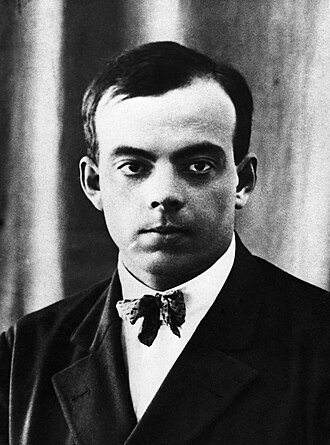
图:佚名 · Public domain · 维基共享资源
- 生卒
- 1888 年 3 月 13 日—1939 年 4 月 1 日
- 出生地
- 比洛皮利亚
- 去世地
- 戈利齐诺
- 国籍 / 所属
- 苏联、俄罗斯帝国
- 身份
- 作家、教师、教育家、教育学家、pedagogical writer
- 代表作
- 教育诗
- 就读
- Poltava National Pedagogical University
- 所属组织
- 苏联作家协会
- 死因
- 心力衰竭
- 简述
- Ukrainian and Soviet educator and writer
安东·谢苗诺维奇·马卡连柯(俄语:Анто́н Семёнович Мака́ренко,1888年3月13日—1939年4月1日)是一位苏联教育家,苏联教育学的创建者之一,描述了儿童集体教育和教育结合生产劳动的理论和方法。
1888年3月13日,马卡连柯出生在俄罗斯帝国哈尔科夫省别洛波利耶的一个铁路技工家庭。1917年毕业于波尔塔瓦师范学院。十月革命后曾任小学校长。十月革命以后的俄国内战,造成大批孤儿流浪街头,造成严重的社会问题。马卡连柯投身流浪儿童及少年犯的教育和改造工作,成立了自给自足的高尔基工学团,后来加入斯大林主办的捷尔任斯基公社试图改造少年罪犯。与伪科学家李森科一样,马卡连柯相信人性是可以改变的,他的教育方法强调学生的集体生活,为团体利益服务,反复向学生重复口号,十分接近于意识形态的灌输,他的教育理念后来被强加在东欧社会主义国家,对当地有深远影响。他先后创立了波尔塔瓦附近的未成年罪犯劳动营和哈尔科夫市郊的捷尔任斯基儿童公社,并亲任领导。他主张通过集体,结合生产劳动来对儿童进行教育,使之成为有政治觉悟以及高度的责任感和荣誉感的、遵守纪律的社会主义社会成员。
马卡连柯主要的作品有《教育诗》,描写高尔基工学团的小说,在苏联相当流行。1939年4月1日,马卡连柯在莫斯科去世。他根据自己长期从事教育工作的经验和感受,写出了许多与儿童教育有关的文艺作品,包括《1930年进行曲》(1932年)、《教育的诗篇》(1933—1935年)、《塔上旗》(1938年)等,此外还著有《父母必读》(1937年)和《儿童教育讲演集》。
正文摘自中文维基百科「安东·马卡连柯」(删去了参考文献、表格和图片),按 CC BY-SA 4.0 使用
英文维基百科的更多内容
中文维基百科这一条比较短,下面是英文维基百科同一条目的节选,原文为英文,未翻译。
Anton Semyonovich Makarenko (Russian: Анто́н Семёнович Мака́ренко, Ukrainian: Антон Семенович Макаренко, romanized: Anton Semenovych Makarenko; 13 March [O.S. 1 March] 1888 – 1 April 1939), was a Soviet educator, social worker and writer. He became the most influential educational theorist in the Soviet Union; along with promoting principles in educational theory and practice. As one of the founders of Soviet pedagogy, he elaborated the theory and methodology of upbringing in self-governing child collectives and introduced the concept of productive labor into the educational system. Makarenko's books have appeared in many countries.
In the aftermath of the Revolution of 1917, he established self-supporting orphanages for street children — including juvenile delinquents — left orphaned by the Russian Civil War of 1917-1923. These establishments included the Gorky Colony and later the Dzerzhinsky labor commune (where the FED camera was produced) in Kharkiv. Makarenko wrote several books, of which The Pedagogical Poem (Педагогическая поэма; published in English as The Road to Life), a fictionalized story of the Gorky Colony, became especially popular in the Soviet Union. A 1955 Soviet movie with English title Road to Life was based on this book. Makarenko died under unclear circumstances in 1939.
In 1988 UNESCO ranked Makarenko as one of four educators (along with John Dewey, Georg Kerschensteiner, and Maria Montessori) who determined the world's pedagogical thinking of the 20th century.
Biography
Early life and education
Anton Semyonovich Makarenko was born in Belopolye, Sumsky Uyezd, Kharkov Governorate, Russian Empire, to Semyon Grigoryevich Makarenko (Semen Hryhorovych Makarenko), who worked at a railway depot as a painter, and Tatyana Mikhaylovna (Tetiana Mykhailivna, née Dergachova), daughter of a soldier from Mykolaiv.
In September 1905, having graduated from a four-year college in Kremenchuk, Makarenko took a one-year teachers' course and at the age of seventeen, began teaching at a railway college at Dolinskaya station near Kherson where he worked from September 1911 till October 1914. In August 1912, Makarenko entered the Teachers' Institute in Poltava and in July 1917 graduated with a gold medal.……
Career
Gorky Colony
In 1920 he was invited to head the Poltava Colony for Young Offenders.……
Legacy
Although there was some opposition by the authorities at the early stages of Makarenko's "experiments", the Soviet establishment eventually came to hail his colonies as a grand success in communist education and rehabilitation. Among his key ideas were "as much exigence towards the person as possible and as much respect for him as possible", the use of positive peer pressure on the individual by the collective, and institutionalized self-government and self-management of that collective.
Criticism and response
Criticism of Makarenko's ideas were raised by Soviet educators and Russian dissidents both before and after the fall of Soviet communism. The humanist educator Vasyl Sukhomlynsky ventured in an unpublished manuscript, "Our Good Family" (1967), against "Makarenko's false statement that the main objective of Soviet moral and character education is found in the collective." Vladimir Sirotin (Kharkiv 1966 - Moscow 2016) described Makarenko as "the bard of punitive pedagogy" and as an ideologue of "command pedagogy", a system attempting to suppress the personality and being contrary to democratic freedoms and human rights, including the natural rights of child and parents.……
Selected bibliography
Major (Мажор, 1932; play)
March of the 30th Year (Марш 30-го года, 1932, novella)
FD—1 (novella, subtitled "A sketch"; written in 1932, published posthumously)
The Pedagogical Poem (Педагогическая поэма, 1925–1935, three-part novel)
The Book for Parents (Книга для родителей, 1937; non-fiction)
Honour (Честь, 1937—1938; novella)
Flags on the Battlements (Флаги на башнях, 1938)
正文摘自英文维基百科(原文为英文,未翻译)「Anton Makarenko」(节选,删去了参考文献、表格和图片),按 CC BY-SA 4.0 使用;在维基百科读全文 ›
所属政权

同时代、同地区的人物




同时代、同身份的人物(思想与学术)