史鉴
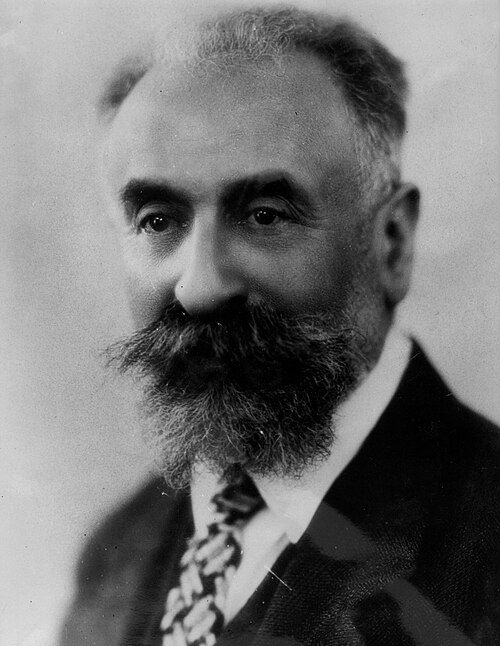
图:Société des Amis du Centre d'Études Sociologiques (SACES) · CC0 · 维基共享资源
- 生卒
- 1872 年 5 月 10 日—1950 年 2 月 10 日
- 出生地
- 埃皮纳勒
- 去世地
- 巴黎
- 国籍 / 所属
- 法国
- 身份
- 政治人物、教授、讲师、民族学家、社会学家、人类学家、哲学家、宗教学家
- 职位
- 总统
- 受影响于
- 埃米尔·涂尔干
- 原文名
- Marcel Mauss
- 就读
- 波尔多大学
- 任职机构
- 法兰西公学院、高等研究应用学院
- 领域
- 民族志、宗教社会学
- 简述
- French sociologist and anthropologist (1872-1950)
马塞尔·莫斯(法语:Marcel Mauss,法语发音:[maʁsɛl mos];1872年5月10日—1950年2月10日),法国社会学家,他是社会学家爱米尔·涂尔干的外甥。莫斯的学术作品跨越了社会学和人类学的边界。他在相关领域的影响一直延续至今。莫斯曾研究了世界各地不同文化中有关魔术、牺牲和礼物交换的现象。他于1925年发表在《社会学年鉴》上的《礼物》可谓是社会科学史上最重要的文本。
莫斯以一人一身,凝聚并体现了由圣西门和孔德开启,而后由涂尔干加以系统化的整个法国社会学传统,这一传统与(韦伯和齐美尔的)德国社会学传统,以及(芝加哥学派、杜威和帕森斯的)美国社会学传统鼎足而三。
正文摘自中文维基百科「马塞尔·莫斯」(删去了参考文献、表格和图片),按 CC BY-SA 4.0 使用
英文维基百科的更多内容
中文维基百科这一条比较短,下面是英文维基百科同一条目的节选,原文为英文,未翻译。
Marcel Israël Mauss (French: [mos]; 10 May 1872 – 10 February 1950) was a French sociologist and anthropologist known as the "father of French ethnology". The nephew of Émile Durkheim, Mauss, in his academic work, crossed the boundaries between sociology and anthropology. Today, he is perhaps better recognised for his influence on the latter discipline, particularly with respect to his analyses of topics such as magic, sacrifice and gift exchange in different cultures around the world. Mauss had a significant influence upon Claude Lévi-Strauss, the founder of structural anthropology. His most famous work is The Gift (1925).
Biography
Family and education
Mauss was born in Épinal, Vosges, to a Jewish family, his father a merchant and his mother an embroidery shop owner. Unlike his younger brother, Mauss did not join the family business and instead he joined the socialist and cooperative movement in the Vosges. Following the death of his grandfather, the Mauss and Durkheim families grew close and at this time Mauss began to feel concerned about his education and took initiatives in order to learn. Mauss obtained a religious education and was bar mitzvahed, yet by the age of eighteen he stopped practicing his religion.
Academic career
His first publication in 1896 marked the beginning of a prolific career that would produce several landmarks in sociological literature.……
Theoretical views
Marcel Mauss and Émile Durkheim
Marcel Mauss's studies under his uncle Durkheim at Bordeaux led to their doing work together on Primitive Classification which was published in L'Année Sociologique. In this work, Mauss and Durkheim attempted to create a French version of the sociology of knowledge, illustrating the various paths of human thought taken by different cultures, in particular how space and time are connected back to societal patterns. They focused their study on tribal societies in order to achieve depth.
While Mauss called himself a Durkheimian, he interpreted the school of Durkheim as his own.……
The Gift
Mauss has been credited for his analytic framework which has been characterized as more supple, more appropriate for the application of empirical studies, and more fruitful than his earlier studies with Durkheim.……
Legacy
While Mauss is known for several of his own works – most notably his masterpiece Essai sur le Don ('The Gift') – much of his best work was done in collaboration with members of the Année Sociologique, including Durkheim (Primitive Classification), Henri Hubert (Outline of a General Theory of Magic and Essay on the Nature and Function of Sacrifice), Paul Fauconnet (Sociology) and others.
Mauss influenced French anthropology and social science. He did not have a great number of students like many other Sociologists did; however, he taught ethnographic method to first generation French anthropology students.……
Critiques
Mauss's views on the nature of gift exchange have had critics. Main critiques against Mauss stem from beliefs that Mauss's essay is analyzing all primitive and archaic societies, but rather his essay is used to apply to one society and relationships within. French anthropologist Alain Testart (1998), for example, argues that there are "free" gifts, such as passers-by giving money to beggars, e.g. in a large Western city. Donor and receiver do not know each other and are unlikely ever to meet again. In this context, the donation certainly creates no obligation on the side of the beggar to reciprocate;……
Selected works
Essai sur la nature et la fonction du sacrifice, (with Henri Hubert) 1898.
La sociologie: objet et méthode, (with Paul Fauconnet) 1901.
De quelques formes primitives de classification, (with Durkheim) 1902.
Esquisse d'une théorie générale de la magie, (with Henri Hubert) 1902.
Essai sur le don, 1925.
Les techniques du corps, 1934. Marcel Mauss, "Les techniques du corps" (1934) Journal de Psychologie 32 (3–4). Reprinted in Mauss, Sociologie et anthropologie, 1936, Paris: PUF.
Sociologie et anthropologie, (selected writings) 1950.
Manuel d'ethnographie. 1967. Editions Payot & Rivages. (Manual of Ethnography 2009. Translated by N. J. Allen. Berghan Books.)
Honors and awards
Officer of the Order of Legion of Honour
Croix de guerre 1914-1918 (France)
正文摘自英文维基百科(原文为英文,未翻译)「Marcel Mauss」(节选,删去了参考文献、表格和图片),按 CC BY-SA 4.0 使用;在维基百科读全文 ›
受其影响的人物
同时代、同地区的人物





同时代、同身份的人物(帝王与政治)