史鉴
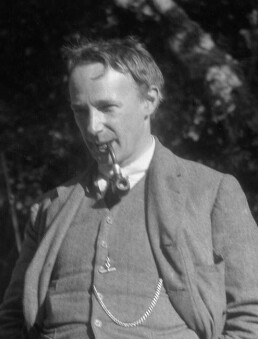
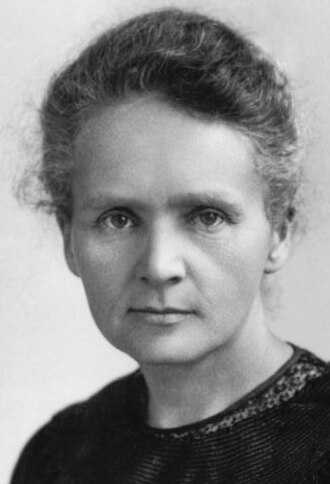
图:Ray Strachey, born Rachel Pearsall Conn Costelloe (4 June 1887 London – 16 July · Public domain · 维基共享资源
- 生卒
- 1873 年 11 月 4 日—1958 年 10 月 24 日
- 出生地
- 上诺伍德
- 去世地
- 剑桥
- 国籍 / 所属
- 英国
- 身份
- 大学教师、哲学家
- 代表作
- 伦理学原理、Ethics
- 原文名
- George Edward Moore
- 宗教
- 无神论
- 就读
- 剑桥大学三一学院、德威学校
- 任职机构
- 剑桥大学
- 所属组织
- 英国科学院
- 领域
- 哲学
- 简述
- English philosopher (1873–1958)
乔治·爱德华·摩尔,OM(George Edward Moore或G. E. Moore,1873年11月4日—1958年10月24日),英国哲学家,与伯特兰·罗素一同被认为是分析哲学的主要创始人,主要贡献为后设伦理学,知名作品有《伦理学原理》。
摩尔认为和伦理相关的概念不可能用自然概念(例如:生存,功利,等)来解释。
详细介绍
生平
摩尔于1873年11月4日出生于大伦敦克罗伊登的上诺伍德,是丹尼尔·摩尔博士和亨丽埃塔·斯特奇的七个孩子中的一个。他的祖父是作家乔治·摩尔博士。他的大哥是托马斯·斯特奇·摩尔,诗人、作家和雕刻家。
摩尔中学毕业于德威士学院,1892年在剑桥三一学院学习古典学和人文科学,曾是剑桥使徒中的一员,毕业后亦和布卢姆茨贝里派有交往。1898年成为三一学院研究员,1925年至1939年担任剑桥大学精神哲学和逻辑主席。
摩尔以捍卫道德非自然主义、强调哲学方法的常识以及摩尔悖论而闻名于世。他受到其他哲学家以及布卢姆茨贝里派的钦佩和影响,但与他的同事罗素不同,他在学术哲学之外影响力甚微。摩尔的文章以其清晰、谨慎的写作风格以及他对哲学问题的有条理和耐心的态度而闻名。他批评现代哲学缺乏进步,他认为这与文艺复兴以来自然科学的戏剧性进步形成鲜明对比。穆尔最著名的作品是他的《伦理学原理》一书和他的随笔《理想主义的反驳》、《常识的辩护》和《外部世界的证明》。
1918-1919年,他担任亚里士多德学会主席。
摩尔于1958年10月24日去世,1958年10月28日在剑桥火葬场被火化,骨灰葬在剑桥升天堂区墓地,他的妻子多萝西·伊利(Dorothy Ely,1892年-1977年)也葬在那里。他们有两个儿子,诗人尼古拉斯·摩尔和作曲家蒂莫西·摩尔(Timothy Moore)。
正文摘自中文维基百科「乔治·爱德华·摩尔」(删去了参考文献、表格和图片),按 CC BY-SA 4.0 使用
英文维基百科的更多内容
中文维基百科这一条比较短,下面是英文维基百科同一条目的节选,原文为英文,未翻译。
George Edward Moore (4 November 1873 – 24 October 1958) was an English philosopher who, alongside Bertrand Russell, Ludwig Wittgenstein and earlier Gottlob Frege, was an initiator of analytic philosophy. He and Russell began de-emphasising the idealism which was then prevalent among British philosophers and became known for advocating common-sense concepts and contributing to ethics, epistemology and metaphysics. He was said to have had an "exceptional personality and moral character". Ray Monk dubbed him "the most revered philosopher of his era".
As Professor of Philosophy at the University of Cambridge, he influenced but abstained from the Bloomsbury Group, an informal set of intellectuals. He edited the journal Mind. He was a member of the Cambridge Apostles from 1894 to 1901, a fellow of the British Academy from 1918, and was chairman of the Cambridge University Moral Sciences Club in 1912–1944. A humanist, he presided over the British Ethical Union (now Humanists UK) in 1935–1936.
Biography
Early life and education
George Edward Moore was born in Upper Norwood, in south-east London, on 4 November 1873, the middle child of seven of Daniel Moore, a medical doctor, and Henrietta Sturge. His grandfather was the physician, writer and British Israelite George Moore. His eldest brother was Thomas Sturge Moore, a poet, writer and engraver.
He was educated at Dulwich College and, in 1892, began attending Trinity College, Cambridge, to learn classics and moral sciences. His tripos results were a double first.
Career
He became a Fellow of Trinity in 1898 and was later University of Cambridge Professor of Mental Philosophy and Logic from 1925 to 1939.
Moore is known best now for defending ethical non-naturalism, his emphasis on common sense for philosophical method, and the paradox that bears his name. He was admired by and influenced by other philosophers and some of the Bloomsbury Group.……
Philosophy
Ethics
His influential work Principia Ethica is one of the main inspirations of the reaction against ethical naturalism (see ethical non-naturalism) and is partly responsible for the twentieth-century concern with metaethics.
Naturalistic fallacy
Moore asserted that philosophical arguments can suffer from a confusion between the use of a term in a particular argument and the definition of that term (in all arguments). He named this confusion the naturalistic fallacy. For example, an ethical argument may claim that if an item has certain properties, then that item is 'good.' A hedonist may argue that 'pleasant' items are 'good' items. Other theorists may argue that 'complex' things are 'good' things. Moore contends that, even if such arguments are correct, they do not provide definitions for the term 'good'. The property of 'goodness' cannot be defined. It can only be shown and grasped. Any attempt to define it (X is good if it has property Y) will simply shift the problem (Why is Y-ness good in the first place?).
Open-question argument
Moore's argument for the indefinability of 'good' (and thus for the fallaciousness in the "naturalistic fallacy") is often termed the open-question argument;……
Works
G. E. Moore, "The Nature of Judgment" (1899)
G. E. Moore, Principia Ethica (1903)
G. E. Moore, "Review of Franz Brentano's The Origin of the Knowledge of Right and Wrong" (1903)
G. E. Moore, "The Refutation of Idealism" (1903)
G. E. Moore, "The Nature and Reality of the Objects of Perception" (1905–6)
G. E. Moore, Ethics (1912)
G. E. Moore, "Some Judgments of Perception" (1918)
G. E. Moore, Philosophical Studies (1922) [papers published 1903–21]
- G. E. Moore, "The Conception of Intrinsic Value"
- G. E. Moore, "The Nature of Moral Philosophy"
G. E. Moore, "Are the Characteristics of Things Universal or Particular?" (1923)
G. E. Moore, "A Defence of Common Sense" (1925)
G. E. Moore and F. P. Ramsey, Facts and Proposition (Symposium) (1927)
W. Kneale and G. E. Moore, "Symposium: Is Existence a Predicate?" (1936) JSTOR 4106413
G. E. Moore, "An Autobiography," and "A reply to my critics," in: The Philosophy Of G. E. Moore. ed. Schilpp, Paul Arthur (1942).
正文摘自英文维基百科(原文为英文,未翻译)「G. E. Moore」(节选,删去了参考文献、表格和图片),按 CC BY-SA 4.0 使用;在维基百科读全文 ›
受其影响的人物
同时代、同地区的人物





同时代、同身份的人物(思想与学术)