史鉴
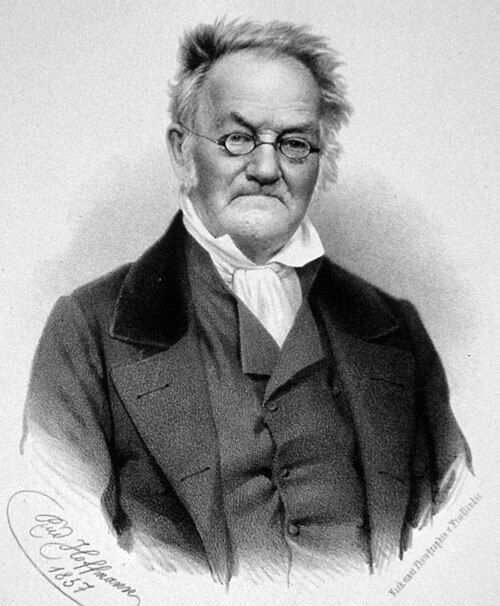
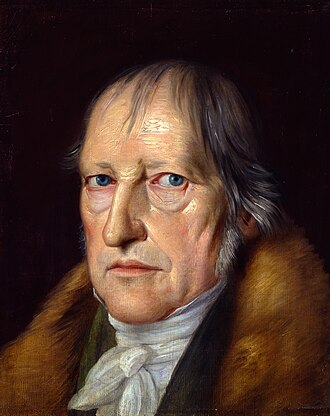
图:Rudolph Hoffmann · Public domain · 维基共享资源
- 生卒
- 1779 年 8 月 7 日—1859 年 9 月 28 日
- 出生地
- 奎德林堡
- 去世地
- 柏林
- 国籍 / 所属
- 普鲁士王国
- 身份
- 地理学家、大学教师、植物学家、探险家
- 原文名
- Carl Ritter
- 就读
- 哈雷-维滕贝格大学、柏林洪堡大学
- 任职机构
- 柏林洪堡大学
- 所属组织
- 俄罗斯科学院、英国皇家学会、荷兰皇家学会、匈牙利科学院、奥地利科学院、普鲁士科学院 等 12 项
- 领域
- 地理学
- 简述
- 德国地理学家
卡尔·李特尔(德语:Carl Ritter,1779年8月7日—1859年9月28日),为德国地理学家,出生在奎德林堡,后世称之为人文地理学之父。
1796年,他入读了哈雷大学,读自然科学和文史等课程。1819年,他担任法兰克福大学历史学教授,1820年担任柏林洪堡大学首任地理学教授,直到1859年9月28日他逝世。
他主张在地理学中贯彻因果联系观点,运用经验法(实地观察)和比较法,对区域地理的研究强调各种地理现象(有机的、无机的、人文的、非人文的)的因果关系,从而揭示区域个性;在具体研究工作中,偏重人文现象,把自然作为人文的基本原因,认为自然决定人类历史的发展;声称每一大陆各有其特定的形状与位置,对人类发展各自起着特定作用,用自然解释人文。
虽然他也注意自然现象及它们之间互相存在的关系,但最终他关注的是人与自然界之间的关系。他认为地理学就是研究“空间分布的各种架构原理”的科学。
李特尔著名的学术界名著叫《地学通论》,又名《地球科学与自然和人类历史》。
正文摘自中文维基百科「卡尔·李特尔」(删去了参考文献、表格和图片),按 CC BY-SA 4.0 使用
英文维基百科的更多内容
中文维基百科这一条比较短,下面是英文维基百科同一条目的节选,原文为英文,未翻译。
Carl Ritter (August 7, 1779 – September 28, 1859) was a German geographer. Along with Alexander von Humboldt, he is considered one of the founders of modern geography, as they established it as an independent scientific discipline. From 1825 until his death, he occupied the first chair in geography at the University of Berlin.
Biography
Carl Ritter was born in Quedlinburg, one of the six children of a doctor, F. W. Ritter.
Ritter's father died when he was two. At the age of five, he was enrolled in the Schnepfenthal Salzmann School, a school focused on the study of nature (apparently influenced by Jean-Jacques Rousseau's writings on children's education). This experience would influence Ritter throughout his life, as he retained an interest in new educational modes, including those of Johann Heinrich Pestalozzi. Indeed, much of Ritter's writing was based on Pestalozzi's three stages in teaching: the acquisition of the material, the general comparison of material, and the establishment of a general system.
After completion of his schooling, Ritter was introduced to Bethmann Hollweg, a banker in Frankfurt. It was arranged that Ritter should become tutor to Hollweg's children, but that in the meantime he should attend the University of Halle at his patron's expense. His duties as tutor began in 1798 and continued for fifteen years. The years 1814–1819, which he spent at Göttingen in order still to watch over his pupils, were those in which he began to exclusively study geography. It was there that he courted and married Lilli Kramer, from Duderstadt and that he wrote and published the first two volumes of his Erdkunde.
In 1819, he became professor of history at Frankfurt, and in 1820, he received a teaching appointment in history at the University of Berlin. Ritter received his doctorate there in 1821, and was appointed professor extraordinarius in 1825. He also lectured at a nearby military college. He was particularly interested in the exploration of Africa and held constant contacts with British scholars and scientific circles like the Royal Geographical Society.……
Works
The Great Work
Carl Ritter's 19 part (21 volume) masterwork, "Erdkunde im Verhältnis zur Natur und zur Geschichte des Menschen oder allgemeine, vergleichende Geographie, als sichere Grundlage des Studiums und Unterrichts in physikalischen und historischen Wissenschaften", is one of the most extensive works of geographical literature written by a single author. The first two volumes were published by G. Reimer in 1817 and 1818 respectively, after which the third would not be published until 1822. During this time, Ritter wrote and published "Vorhalle der europäischen Völkergeschichte vor Herodotus um den Kaukasus und um die Gestade des Pontus, eine Abhandlung zur Altertumskunde", which marked Ritter's interest in India. It was also to serve as a transition to a third volume of "Erdkunde" that appeared first in 1835.
In total, Ritter intended to write an all-encompassing geography spanning the entire globe. His work was to consist of three parts:
- 1. The solid form or the continents
- 2. The fluid form or the elements
- 3. The bodies of the three realms of nature
Part one was to undertake the continents of the globe beginning with the "Old World" and work to the "New World". The dynamic of old and new proposed here does not correspond to contemporary notions, rather refers to the evolution of human activity on the planet as Ritter understood it. Consequently, as noted by Hanno Beck, "The most extreme parts of the world, in Ritter's opinion, in the North, the South and the East are in practical terms as much a part of the New World as America".……
正文摘自英文维基百科(原文为英文,未翻译)「Carl Ritter」(节选,删去了参考文献、表格和图片),按 CC BY-SA 4.0 使用;在维基百科读全文 ›
所属政权
同时代、同地区的人物




同时代、同身份的人物(思想与学术)