史鉴
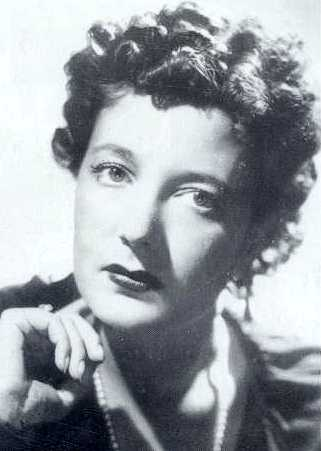
图:佚名 · Public domain · 维基共享资源
详细介绍
生平
1945年4月27日,她与墨索里尼一起从意大利北部向瑞士逃亡时,被从事意大利抵抗运动的意大利共产党游击队俘虏,和墨索里尼一起被处决,卒年33岁。
正文摘自中文维基百科「克拉拉·贝塔西」(删去了参考文献、表格和图片),按 CC BY-SA 4.0 使用
英文维基百科的更多内容
中文维基百科这一条比较短,下面是英文维基百科同一条目的节选,原文为英文,未翻译。
Clara "Claretta" Petacci (Italian: [klaˈretta peˈtattʃi]; 28 February 1912 – 28 April 1945) was a mistress of the Italian dictator Benito Mussolini. She was killed by Italian partisans during Mussolini's summary execution.
Early life
Daughter of Persichetti (1888–1962) and the physician Francesco Saverio Petacci (1883–1970), Clara Petacci was born into a privileged and religious family in Rome in 1912. Her father (a physician of the Holy Apostolic Palaces who for several years also had his own private clinic, "La Clinica del Sole") became a supporter of fascism. A child when Mussolini rose to power in the 1920s, Clara Petacci idolised him from an early age. After Violet Gibson attempted to assassinate the dictator in April 1926, the 14-year-old Petacci wrote to him commenting "O, Duce, why was I not with you? ... Could I not have strangled that murderous woman?" Clara studied music with mixed results and was a pupil of the violinist Corrado Archibugi, a friend of her parents.
Relationship with Mussolini
Petacci had a long-standing relationship with Mussolini while he was married to Rachele Mussolini. Petacci was 28 years younger than Mussolini. They met for the first time in April 1932 when Mussolini, driving with an aide to Ostia, overtook a car occupied by the twenty-year-old Petacci and family members. She called out, "Duce! Duce!" and when he stopped, told him that she had been writing to him since her early teens.
In 1934, Petacci married Italian Air Force officer Riccardo Federici, but she parted ways with her husband when he was sent to Tokyo as Air Attaché in 1936. Petacci then became the mistress of the fifty-three-year-old Mussolini, visiting his large headquarters in the Palazzo Venezia, where a private apartment was reserved for her. Her infatuation with Mussolini appears to have been genuine and permanent. The affair became widely known and members of the Petacci family, notably her brother, Marcello, were able to benefit financially and professionally by influence-selling.
Clara was passionate about painting. She took on the role of Mussolini's secret companion, sharing his darkest moments and his final fate, apparently without ever demanding that he leave his wife Rachele for her.
Part of Petacci and Mussolini's correspondence has not been released on the grounds of privacy.
Social rise of the Petacci family
Toward the end of 1939, the Petacci family moved from their middle-class residence on Via Lazzaro Spallanzani (adjacent to Villa Torlonia) to the splendid "Villa Camilluccia" (located on the slopes of Monte Mario, then on the outskirts of the city), designed by the architects Vincenzo Monaco and Amedeo Luccichenti.……
Death
Clara Petacci was arrested on 25 July 1943, at the fall of the Fascist regime. During this period, she maintained an intense correspondence with Mussolini and, despite the Duce's contrary opinion, kept all the letters. In one of these she asked that, at the Verona trial, Galeazzo Ciano be sentenced to death as a "traitor, cowardly, filthy, self-interested and false", thus expressing an extremely harsh position (also applicable to Edda Mussolini, "his worthy accomplice"), which was defined by the historian Emilio Gentile as showing "Nazi rigor".
On 27 April 1945, Mussolini and Petacci were captured at Dongo by a unit of the 52nd Garibaldi Brigade of partisans while travelling with a Luftwaffe convoy retreating to Germany. The German column included Italian Social Republic members.
On 28 April, she and Mussolini were taken to Mezzegra and executed. One source alleges Petacci's execution was not planned and that she died by throwing herself on Mussolini in a vain attempt to protect him from the bullets. On the following day, the bodies of Mussolini and Petacci were taken to Piazzale Loreto in Milan and hung upside down by their feet from the canopy of the Esso petrol station in order to protect the bodies from further desecration by the crowd.
Epistolary correspondence
Only part of the correspondence exchanged over more than fifteen years between Mussolini and Petacci has been published. It is preserved at the State Archives of Rome and has been the subject of a legal dispute.
Works
Il mio diario, Cernusco sul Naviglio, Editori Associati, 1946.
正文摘自英文维基百科(原文为英文,未翻译)「Clara Petacci」(节选,删去了参考文献、表格和图片),按 CC BY-SA 4.0 使用;在维基百科读全文 ›
所属政权

同时代、同地区的人物




同时代、同身份的人物(帝王与政治)