史鉴
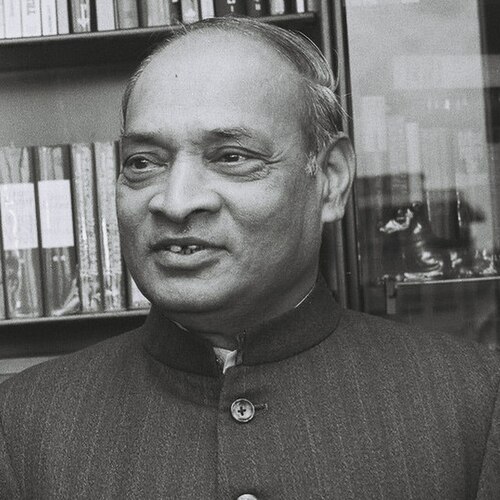
图:Christian Lambiotte - European Commission · CC BY 4.0 · 维基共享资源
- 生卒
- 1921 年 6 月 28 日—2004 年 12 月 23 日
- 出生地
- Laknepalli
- 去世地
- 德里
- 国籍 / 所属
- 印度、英属印度、印度联邦
- 身份
- 作家、诗人、政治人物、部长、法学家、小说家、freedom fighter
- 职位
- 印度总理、印度外部事务部长、安得拉邦首席部长列表、印度内政部长、印度国防部长、Member of the 10th Lok Sabha 等 11 项
- 子女
- P. V. Ranga Rao、Surabhi Vani Devi
- 原文名
- పాములపర్తి వెంకట నరసింహారావు
- 宗教
- 印度教
- 就读
- 孟买大学、奥斯马尼亚大学、Rashtrasant Tukadoji Maharaj Nagpur University、弗格森学院、North-Eastern Hill University
- 领域
- 政治、法律、经济学
- 死因
- 心肌梗死
- 简述
- Prime Minister of India (1991-1996)
帕穆拉帕提·文卡塔·纳拉辛哈·拉奥(泰卢固语:పాములపర్తి వెంకట నరసింహారావు,英语:Pamulaparthi Venkata Narasimha Rao,1921年6月28日—2004年12月23日),印度政治家,曾于1991年至1996年出任印度总理。拉奥在任内推行市场经济,使印度逐渐走向现代化。
详细介绍
生平
拉奥属婆罗门种姓。曾就读于海得拉巴奥斯马尼亚大学、孟买大学及那加浦尔大学,获理学士和法学士学位。
1956年起历任安得拉邦国大党副主席、邦议会议员、邦政府首席部长等职。1974年任国大党总书记。
1977年任人民院预算委员会主席。1980年后,历任外交部长、内政部长、国防部长、人力资源开发部长等职。1988-1989年再任外交部长。
1991年6月大选,拉吉夫·甘地暗杀身亡后,他接替成为国大党领袖及总理候选人,大选获胜后出任总理。其后接任国大党主席。1993年3月28日再次蝉联国大党主席。
1994年,成立圣雄甘地和平奖,奖金为英迪拉·甘地和平奖的四倍。
1996年5月10日,因大选失利,不再担任政府总理。
在总理任内,拉奥任命曼莫汉·辛格担任财政部长,使印度推行市场经济政策,放弃过去社会主义的经济政策。
拉奥通晓13种语言。泰卢固语是他的母语,他还能讲流利的乌尔都语、马拉地语、卡纳达语、印地语、泰米尔语、梵文和奥里亚语 。除了这八种印度语言,他会讲英语、法语、阿拉伯语、西班牙语、德语、希腊语、拉丁语和波斯语。拉奥擅长写作,曾用印地文、马拉提文写过许多小说,并把许多书译成泰卢固文和印地文。
2004年,拉奥去世,遗体移灵至海德拉巴的侯赛因·萨加尔湖畔火化。
正文摘自中文维基百科「纳拉辛哈·拉奥」(删去了参考文献、表格和图片),按 CC BY-SA 4.0 使用
英文维基百科的更多内容
中文维基百科这一条比较短,下面是英文维基百科同一条目的节选,原文为英文,未翻译。
Pamulaparthi Venkata Narasimha Rao (28 June 1921 – 23 December 2004) was an Indian independence activist, lawyer, and politician from the Indian National Congress who served as the prime minister of India from 1991 to 1996. He was the first person from South India and the second person from a non-Hindi speaking background to be prime minister. He is known for his role in initiating India's economic liberalisation following an economic crisis in 1991, a process that has been sustained and expanded by every successive prime minister of the country.
Prior to his premiership, he served as the chief minister of Andhra Pradesh, and later also held high-order portfolios of the union government, such as Defence, Home Affairs and External Affairs. In 1991 Indian general election, the Indian National Congress led by him, won 244 seats, and thereafter, he, along with external support from other parties, formed a minority government with him being the prime minister.As prime minister, Rao adopted to avert the impending 1991 economic crisis, the reforms progressed furthest in the areas of opening up to foreign investment, reforming capital markets, deregulating domestic business, and reforming the trade regime. Trade reforms and changes in the regulation of foreign direct investment were introduced to open India to foreign trade while stabilising external loans.
In 2024, he was posthumously awarded the Bharat Ratna, India's highest civilian award, by the government of India. In 2025, his portrait was unveiled at Raj Bhavan on the eve of his birth anniversary by the Governor of Telangana Jishnu Dev Varma.
Early life and background
P. V. Narasimha Rao was born on 28 June 1921 in a Telugu Niyogi Brahmin family in the village of Laknepalli village of Narsampet mandal, Warangal district of present-day Telangana (then part of Hyderabad State). His father Sitarama Rao and mother Rukma Bai hailed from agrarian families.……
Political career
Rao was an active freedom fighter during the Indian Independence movement and joined full-time politics after independence as a member of the Indian National Congress. He served as an elected representative for Andhra Pradesh State Assembly from 1957 to 1977.……
Prime Minister of India (1991–1996)
Economic reforms
Adopted to avert the impending 1991 economic crisis, the reforms progressed furthest in the areas of opening up to foreign investment, reforming capital markets, deregulating domestic business, and reforming the trade regime.……
Later life and financial difficulties
In spite of significant achievements in a difficult situation, in the 1996 general elections the Indian electorate voted out Rao's Congress Party.
Rao rarely spoke of his personal views and opinions during his 5-year tenure.……
Death
Rao suffered a heart attack on 9 December 2004, and was taken to the All India Institute of Medical Sciences where he died 14 days later at the age of 83.……
Awards and honours
India:
Bharat Ratna (9 February 2024, posthumous)
Rao was honoured with India's highest civilian award, the Bharat Ratna (posthumously) on 9 February 2024 by the Government of India. Rao was awarded the Pratibha Murthy Lifetime Achievement Award.……
Personal life
In 1931, the 10-year-old Narasimha Rao was married to Satyamma, a girl of his own age, belonging to his own community and coming from a family of a similar background. They were married for the entirety of their lives. Smt. Satyamma died on 1 July 1970.
Legacy
Biographical and political evaluation
On the occasion of 25 years of economic liberalisation in India, there have been several books published by authors, journalists and civil servants evaluating Rao's contributions. While Vinay Sitapati's book Half Lion: How P.V.……
Literary achievements
Rao was a polyglot and could speak 17 languages.……
Centenary celebrations
In June 2020, Government of Telangana, led by Telangana Rashtra Samithi has declared to organise one-year-long centenary celebrations of Rao.……
正文摘自英文维基百科(原文为英文,未翻译)「P. V. Narasimha Rao」(节选,删去了参考文献、表格和图片),按 CC BY-SA 4.0 使用;在维基百科读全文 ›
所属政权
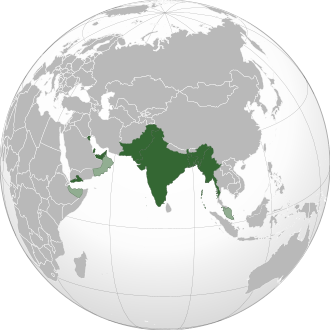
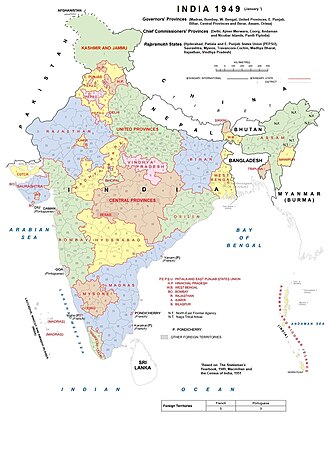
同时代、同地区的人物




同时代、同身份的人物(帝王与政治)