史鉴
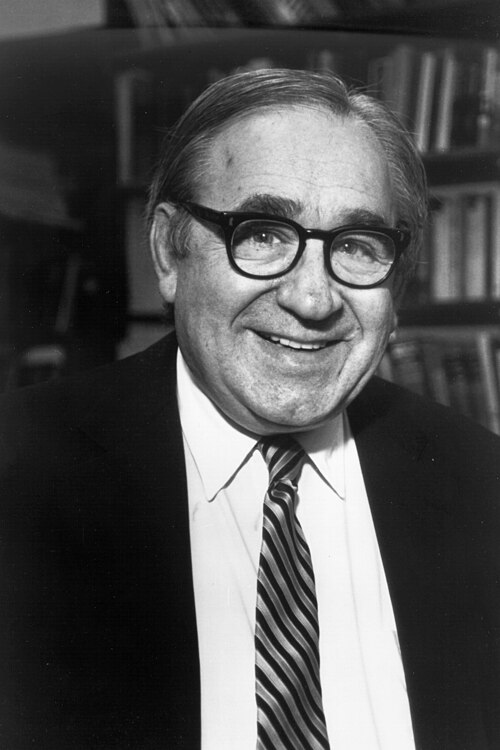
图:Michael Fogel · CC BY-SA 3.0 · 维基共享资源
- 生卒
- 1926 年 7 月 1 日—2013 年 6 月 11 日
- 出生地
- 纽约
- 去世地
- 奥克朗
- 国籍 / 所属
- 美国
- 身份
- 作家、经济学家、历史学家、经济学家、大学教师、经济史学家
- 职位
- 大学教师
- 受影响于
- 西蒙·史密斯·库兹涅茨、埃弗塞·多马
- 本名
- Robert William Fogel
- 原文名
- Robert Fogel
- 就读
- 哥伦比亚大学、康奈尔大学、约翰·霍普金斯大学、斯泰弗森特高中
- 任职机构
- 哈佛大学、剑桥大学、哥伦比亚大学、康奈尔大学、芝加哥大学、罗切斯特大学 等 7 项
- 所属组织
- 美国国家科学院、美国文理科学院、美国哲学会、经济计量学会
- 领域
- 历史、经济学
- 简述
- 经济学家, 美国
罗伯特·威廉·福格尔(英语:Robert William Fogel,1926年7月1日—2013年6月11日),美国经济学家,1993年与道格拉斯·诺斯一同获得诺贝尔经济学奖。以其在计量史学领域的贡献而闻名。
详细介绍
生平
福格尔出生于纽约市,是一位俄罗斯裔犹太人移民的儿子。1944年他从史岱文森高中毕业后,进入康奈尔大学学习。在大学期间,他主修历史学、辅修经济学,并成为了共产主义组织American Youth for Democracy校园分部的主席。1948年毕业后,他成了共产党的职业组织者。但之后他放弃共产主义,并进入哥伦比亚大学深造。1958年,他获得硕士学位,后又于1964年获约翰·霍普金斯大学博士学位。
福格尔曾分别在多所大学任教,包括约翰·霍普金斯大学(1958-1959年)、罗彻斯特大学(1960-1965年、1968-1975年)、芝加哥大学(1964-1975年、1981年至今)、剑桥大学(1975年,担任庇特美国历史机构讲座教授)、哈佛大学(1975-1981年)。福格尔与伊妮德·卡珊德拉·摩根(Enid Cassandra Morgan)于1949年结婚并育有两个子女。
2013年6月11日,福格尔在伊利诺伊州Oak Lawn的健康照护服务中心因病辞世。
著作
《联邦太平洋铁路》(1960年)
《铁路与美国的经济增长:计量历史学文集》(1964年)
《苦难的时代:美国奴隶制经济学》(1974年,与斯坦利·L·恩格尔曼合著)
《美国奴隶制度的兴衰》(1989年)
《经济增长、人口理论和生理学》(1994年)
《四次伟大的觉醒与平等主义的未来》(2002年)
《奴隶制争论:回顾1952-1990年》(2003年)
《摆脱饥饿与夭折,1700-2100年》(2004年)
正文摘自中文维基百科「罗伯特·福格尔」(删去了参考文献、表格和图片),按 CC BY-SA 4.0 使用
英文维基百科的更多内容
中文维基百科这一条比较短,下面是英文维基百科同一条目的节选,原文为英文,未翻译。
Robert William Fogel (; July 1, 1926 – June 11, 2013) was an American economic historian and winner (with Douglass North) of the 1993 Nobel Memorial Prize in Economic Sciences. As of his death, he was the Charles R. Walgreen Distinguished Service Professor of American Institutions and director of the Center for Population Economics (CPE) at the University of Chicago's Booth School of Business. He is best known as an advocate of cliometrics, an approach to history emphasizing the use of quantitative methods.
Early life and education
Fogel was born on July 1, 1926, in New York City, the son of Ukrainian Jewish immigrants from Odessa (1922). His brother, six years his senior, was his main intellectual influence in his youth as he listened to him and his college friends intensely discuss social and economic issues of the Great Depression.
He graduated from the Stuyvesant High School in 1944. Upon his graduation he found himself with a love for literature and history and aspired for a career in science, but due to an extreme pessimism about the economy in the second half of the 1940s, he shifted his interest towards economics.
Career
Fogel began his research career as an assistant professor at the University of Rochester in 1960. In 1964 he moved to the University of Chicago as an associate professor. From 1968 to 1975 he was also a visiting professor at Rochester in autumn semesters. During this time he completed some of his most important works, including Time on the Cross (in collaboration with Stanley Engerman). He also mentored a large group of students and researchers in economic history, including his colleague Deirdre McCloskey at Chicago.
In 1975 he left for Harvard University, and from 1978 on he worked as a research associate under the National Bureau of Economic Research in Cambridge, Massachusetts.……
Personal life and death
Fogel married Enid Cassandra Morgan, an African-American woman, in 1949, and had two children. The couple faced significant difficulties at the time due to anti-miscegenation laws and prevalent sentiments against interracial marriages.
He died on June 11, 2013, in Oak Lawn, Illinois, of a short illness, aged 86.
Contributions
Cliometrics and Railroads and American Economic Growth
Fogel's first major study involving cliometrics was Railroads and American Economic Growth: Essays in Econometric History (1964). This tract sought to quantify the railroads' contribution to U.S. economic growth in the 19th century. Its argument and method were each rebuttals to a long line of non-numeric historical arguments that had ascribed much to expansionary effect to railroads without rigorous reference to economic data.
Fogel argued against these previous historical arguments to show that onset of the railroad was not indispensable to the American economy.……
Slavery and Time on the Cross
Fogel's most famous and controversial work is Time on the Cross (1974), a quantitative study of American slavery, co-written with Stanley Engerman.……
The Nobel Memorial Prize in Economic Sciences
In 1993, Robert Fogel received, jointly with fellow economic historian Douglass C. North, the Nobel Memorial Prize in Economic Sciences "for having renewed research in economic history by applying economic theory and quantitative methods in order to explain economic and institutional change". In his Nobel lecture, titled "Economic growth, population theory, and physiology: the bearing of long-term processes on the making of economic policy", he emphasised his work done on the question of nutrition and economic growth.
Selected works
The Union Pacific Railroad: A Case in Premature Enterprise, 1960.
Railroads and American Economic Growth: Essays in Econometric History, 1964.
Time on the Cross: The Economics of American Negro Slavery, 2 volumes, 1974. (co-written with Stanley Engerman)
Which Road to the Past?, 1983.
Economic Growth, Population Theory and Physiology: The Bearings of Long-Term Processes on the Making of Economic Policy, 1994.
The Fourth Great Awakening and the Future of Egalitarianism Chicago: University of Chicago Press, 2000.
Explaining Long-Term Trends in Health and Longevity, 2012.
正文摘自英文维基百科(原文为英文,未翻译)「Robert Fogel」(节选,删去了参考文献、表格和图片),按 CC BY-SA 4.0 使用;在维基百科读全文 ›
同时代、同地区的人物







同时代、同身份的人物(思想与学术)