史鉴
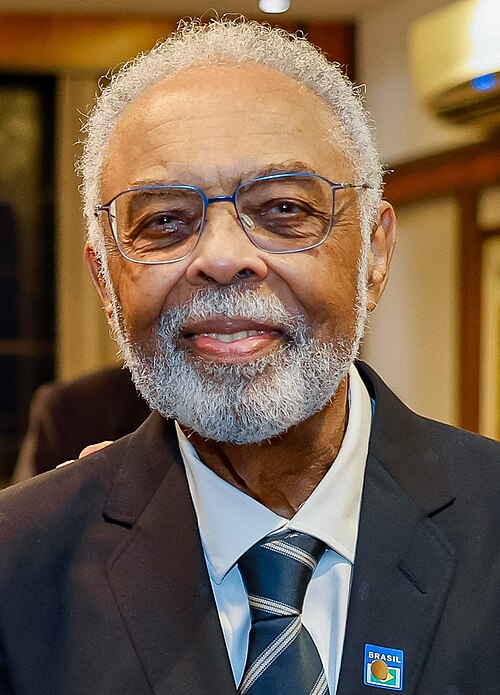
图:Ricardo Stuckert / PR · CC BY-SA 4.0 · 维基共享资源
- 生卒
- 1942 年 6 月 26 日
- 出生地
- 萨尔瓦多
- 国籍 / 所属
- 巴西
- 身份
- 作曲家、政治人物、歌手、音乐家、词曲作家、乐队领队、吉他手、爵士吉他手
- 职位
- councillor of Salvador、巴西文化部长
- 配偶
- Flora Gil
- 子女
- 普雷塔·吉尔、Nara Gil、Bem Gil、Bela Gil、Pedro Gil
- 本名
- Gilberto Passos Gil Moreira
- 原文名
- Gilberto Gil
- 宗教
- 坎东布雷
- 就读
- 巴伊亚联邦大学
- 所属组织
- 巴西文学学院
- 简述
- Brazilian recording artist, singer, guitarist, songwriter and politician
吉尔伯托·帕索斯·吉尔·莫雷拉 (1942年6月26日—),是一位巴西创作歌手和政治家。巴西军人独裁统治时期,他一度被关押了九个月,之后被驱逐出巴西。吉尔搬到伦敦定居,但于1972年返回巴伊亚州。他的作品曾获得格莱美奖以及拉丁格莱美奖。2003年至2008年期间,他是路易斯·伊纳西奥·卢拉·达席尔瓦政府的文化部部长。
正文摘自中文维基百科「吉尔贝托·吉尔」(删去了参考文献、表格和图片),按 CC BY-SA 4.0 使用
英文维基百科的更多内容
中文维基百科这一条比较短,下面是英文维基百科同一条目的节选,原文为英文,未翻译。
Gilberto Passos Gil Moreira (Brazilian Portuguese: [ʒiwˈbɛʁtu ˈʒiw]; born 26 June 1942) is a Brazilian singer-songwriter and politician, known for both his musical innovation and political activism. From 2003 to 2008, he served as Brazil's Minister of Culture in the administration of President Luiz Inácio Lula da Silva. Gil's musical style incorporates an eclectic range of influences, including rock, Brazilian genres including samba, African music, and reggae.
Gil started to play music as a child and was a teenager when he joined his first band. He began his career as a bossa nova musician and began to write songs that reflected a focus on political awareness and social activism. He was a key figure in the música popular brasileira and tropicália movements of the 1960s, alongside artists such as longtime collaborator Caetano Veloso. The Brazilian military regime that took power in 1964 saw both Gil and Veloso as a threat, and the two were held for nine months in 1969 before they were told to leave the country. Gil moved to London, but returned to Bahia in 1972 and continued his musical career, while also working as a politician and environmental advocate. His album Quanta Live won Best World Album at the 41st Annual Grammy Awards, and the album Eletracústico won the Best Contemporary World Music Album at the 48th Annual Grammy Awards.
Early life (1942–1963)
Gil was born in Salvador and spent much of his childhood in Ituaçu. Ituaçu was a small town of fewer than a thousand people, located in the sertão, or countryside, of Bahia. His father, José Gil Moreira, was a doctor; his mother, Claudina Passos Gil Moreira, an elementary school teacher. As a young boy, he attended a Marist Brothers school. Gil remained in Ituaçu until he was nine years old, returning to Salvador for secondary school.
Musical career (1963–present)
Gil met guitarist and singer Caetano Veloso at the Universidade Federal da Bahia (Federal University of Bahia) in 1963. The two began collaborating and performing together, releasing a single and EP.……
Imprisonment and exile
In October 1968, Gilberto Gil and Caetano Veloso performed at Sucata club in Rio de Janeiro, with Hélio Oiticica's poem-flag Seja marginal, seja herói displayed on stage.……
Political career (1987–present)
Gil describes his attitude towards politics thus: "I'd rather see my position in the government as that of an administrator or manager. But politics is a necessary ingredient." His political career began in 1987, when he was elected to a local post in Bahia and became the Salvador secretary of culture. In 1988, he was elected to the city council and subsequently became city commissioner for environmental protection.……
Personal life
Gil has been married four times. He had two daughters Nara and Marilia, with first wife Belina Aguiar. He was then married to famous singer Nana Caymmi, they had no children. His third wife was Sandra Gadelha with whom he had three children: Pedro, Preta and Maria. Sandra inspired one of his most beloved songs Drão, she was with him during the very hard times of Brazilian dictatorship and they both were exiled.……
Musical style and influences
Gil is a tenor, but he sings in the baritone or falsetto register, with lyrics and/or scat syllables. His lyrics are on subjects that range from philosophy to religion, folktales, and word play. Gil's musical style incorporates a broad range of influences. The first music he was exposed to included The Beatles and street performers in various metropolitan areas of Bahia.……
Discography
1967: Louvação
1968: Gilberto Gil (with Os Mutantes)
1968: Tropicália: ou Panis et Circencis (with Caetano Veloso, Gal Costa, Os Mutantes)
1969: Gilberto Gil (Cérebro Eletrônico)
1970: "Copacabana Mon Amour"
1971: Gilberto Gil (Nêga)
- 1972: Barra 69: Caetano e Gil Ao Vivo na Bahia
- 1972: Expresso 2222
- 1974: Gilberto Gil Ao Vivo
1975: "Gil e Jorge: Ogum Xangô" (with Jorge Ben)
1975: Refazenda
正文摘自英文维基百科(原文为英文,未翻译)「Gilberto Gil」(节选,删去了参考文献、表格和图片),按 CC BY-SA 4.0 使用;在维基百科读全文 ›
同时代、同地区的人物





同时代、同身份的人物(帝王与政治)