史鉴
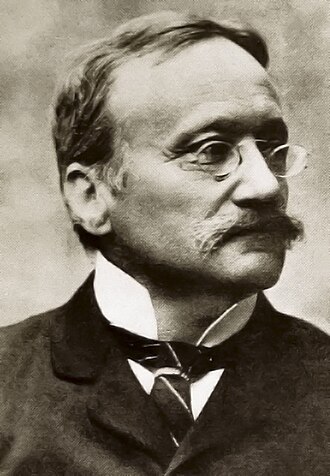
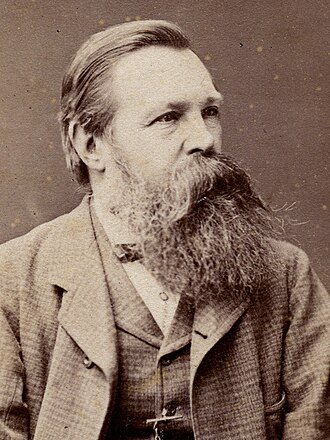
图:佚名 · Public domain · 维基共享资源
- 生卒
- 1842 年 2 月 24 日—1918 年 6 月 10 日
- 出生地
- 帕多瓦
- 去世地
- 米兰
- 国籍 / 所属
- 意大利王国
- 身份
- 编剧、作家、作曲家、诗人、政治人物、音乐家、新闻工作者、剧本作者
- 职位
- 意大利王国参议员
- 父亲
- Silvestro Boito
- 代表作
- 梅菲斯托菲尔、Nerone
- 原文名
- Arrigo Boito
- 宗教
- 无神论
- 就读
- 米兰音乐学院
- 所属组织
- 法兰西艺术院
- 领域
- 表演艺术
- 流派 / 运动
- Scapigliatura
- 简述
- 意大利文学家、作曲家(1842—1918)
阿里格·博伊托(意大利语:Arrigo Boito;1842年2月24日—1918年6月10日),意大利文学家、作曲家。1856年入米兰音乐学院学习,1868年写出成名作歌剧《梅菲斯特费勒》,另一部歌剧《尼禄》则一直未能完成。博伊托主要以歌剧脚本作家闻名,他是威尔第的《奥塞罗》《法尔斯塔夫》等歌剧的脚本作者。
正文摘自中文维基百科「阿里戈·博伊托」(删去了参考文献、表格和图片),按 CC BY-SA 4.0 使用
英文维基百科的更多内容
中文维基百科这一条比较短,下面是英文维基百科同一条目的节选,原文为英文,未翻译。
Arrigo Boito (Italian: [arˈriːɡo ˈbɔito]; born Enrico Giuseppe Giovanni Boito; 24 February 1842 – 10 June 1918) was an Italian librettist, composer, poet and critic whose only completed opera was Mefistofele. Among the operas for which he wrote the libretti are Giuseppe Verdi's monumental last two operas Otello and Falstaff as well as Amilcare Ponchielli's La Gioconda.
Along with Emilio Praga and his brother Camillo Boito, he is regarded as one of the prominent representatives of the Scapigliatura (Italian bohemian) artistic movement. He wrote essays under the anagrammatic pseudonym of Tobia Gorrio.
Biography
Boito was born in Padua. He was the son of Silvestro Boito, a painter of miniatures, who was not of noble birth but passed himself off as a nobleman, and his wife, a Polish countess, Józefina Radolińska. His older brother, Camillo Boito, was an Italian architect and engineer as well as a noted art critic, art historian and novelist.
Boito studied music at the Milan Conservatory with Alberto Mazzucato until 1861, where he was a contemporary of Albert Visetti and Amintore Galli. In 1866, with Galli, Franco Faccio, and Emilio Praga, Boito fought under Giuseppe Garibaldi in the Seven Weeks' War in which the Kingdom of Italy and Prussia fought against Austria, after which Venice was ceded to Italy.
Between 1887 and 1894, he had an affair with the celebrated actress Eleonora Duse. Their relationship was carried out in a highly clandestine manner, presumably because of Boito's many aristocratic friends and acquaintances. Despite this, their voluminous correspondence over the years survives. The two remained on good terms until his death.
Towards the end of his musical career, Boito succeeded Giovanni Bottesini as director of the Parma Conservatory after the latter's death in 1889 and held the post until 1897.……
Career in music
Boito wrote very little music, but completed (and later destroyed) the opera Ero e Leandro and left incomplete a further opera, Nerone, which he had been working at, on and off, between 1877 and 1915. Excluding its last act, for which Boito left only a few sketches, Nerone was finished after his death by Arturo Toscanini and Vincenzo Tommasini and premiered at La Scala in 1924. He also left a Symphony in A minor in manuscript.
Mefistofele
His only completed opera, Mefistofele, based on Goethe's Faust, was given its first performance on 5 March 1868, at La Scala, Milan. The premiere, which he conducted himself, was badly received, provoking riots and duels over its supposed "Wagnerism", and it was closed by the police after two performances. Verdi commented, "He aspires to originality but succeeds only at being strange." Boito withdrew the opera from further performances to rework it, and it had a more successful second premiere, in Bologna on 10 April 1875. This revised and drastically cut version also changed Faust from a baritone to a tenor. Mefistofele is the only work of his performed with any regularity today, and Enrico Caruso included its two tenor arias in his first recording session.……
Libretti by Boito
The years given are those of the premieres. Boito also provided the text to Verdi's cantata Inno delle Nazioni which was first given on 24 May 1862 at Her Majesty's Theatre, London.
Recordings
- Recordings of two operas exist:
- Mefistofele
- Nerone
Depictions in media
The play After Aida — a 1985 play-with-music by Julian Mitchell — depicts the struggle of Giulio Ricordi and Franco Faccio to get the retired Verdi to collaborate with young Boito on a project, which resulted in Otello.
In November 2001, Tell Giulio the Chocolate is Ready, a radio play by Murray Dahm, was produced and broadcast by Radio New Zealand. The play is based on the letters of the Verdi-Boito correspondence and explores the genesis and production of Verdi and Boito's opera Otello. The play and broadcast included those sections of the opera as they appeared in the correspondence (such as Iago's Credo).
正文摘自英文维基百科(原文为英文,未翻译)「Arrigo Boito」(节选,删去了参考文献、表格和图片),按 CC BY-SA 4.0 使用;在维基百科读全文 ›
所属政权

同时代、同地区的人物






同时代、同身份的人物(帝王与政治)