史鉴
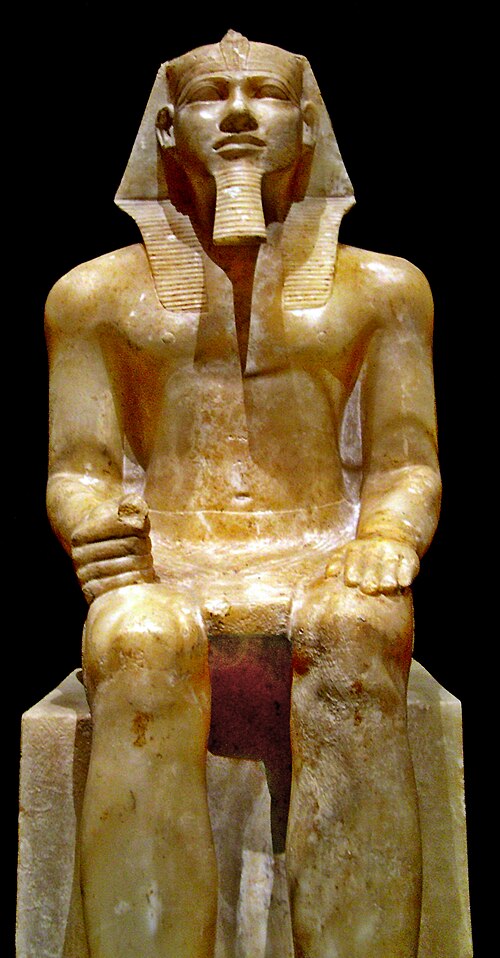
图:José-Manuel Benito · CC BY-SA 2.5 · 维基共享资源
- 生卒
- 公元前 2612 年—公元前 2530 年
- 国籍 / 所属
- 古埃及、古王国时期
- 身份
- sovereign
- 职位
- 法老
- 父亲
- 胡夫
- 母亲
- 荷努森
- 配偶
- Meresankh III、Persenet、Khamerernebty I、Hekenuhedjet
- 子女
- 孟卡拉、Nikaure、Iunmin I、Khamerernebty II、Nebemakhet、Duaenre、Ankhmare、Iunre、Shepsetkau
- 家族
- 埃及第四王朝
- 简述
- 古埃及第四王朝法老
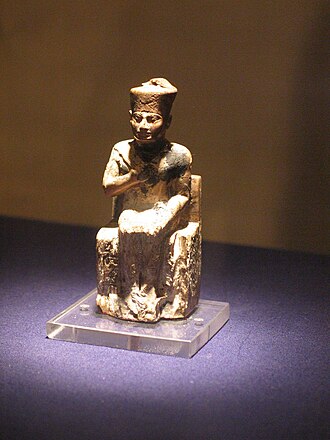
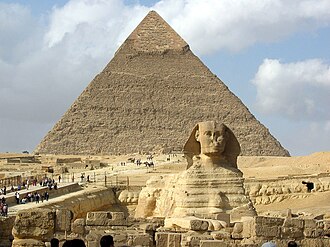
卡夫拉(英语:Khafre,又译哈佛拉)是埃及第四王朝的法老(约公元前2558年-前2532年在位),名字的意思可能是“拉的皇冠”,为法老胡夫之子,希腊著名历史学家希罗多德称他为“齐夫伦”(英语:Chephren),并把他描写成胡夫专制统治的继承者,他在吉萨修建了埃及第二大的金字塔——卡夫拉金字塔,现高136.4米,原高达143.5米,以及它的附属著名建筑狮身人面像(又称“大斯芬克斯”)。
关于卡夫拉的身份一直存在争论,古希腊作家如希罗多德和西西里的狄奥多罗斯都说他是胡夫的弟弟,但狄奥多洛斯同时也提到他是胡夫之子的可能。
正文摘自中文维基百科「卡夫拉」(删去了参考文献、表格和图片),按 CC BY-SA 4.0 使用
英文维基百科的更多内容
中文维基百科这一条比较短,下面是英文维基百科同一条目的节选,原文为英文,未翻译。
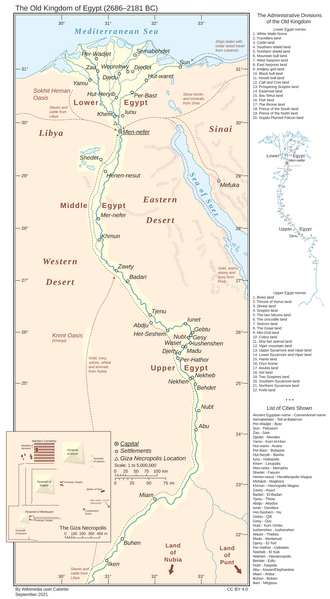
Khafre or Chephren (died c. 2532 BC) was an ancient Egyptian monarch who was the fourth king of the Fourth Dynasty, during the earlier half of the Old Kingdom period (c. 2700–2200 BC). He was son of the king Khufu, and succeeded his brother Djedefre to the throne.
Khafre's enormous pyramid at Giza, the Pyramid of Khafre, is surpassed only by his father's (the Great Pyramid). The Great Sphinx of Giza was also built for him, according to some Egyptologists, although this remains unconfirmed. Little is known about Khafre aside from the reports of Herodotus, a Greek historian who wrote 2,000 years later.
Family
Khafre was a son of king Khufu and the brother and successor of Djedefre. Khafre is thought by some to be the son of Queen Meritites I due to an inscription where he is said to honor her memory.
[Breasted; Ancient Records]
Others argue that the inscription just suggests that this queen died during the reign of Khafre. Khafre may be a son of Queen Henutsen instead.
Khafre had several wives and he had at least 12 sons and 3 or 4 daughters.
Children with Meresankh III
Queen Meresankh III was the daughter of Kawab and Hetepheres II and thus a niece of Khafre.
- Nebemakhet
- Duaenre
- Niuserre
- Khentetka
- Shepsetkau
Children with Hekenuhedjet
Sekhemkare
Possible children with Khamerernebty I
- Menkaure
- Khamerernebty II
Persenet may have been a wife of Khafre based on the location of her tomb. She was the mother of Nikaure.
Other children of Khafre are known, but no mothers have been identified. Further sons include Ankhmare, Akhre, Iunmin, and Iunre.……
Reign
There is no agreement on the date of his reign. Some authors say it was between 2558 BC and 2532 BC. While the Turin King List length for his reign is blank, and Manetho exaggerates his reign as 66 years, most scholars believe it was between 24 and 26 years, based upon the date of the Will of Prince Nekure which was carved on the walls of this Prince's mastaba tomb. The will is dated anonymously to the Year of the 12th Count and is assumed to belong to Khafre since Nekure was his son. Khafre's highest year date is the "Year of the 13th occurrence" which is a painted date on the back of a casing stone belonging to mastaba G 7650. This would imply a reign of 24–25 years for this king if the cattle count was biannual during the Fourth Dynasty.
Pyramid complex
Khafre built the second-largest pyramid at Giza. The Egyptian name of the pyramid was Wer(en)-Khafre which means "Khafre is Great".
The pyramid has a subsidiary pyramid, labeled G2-a. It is not clear who was buried there. Sealings have been found of a King's eldest son of his body etc. and the Horus name of Khafre.
Valley Temple
The valley temple of Khafre was located closer to the Nile and would have stood right next to the Sphinx temple. Inscriptions from the entrance way have been found which mention Hathor and Bubastis. Blocks have been found showing the partial remains of an inscription with the Horus name of Khafre (Weser-ib). Mariette discovered statues of Khafre in 1860. Several were found in a well in the floor and were headless. But other complete statues were found as well.
Mortuary Temple
The mortuary temple was located very close to the pyramid.……
Great Sphinx and Sphinx temple
The sphinx is said to date to the time of Khafre.……
Khafre in ancient Greek traditions
The ancient Egyptian historian Manetho called Khafre "Sûphis II". and credited him with a rulership of 66 years, but didn't make any further comments about him.
Contrary to modern Egyptologists and archaeological findings, Greek historians Diodorus and Herodotus, writing more than 2,000 years after King Khafre, depicted him as a tyrant who had followed his father Khêops on the throne. Herodotus and Diodorus say that Khafre ruled for 56 years.
They describe a king Menkaure (whom they call "Mykerînós") as the follower of Khafre and that this king was the counterpart of his two predecessors: Herodotus describes Menkaure as bringing peace and piety back to Egypt.
Of all the rulers of the Old Kingdom, Khafre is evidenced by the greatest number of statues.……
正文摘自英文维基百科(原文为英文,未翻译)「Khafre」(节选,删去了参考文献、表格和图片),按 CC BY-SA 4.0 使用;在维基百科读全文 ›