史鉴

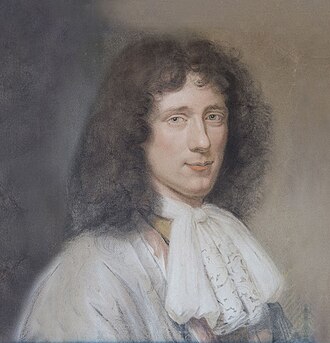
图:Пауль Фюрст, вдова и наследники · CC BY-SA 4.0 · 维基共享资源
- 生卒
- 1630 年—1671 年 6 月 6 日 (日期为儒略历)
- 出生地
- 科捷利尼科沃区、切尔卡斯克 等 3 项
- 去世地
- 莫斯科
- 国籍 / 所属
- 俄罗斯沙皇国
- 身份
- 头领、反叛者
- 参与
- 斯捷潘·拉辛起义、Battle of Simbirsk、Sangi-Mughan Battle、Battle of the Kandarat River
- 原文名
- Степан Тимофеевич Разин
- 宗教
- 俄罗斯正教会
- 军衔
- 头领
- 死因
- 车裂
- 简述
- Cossack leader (c. 1630 - 1671)
斯捷潘·季莫费耶维奇·拉辛(俄语:Степан Тимофеевич Разин;1630年—1671年6月11日),哥萨克领袖,1670年至1671年在俄罗斯南部曾领导了一场反抗俄罗斯沙皇和贵族的大规模起义。
斯捷潘·拉辛幼年家境贫寒,被送给顿河哥萨克军队首领克·雅科夫列夫做义子。后在哥萨克军中渐具声誉。1667年春聚众在顿河一带劫富济贫,队伍不断扩大。1670年,拉辛在潘申城召开会议,提出保卫皇室、讨伐领主与贵族的起义计划。率骑兵万余人向伏尔加河流域进发,先后攻克察里津、阿斯特拉罕、萨拉托夫、萨马拉等城,建立了市政权,哥萨克骑兵队伍中包括鞑靼人、莫尔多瓦人、楚瓦什人。在辛比尔斯克附近战役中,拉辛被沙皇阿列克谢·米哈伊洛维奇的军队击败,身受重伤,败退回到南方草原,次年拉辛被哥萨克酋长捕获,押解到莫斯科被砍头分尸。十月革命后,苏维埃政府为他建立了纪念碑。
正文摘自中文维基百科「斯捷潘·拉辛」(删去了参考文献、表格和图片),按 CC BY-SA 4.0 使用
英文维基百科的更多内容
中文维基百科这一条比较短,下面是英文维基百科同一条目的节选,原文为英文,未翻译。
Stepan Timofeyevich Razin (Russian: Степан Тимофеевич Разин, pronounced [sʲtʲɪˈpan tʲɪmɐˈfʲe(j)ɪvʲɪtɕ ˈrazʲɪn]; c. 1630 – 16 June [O.S. 6 June] 1671), known as Stenka Razin (Стенька [ˈsʲtʲenʲkə]), was a Don Cossack leader who led a major uprising against the nobility and tsarist bureaucracy in southern Russia from 1670 to 1671.
Early life
Razin's father, Timofey Razya, supposedly came from a suburb of Voronezh, a city near Russia's steppe frontier, called the Wild Fields. Razin's uncle and grandmother still lived in the village of New Usman' or Usman' Sobakina, 8 kilometres (5.0 mi) outside of Voronezh, until 1667. The identity of Razin's mother is debated. In one document, Razin was referred to as a tuma Cossack which means "half-blood", leading to a hypothesis that his mother was a captured "Turkish" (turchanka) or Crimean Tatar woman.……
Background
The Time of Troubles, which lasted from 1598 to 1613, had proven a difficult period for Russia. The direct male line of Rurik dynasty tsars died out in 1598, and the rule of the Romanov dynasty (which would eventually end with the February Revolution of 1917) began only in 1613. The reigns of Michael Romanov (tsar from 1613 to 1645) and of his son Alexis (tsar from 1645 to 1676) saw a strengthening of the power of the tsar with a view to stabilizing the Russian lands after the turmoil of the Time of Troubles.……
Departure from the Don
In 1667, Razin gathered a small group of Cossacks and left the Don for an expedition in the Caspian Sea. He aimed to set up a base in Yaitsk (now known as Oral, located in Kazakhstan on the Ural River) and plunder villages from there. However, Moscow learned of Razin's plans and attempted to stop him.……
Persian expedition
After losing Yaitsk, Razin sailed south down the coast of the Caspian Sea to continue his pillaging. He and his men then attacked Persia. Failing to capture the well-defended fortress port of Derbent in present-day Dagestan, his forces moved south to attack the small port of Badkuba (present Baku) located on the Absheron Peninsula in present-day Azerbaijan, but at Rasht (in the southwest Caspian Sea in modern Iran) the Persians killed roughly 400 Cossacks in a surprise attack.……
Open rebellion
In 1670, Razin, while ostensibly on his way to report at the Cossack headquarters on the Don, openly rebelled against the government, capturing Cherkassk and Tsaritsyn. After taking Tsaritsyn, Razin sailed down the Volga with his army of almost 7,000 men. The men traveled toward Cherny Yar, a government stronghold between Tsaritsyn and Astrakhan. Razin and his men swiftly took Cherny Yar when the Cherny Yar streltsy rose up against their officers and joined the Cossack cause in June 1670.……
Implications
Razin originally set out to loot villages, but as he became a symbol of peasant unrest, his movement turned political. Razin wanted to protect the independence of the Cossacks and to protest an increasingly centralized government. The Cossacks supported the tsar and autocracy, but they wanted a tsar that responded to the needs of the people and not just those of the upper class. By destroying and pillaging villages, Razin intended to take power from the government officials and give more autonomy to the peasants.……
In Russian-language culture and folklore
Razin and the "Persian princess"
One of the most popular cultural motifs associated with Razin is the episode with the drowning of the "Persian princess" in the river. Modern historians doubt the reality of this episode. There are two reports of foreigners who ended up in Astrakhan during the uprising. One of the testimonies is from the memoirs of the Dutch traveler Jan Struis. This testimony is much more famous: it was widely used by Russian historians and it served as the basis for the plot of the song Stenka Razin.……
Stenka Razin song
In 1883, the Russian poet Dmitry Sadovnikov published the poem "Stenka Razin", which he, as was customary, presented as a "folk epic".……
正文摘自英文维基百科(原文为英文,未翻译)「Stenka Razin」(节选,删去了参考文献、表格和图片),按 CC BY-SA 4.0 使用;在维基百科读全文 ›
参与的事件
- 斯捷潘·拉辛起义1667 年—1671 年 · 革命与起义 · 欧洲
所属政权
同时代、同地区的人物