史鉴

图:佚名 · Public domain · 维基共享资源
- 生卒
- 1688 年 10 月 22 日—1747 年 6 月 19 日
- 出生地
- Dastgerd
- 去世地
- 古昌
- 国籍 / 所属
- 萨法维帝国、阿夫沙尔帝国
- 身份
- 君主、军人、政治人物、政区首长、沙阿、军事领袖、皇族
- 职位
- 沙阿
- 父亲
- Imam Qoli
- 配偶
- Raziya Sultan
- 子女
- Reza Qoli Mirza Afshar、Ali Mirza Khan、Morteza Mirza Afshar
- 参与
- Campaigns of Nader Shah
- 原文名
- نادرشاه
- 家族
- 阿夫沙尔王朝
- 宗教
- 伊斯兰教、十二伊玛目派
- 军种
- 萨非伊朗军事
- 军衔
- 将军
- 死因
- 暗杀
- 简述
- Shah of Iran (r. 1736–47) and founder of the Afsharid dynasty
纳迪尔·沙阿·阿夫沙尔(波斯语:نادر شاه افشار,1688年11月22日—1747年6月20日),通称纳迪尔沙,伊朗阿夫沙尔王朝开国沙阿,伊朗历史上最具权势的君主之一。他在西亚、中亚与南亚地区发动多次战役,并在多场会战中取得胜利,最终在叛乱中遇刺身亡。
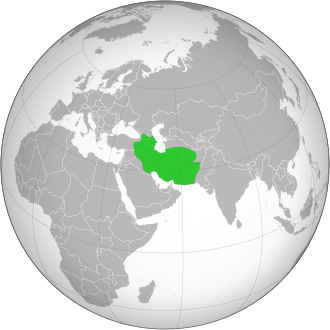
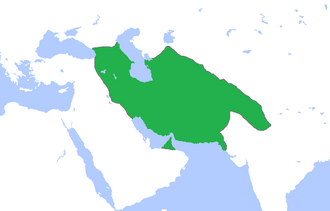
纳迪尔出身于呼罗珊的土库曼斯坦阿夫沙尔部族,该部族为协助萨非王朝建立统治的七个奇兹尔巴什部族之一。他在伊朗动荡时期崛起,当时汉达基阿富汗人起义推翻了软弱的沙阿侯赛因,而伊朗的宿敌奥斯曼帝国与俄罗斯帝国亦趁机瓜分伊朗领土。纳迪尔成功重建伊朗国家,驱逐外敌,并逐渐掌握实权,最终在1736年终结统治伊朗逾两百年的萨非王朝,自立为沙阿。他的征战建立起一个庞大帝国,其极盛时期疆域一度涵盖现今阿富汗、亚美尼亚、阿塞拜疆、巴林、格鲁吉亚、印度、伊朗、伊拉克、土耳其、土库曼斯坦、阿曼、巴基斯坦、乌兹别克斯坦等地。然而,庞大的军事开支也对伊朗经济造成严重破坏。
纳迪尔沙常被称为“最后伟大的亚洲征服者”。他崇拜成吉思汗与帖木儿,并模仿其军事能力,甚至在统治后期也模仿其残酷手段。他的一系列胜利,使他一度成为西亚最强大的统治者,掌控着当时亚洲最强大的帝国之一。1747年他遇刺身亡后,其帝国迅速瓦解,伊朗陷入内战。他的孙子沙鲁克·阿夫沙尔成为该王朝最后一位统治者,最终于1796年被阿迦·穆罕默德汗推翻,后者同年建立卡扎尔王朝。
正文摘自中文维基百科「纳迪尔沙」(删去了参考文献、表格和图片),按 CC BY-SA 4.0 使用
英文维基百科的更多内容
中文维基百科这一条比较短,下面是英文维基百科同一条目的节选,原文为英文,未翻译。
Nader Shah Afshar (born Nadr Qoli; Persian: نادرشاه افشار; 6 August 1698 or 22 October 1688 – 20 June 1747) was the founder of the Afsharid dynasty of Iran and one of the most powerful rulers in Iranian history, ruling as the emperor of Iran (Persia) from 1736 to 1747, when he was assassinated during a rebellion. He fought numerous campaigns throughout West Asia, the Caucasus, Central Asia, and South Asia, emerging victorious from the battles of Herat, Mihmandust, Murche-Khort, Kirkuk, Yeghevārd, Khyber Pass, Karnal, and Kars. Nader belonged to the Turkoman Afshars, one of the seven Qizilbash tribes that helped the Safavid dynasty establish their power in Iran.
Nader rose to power during a period of chaos in Iran after a rebellion by the Hotaki Afghans had overthrown the weak emperor Soltan Hoseyn (r. 1694–1722), while the arch-enemy of the Safavids, the Ottoman Empire, as well as the Russian Empire, had seized Iranian territory for themselves. Nader reunited the Iranian realm and removed the invaders. He became so powerful that he decided to depose the last members of the Safavid dynasty, which had ruled Iran for over 200 years, and declared himself Shah in 1736. His numerous campaigns created a great empire that, at its maximum extent, briefly encompassed all or part of modern-day Afghanistan, Armenia, Azerbaijan, Bahrain, Georgia, India, Iran, Iraq, Turkey, Turkmenistan, Oman, Pakistan, Uzbekistan, the North Caucasus, and the Persian Gulf, but his military spending had a ruinous effect on the Iranian economy.
Nader Shah has been described as "the last great Asiatic military conqueror". He idolized Genghis Khan and Timur, the previous conquerors from Central Asia. He imitated their military prowess and, especially later in his reign, their reputation of ruthlessness.……
Background
Nader belonged to the Turkoman Afshar tribe, which was one of the seven tribes of the Qizilbash who helped the Safavid dynasty establish their power in Iran.……
Early life
Nader was born in the fortress of Dastgerd in the northern valleys of Khorasan, a province in the northeast of the Iranian Empire. His father, Emam Qoli, was a herdsman who may also have been a coatmaker. His family lived a nomadic way of life. Nader was a long-waited son in his family.
Fall of the Safavid dynasty
Nader grew up during the final years of the Safavid dynasty, which had ruled Iran since 1502.……
Fall of the Hotaki dynasty
Tahmasp and the Qajar leader Fath Ali Khan (the ancestor of Agha Mohammad Khan Qajar) contacted Nader and asked him to join their cause and drive the Ghilzai Afghans out of Khorasan. He agreed and thus became a figure of national importance.……
First Ottoman campaign and the reconquest of the Caucasus
In the spring of 1730, Nader attacked Iran's archrival the Ottomans and regained most of the territory lost during the recent chaos. At the same time, the Abdali Afghans rebelled and besieged Mashhad, forcing Nader to suspend his campaign and save his brother, Ebrahim.……
Shah of Iran
Nader suggested to his closest intimates, after a great hunting party on the Moghan plain (presently split between Azerbaijan and Iran), that he should be proclaimed the new king (shah) in place of the young Abbas III.……
Religious policy
The Safavids had forced Shia Islam as the state religion of Iran.……
Invasion of India
In 1738, Nader Shah conquered Kandahar, the last outpost of the Hotaki dynasty. His thoughts now turned to the Mughal Empire of India.……
Central Asia, North Caucasus, Arabia, and the second Ottoman war
The Indian campaign was the zenith of Nader's career. Afterwards he became increasingly despotic as his health declined markedly. Nader had left his son Reza Qoli Mirza to rule Iran in his absence. Reza had behaved highhandedly and somewhat cruelly but he had kept the peace in Iran.……
Domestic policies
Nader changed the Iranian coinage system. He minted silver coins, called Naderi, that were equal to the Mughal rupee. Nader discontinued the policy of paying soldiers based on land tenure. Like the late Safavids he resettled tribes.……
Foreign policies
In order to construct a broad political framework that could link him to the Ottomans and Mughals more closely than the Safavids had been, Nader Shah started creating new concepts.……
Death and aftermath
In June 1747, Nader Shah was convinced his personal guard intended to assassinate him. As a result, he summoned Ahmad Shah Durrani and other loyal commanders. Nader Shah ordered Ahmad Shah to assemble his Durrani regiments and to arrest his personal guard.……
Legacy and assesment
Initially celebrated by contemporary Iranians as a liberator who rebuilt the realm, Nader Shah eventually became known as a cruel autocrat. Contemporary Europeans viewed him as a powerful conqueror who opened the region to British expansion due to his invasion of India.……
Personality
The strong character of Nader Shah is indicated by the fact that having achieved much fame and glory, he did not allow his pleasers to find great ancestors in the darkness of his origin. He never boasted of a proud genealogy; on the contrary, he often spoke of his simple origin.……
正文摘自英文维基百科(原文为英文,未翻译)「Nader Shah」(节选,删去了参考文献、表格和图片),按 CC BY-SA 4.0 使用;在维基百科读全文 ›
参与的事件
- Campaigns of Nader Shah1720 年代—1747 年 · 战役 · 西亚
- Ottoman–Persian War of 1743–461743 年—1746 年 · 战争 · 西亚
所属政权
同时代、同地区的人物

同时代、同身份的人物(帝王与政治)