史鉴
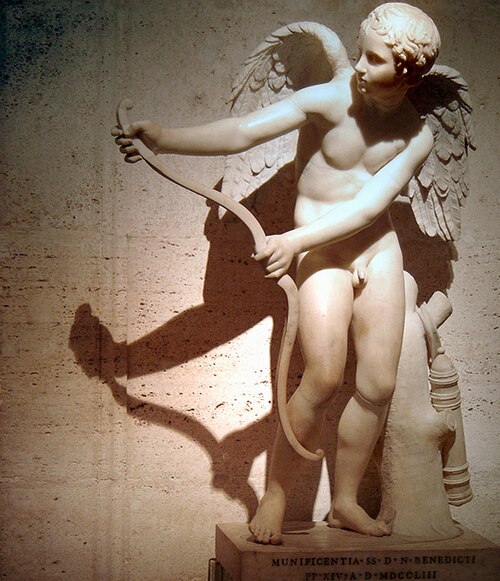
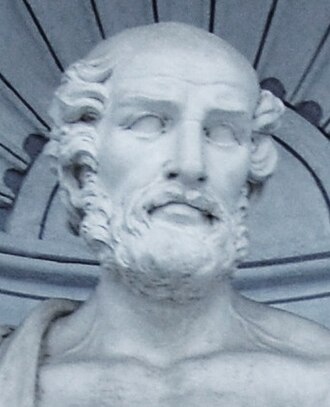
图:Ricardo André Frantz (User:Tetraktys) · CC BY-SA 3.0 · 维基共享资源
- 生卒
- 公元前 390 年—公元前 300 年
- 出生地
- 西库翁
- 国籍 / 所属
- 西库翁
- 身份
- 建筑师、雕塑家、brazier
- 子女
- Boedas、Daippus、Euthycrates
- 代表作
- Apoxyomenos、Victorious Youth、圣马尔谷之马、Troilos statue at Olympia、statue of the pankratiast Xenarkes at Olympia、Cheilon statue at Olympia、Poulydamas statue at Olympia、Pythes statue at Olympia 等 9 项
- 原文名
- Λύσιππος
- 简述
- 4th-century BC Greek sculptor
留西波斯,也译利西普斯(Λύσιππος),是公元前4世纪古希腊著名的雕刻家。他和普拉克西特列斯、斯科帕斯一起被誉为古希腊最杰出的三大雕刻家。留西波斯是著名雕刻家波留克列特斯的继承者。他为希腊化时代的雕刻艺术带来了革新。
留西波斯生于西希昂。其作品风格与伯里克利时代庄严、超人、理想的表现形式不同,面向实际而具有鲜明个性。著名作品有马其顿王国亚历山大大帝的铜像和大理石像,及“格刺奈卡斯河之战的阵亡者群像”。
正文摘自中文维基百科「留西波斯」(删去了参考文献、表格和图片),按 CC BY-SA 4.0 使用
英文维基百科的更多内容
中文维基百科这一条比较短,下面是英文维基百科同一条目的节选,原文为英文,未翻译。
Lysippos (; Ancient Greek: Λύσιππος) was a Greek sculptor of the 4th century BC. Together with Scopas and Praxiteles, he is considered one of the three greatest sculptors of the Classical Greek era, bringing transition into the Hellenistic period. The Victorious Youth or Getty bronze, which resurfaced around 1972, has been associated with him.
Biography
Born at Sicyon around 390 BC, Lysippos was a worker in bronze in his youth. He taught himself the art of sculpture, later becoming head of the school of Argos and Sicyon. According to Pliny, he produced more than 1,500 works, all of them in bronze. Commentators noted his grace and elegance, and the symmetria, or coherent balance, of his figures, which were leaner than the ideal represented by Polykleitos and with proportionately smaller heads, giving them the impression of greater height. He was famous for his attention to the details of eyelids and toenails.
His pupil, Chares of Lindos, constructed the Colossus of Rhodes, one of the Seven Wonders of the Ancient World. As this statue does not exist today, debate continues as to whether its sections were cast in bronze or hammered of sheet bronze.
He had three sons – Euthyktates, Boidas and Daippos – who were also sculptors and his pupils.
Career and legacy
Lysippos was successor in contemporary repute to the famous sculptor Polykleitos. Among the works attributed to him are the so-called Horses of Saint Mark, Eros Stringing the Bow (of which various copies exist, the best in the British Museum), Agias (known through the marble copy found and preserved in Delphi), the similar Oil Pourer (Dresden and Munich), the Farnese Hercules (which was originally placed in the Baths of Caracalla, although the surviving marble copy lies in the Naples National Archaeological Museum) and Apoxyomenos (or The Scraper, known from a Roman marble copy in the Vatican Museums). Lysippos was also famous for his bronze colossal sculptures of Zeus, 17 metres tall, and Herakles, seven meters seated, both from the city of Taras. The only remaining version of one such statue is a Roman copy of The Weary Herakles (Farnese Hercules), by Glykon, with heavy musculature typical of early third century Rome.
Canon of Lysippos
Lysippos developed a more gracile style than his predecessor Polykleitos and this has become known as the Canon of Lysippos.……
Lysippos and Alexander
During his lifetime, Lysippos was personal sculptor to Alexander the Great; indeed, he was the only artist whom the conqueror saw fit to represent him. An epigram by Posidippus, previously only known from the Anthology of Planudes (APl 119), but also found on the recently discovered Milan Papyrus (65 Austin-Bastianini), takes as its inspiration a bronze portrait of Alexander:
And similarly, an epigram by Asclepiades (APl 120):
Lysippos has been credited with the stock representation of an inspired, godlike Alexander with tousled hair and lips parted, looking upward in what came to be known as the 'Lysippean gaze'. One fine example, an early Imperial Roman copy found at Tivoli, is conserved at the Louvre.
The Victorious Youth
In 1972, the Victorious Youth, Getty Bronze, or Atleta di Fano to Italians, was discovered and at the urging of Paul Getty, bought by the Getty Museum. The bronze was pulled out of the sea and restored. Because of the amount of corrosion and the thick layer of incrustation that coated the statue when it was found, it can be assumed that it was beneath the water for centuries. This is less than surprising, as most of the classical bronze statues archeologists have found have been fished out of the Mediterranean Sea. It was not uncommon for a shipwreck to occur with something as precious as a sculpture on board. Without any way to find or retrieve them, these pieces were left to sit at the bottom of the ocean for centuries. The damaging corrosion can be removed by cleaning the surfaces mechanically with a scalpel.
The Getty Bronze is believed by some to be Lysippos's work, or at least a copy, because the detail on it is consistent with his style of work and his canon of proportions.……
正文摘自英文维基百科(原文为英文,未翻译)「Lysippos」(节选,删去了参考文献、表格和图片),按 CC BY-SA 4.0 使用;在维基百科读全文 ›
同时代、同地区的人物