史鉴

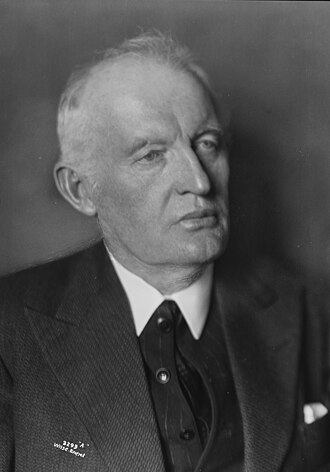
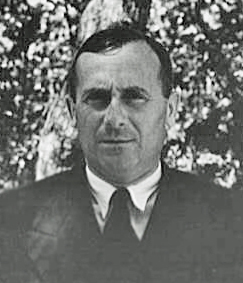
图:Georg Fayer · Public domain · 维基共享资源
- 生卒
- 1883 年 12 月 3 日—1945 年 9 月 15 日
- 出生地
- 维也纳
- 去世地
- 米特西尔
- 国籍 / 所属
- 奥地利
- 身份
- 作曲家、指挥家、音乐家、编曲家、古典音乐作曲家
- 本名
- Anton Friedrich Wilhelm von Webern
- 原文名
- Anton Webern
- 就读
- 维也纳大学
- 所属组织
- 第二维也纳乐派
- 简述
- 奥地利作曲家
安东·弗雷德里克·威廉·冯·韦伯恩(德语:Anton Friedrich Wilhelm von Webern,德语发音:[ˈantoːn ˈveːbɐn];1883年12月3日—1945年9月15日),又译韦伯恩,奥地利作曲家,第二维也纳乐派代表人物之一。
详细介绍
生平
韦伯恩1883年出生于维也纳,1902年入维也纳大学学习音乐学,1904年-1908年师从于勋伯格,与勋伯格、贝尔格组成第二维也纳乐派(或称新维也纳乐派),1920年起定居维也纳,从事指挥和教学。纳粹占领奥地利期间,因受纳粹迫害(希特勒明令禁止演出第二维也纳乐派的音乐),不得不过隐居生活。1945年前往萨尔茨堡看望女儿、女婿,在宵禁、灯火管制时于户外吸烟,被一美军士兵误杀(该士兵在战后因懊悔而酗酒,于1955年身亡)。
创作上分三个阶段:
第一阶段,晚期浪漫主义音乐:创作风格受古斯塔夫·马勒等晚期浪漫主义作曲家的影响,主要作品帕萨卡里亚舞曲(Op.1)。
第二阶段,自由无调性音乐:在其老师勋伯格的影响下创作了大量无调式音乐,作品的规模越来越小,在配器上简洁的不能再简洁,同时韦伯恩的创作开始使用音色序列法,即音色组合在不停地变换中,一个音色组合一般只持续1、2秒。主要作品交响曲(Op.21)。
第三阶段,十二音音乐:这一时期韦伯恩除使用十二音作曲技法创作外,还进行了点描主义音乐的尝试,钢琴变奏曲(Op.27)就是这一时期的代表作。
在第二次世界大战后,韦伯恩的影响越来越大,并且超过了勋伯格和贝尔格。他曾醉心于神秘主义的数字冥想和形式主义的音响排列探索;他的许多尝试被后来的作曲家进一步发展,音色序列法被法国作曲家兼指挥家皮埃尔·布列兹发展为序列主义音乐;点描主义音乐首次将无声视为一种音响与有声取得相同的地位,极大的启发了约翰·凯奇、卡尔海因茨·施托克豪森等作曲家。
正文摘自中文维基百科「安东·韦伯恩」(删去了参考文献、表格和图片),按 CC BY-SA 4.0 使用
英文维基百科的更多内容
中文维基百科这一条比较短,下面是英文维基百科同一条目的节选,原文为英文,未翻译。
Anton Webern (German: [ˈantoːn ˈveːbɐn] ; 3 December 1883 – 15 September 1945) was an Austrian composer, conductor, and musicologist whose modernist music was among the most radical of its milieu in its lyrical, poetic concision and use of then novel atonal and twelve-tone techniques. His approach was typically rigorous, inspired by his studies of the Franco-Flemish School under Guido Adler and by Arnold Schoenberg's emphasis on structure in teaching composition from the music of Johann Sebastian Bach, the First Viennese School, and Johannes Brahms. Webern, Schoenberg, and their colleague Alban Berg were at the core of what became known as the Second Viennese School.
Webern was likely the first and certainly the last of the three to write music in an aphoristic and expressionist style, reflecting his instincts and the idiosyncrasy of his compositional process. Working from personal experience, he treated themes of love, nature, mysticism, and nostalgia. Unhappily peripatetic and often assigned light music or operetta in his early conducting career, he aspired to conduct what was seen as more respectable, serious music at home in Vienna. Following Schoenberg's guidance, Webern tried writing music of greater length during and after their World War I service, relying on the structural support of texts in many Lieder.
He rose as a choirmaster and conductor, championing Gustav Mahler's music in Red Vienna and abroad. With Schoenberg based in Berlin, Webern began writing music of increasing confidence, independence, and scale using twelve-tone technique. Marginalized as a "cultural Bolshevist" in Fascist Austria and Nazi Germany, he maintained "the path to the new music", enjoyed international recognition, and relied more on teaching for income.……
Biography
1883–1908: Upbringing between late Imperial Vienna and countryside
Bucolic Heimat
Anton Webern, of the Webern noble family, was born on 3 December 1883 in Vienna, Austria-Hungary, the only surviving son of Carl von Webern, a decorated army veteran, high-ranking civil servant, and mining engineer who owned the Lamprechtsberg copper mine. He grew up mainly in Graz (1890–1894) and Klagenfurt (1894–1902), with one stay in Olomouc and more in Vienna for his father's work. He excelled only in the humanities and likely sang in choir at school.
He began piano and sang opera with his mother Amalie (née Geer), a trained pianist and accomplished singer, danced with his sisters Rosa and Maria, and received drums, then a trumpet, and later a violin as Christmas gifts.……
University
Before studying at the University of Vienna (1902–1906), Webern immersed himself in concerts, operas, plays, galleries, and cultural history, visiting the Bayreuth Festival, Musikverein, Neue Pinakothek, Prinzregententheater, and Wahnfried.……
Music
Webern's music was generally concise, organic, and parsimonious, with very small motifs, palindromes, and parameterization on both the micro- and macro-scale. His idiosyncratic approach reflected affinities with Schoenberg, Mahler, Guido Adler and early music; interest in esotericism and Naturphilosophie; and thorough perfectionism. He engaged with the work of Goethe, Bach, and the Franco-Flemish School in addition to that of Wolf, Brahms, Wagner, Liszt, Schumann, Beethoven, Schubert ("so genuinely Viennese"), and Mozart. Stylistic shifts were not neatly coterminous with gradually developed technical devices, particularly in the case of his mid-period Lieder.
Reception, influence, and legacy
Webern's music was generally considered difficult by performers and inaccessible by listeners. "To the limited extent that it was regarded", Milton Babbitt observed, it represented "the ultimate in hermetic, specialized, and idiosyncratic composition".
Composers and performers first tended to take Webern's work, with its residual post-Romanticism and initial expressionism, in mostly formalist directions with a certain literalism, departing from Webern's own practices and preferences in extrapolating from elements of his late style. This became known as post-Webernism.……
Performance practice
Webern notated articulations, dynamics, tempo rubato, and other musical expressions, coaching performers to adhere to these instructions but urging them to maximize expressivity through musical phrasing.……
Recordings by Webern
Webern conducts his arrangement of Schubert's German Dances
正文摘自英文维基百科(原文为英文,未翻译)「Anton Webern」(节选,删去了参考文献、表格和图片),按 CC BY-SA 4.0 使用;在维基百科读全文 ›
受其影响的人物
同时代、同地区的人物




同时代、同身份的人物(艺术与音乐)