史鉴
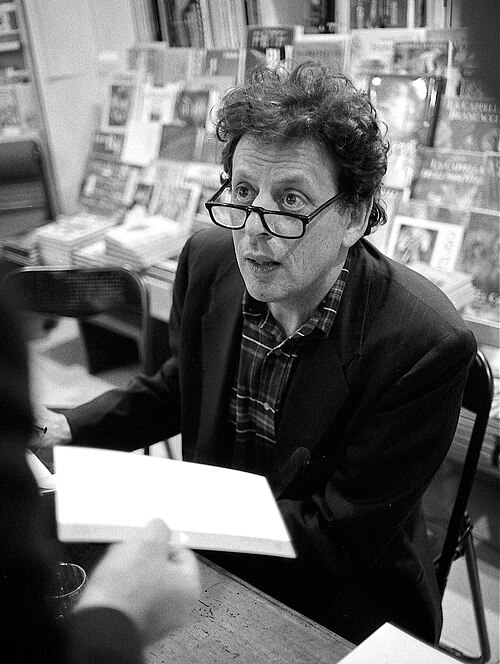
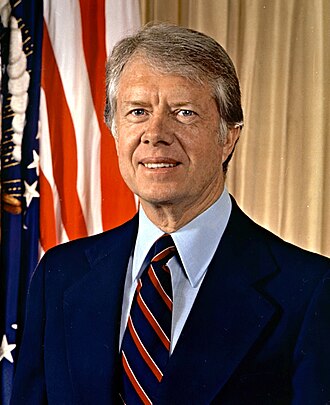
图:Pasquale Salerno · CC BY-SA 2.0 · 维基共享资源
- 生卒
- 1937 年 1 月 31 日
- 出生地
- 巴尔的摩
- 国籍 / 所属
- 美国
- 身份
- 作曲家、钢琴家、电影配乐作曲家、绿叶演员、剧本作者
- 配偶
- 乔安妮·阿卡莱蒂斯
- 子女
- Juliet Glass、Marlowe Glass
- 代表作
- Symphony No. 7、Monsters of Grace、Symphony No. 4、La Belle et la Bête
- 本名
- Philip Morris Glass
- 原文名
- Philip Glass
- 宗教
- 佛教、犹太教
- 就读
- 芝加哥大学、Fontainebleau Schools、朱力亚德学院、Peabody音乐学院
- 所属组织
- 美国艺术暨文学学会、美国文理科学院、美国哲学会
- 简述
- 美国作曲家
菲利普·莫里斯·格拉斯(英语:Philip Morris Glass,1937年1月31日—),美国当代作曲家,简约主义风格的代表人物之一。他的创作涉及了传统古典音乐的几乎所有体裁,并且在流行音乐领域有不少创作,产生了很大的影响。
详细介绍
生平
格拉斯1937年生于美国马里兰州巴尔的摩,祖先来自立陶宛犹太人,因为父亲开了一家音响店而从小对从贝多芬到肖斯塔科维奇的各个时期的古典音乐都有所涉猎,就读于朱利亚音乐学院,又赴巴黎师承娜迪亚·布朗热。与印度音乐家拉维·香卡合作后,对于其他不同音乐发生了浓厚兴趣,并独立发展出了自己的简约主义风格。他的音乐创作往往涉及世界各地的不同文化。在谈到自己的信仰时,格拉斯曾说自己是“犹太-道教-印度-托尔特克-佛教徒”。
音乐风格及创作
格拉斯的简约主义风格深受东方文化和流行音乐的影响,他的作品往往在一个牢固的自然音框架之中以五六个音符作为基础,没有和声变化而节奏极度稳定。他的音乐是有调性的,有的甚至带有浪漫主义式的旋律感,例如《第一小提琴协奏曲》。
格拉斯还是一位重要的电影配乐作曲家,著名电影音乐包括《楚门的世界》以及《时时刻刻》。
正文摘自中文维基百科「菲利普·格拉斯」(删去了参考文献、表格和图片),按 CC BY-SA 4.0 使用
英文维基百科的更多内容
中文维基百科这一条比较短,下面是英文维基百科同一条目的节选,原文为英文,未翻译。
Philip Morris Glass (born January 31, 1937) is an American composer and pianist. He is widely regarded as one of the most influential composers of the late 20th century. Glass's work has been associated with minimalism, being built up from repetitive phrases and shifting layers. He described himself as a composer of "music with repetitive structures", which he has helped to evolve stylistically.
Glass founded the Philip Glass Ensemble in 1968. He has written 15 operas, numerous chamber operas and musical theatre works, 15 symphonies, 12 concertos, nine string quartets, various other chamber music pieces, and many film scores. He has received nominations for four Grammy Awards, including two for Best Contemporary Classical Composition for Satyagraha (1987) and String Quartet No. 2 (1988). He has received three Academy Award for Best Original Score nominations for Martin Scorsese's Kundun (1997), Stephen Daldry's The Hours (2002), and Richard Eyre's Notes on a Scandal (2006). He also composed the scores for Koyaanisqatsi (1982), Mishima: A Life in Four Chapters (1985), Hamburger Hill (1987), The Thin Blue Line (1988), Candyman (1992), The Truman Show (1998), and The Illusionist (2006).
Glass is known for composing the operas Einstein on the Beach (1976), Satyagraha (1980), Akhnaten (1983), The Voyage (1992), and The Perfect American (2013). He also wrote the scores for Broadway productions such as the revivals of The Elephant Man (2002), The Crucible (2016), and King Lear (2019). For the last he won the Drama Desk Award for Outstanding Music in a Play.
Glass has received many accolades, including a BAFTA Award, a Drama Desk Award, and a Golden Globe Award, as well as nominations for three Academy Awards, four Grammy Awards, and a Primetime Emmy Award.……
Early life and education
Glass was born in Baltimore, Maryland, on January 31, 1937, the son of Ida (née Gouline) and Benjamin Charles Glass. His family were Latvian-Jewish and Russian-Jewish emigrants. His father owned a record store and his mother was a librarian.……
Career
1964–1966: Paris
In 1964, Glass received a Fulbright Scholarship;……
Influences and collaborations
Glass describes himself as a "classicist", pointing out he is trained in harmony and counterpoint and studied such composers as Franz Schubert, Johann Sebastian Bach, and Wolfgang Amadeus Mozart with Nadia Boulanger.……
Music for film
Glass has composed many film scores, starting with the orchestral score for Koyaanisqatsi (1982), and continuing with two biopics, Mishima: A Life in Four Chapters (1985, resulting in the String Quartet No.……
Other business ventures
Dunvagen Music Publishers
In 1977, Glass formed a music publisher and management company named Dunvagen Music Publishers. The company still represents his publishing and management interests today.
Record labels
In 1970, Glass and Klaus Kertess (owner of the Bykert Gallery) formed a record label named Chatham Square Productions after the location of the studio of a Philip Glass Ensemble member Dick Landry.……
Personal life
Glass lives in New York City and in Cape Breton in Nova Scotia. He has described himself as "a Jewish-Taoist-Hindu-Toltec-Buddhist" and is a supporter of the Tibetan independence movement.……
Critical reception
Musical Opinion said, "Philip Glass must be one of the most influential living composers." The National Endowment for the Arts, while noting that many of his operas have been produced by the world's leading opera houses, said, "He is the first composer to win a wide, multigenerational audience in the opera house, the concert hall, the dance world, in film, and in popular music." Classical Music Review called his opera Akhnaten "a musically sophisticated and imposing work".……
Works about Glass
Music with Roots in the Aether: Opera for Television (1976). Tape 2: Philip Glass. Produced and directed by Robert Ashley
Philip Glass, from Four American Composers (1983); directed by Peter Greenaway
A Composer's Notes: Philip Glass and the Making of an Opera (1985); directed by Michael Blackwood
正文摘自英文维基百科(原文为英文,未翻译)「Philip Glass」(节选,删去了参考文献、表格和图片),按 CC BY-SA 4.0 使用;在维基百科读全文 ›
同时代、同地区的人物






同时代、同身份的人物(文学)