史鉴
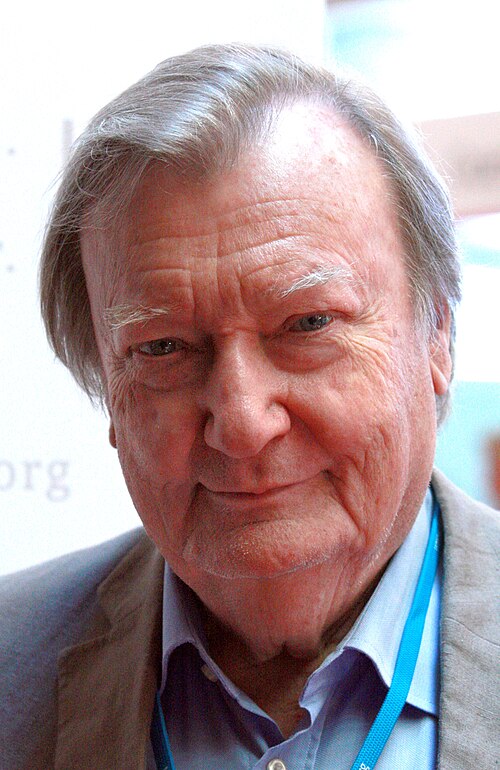
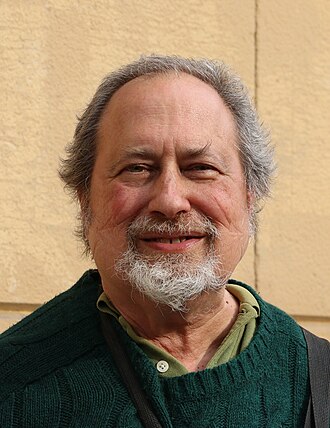
图:Markus Pössel (user name: Mapos) · CC BY-SA 3.0 · 维基共享资源
- 生卒
- 1934 年 3 月 31 日
- 出生地
- 戈里齐亚
- 国籍 / 所属
- 意大利
- 身份
- 工程师、物理学家
- 职位
- 终身参议员、Director General of CERN
- 原文名
- Carlo Rubbia
- 就读
- 哥伦比亚大学、比萨大学、比萨高等师范学校
- 任职机构
- 哈佛大学、帕维亚大学
- 所属组织
- 俄罗斯科学院、英国皇家学会、National Virgilian Academy、匈牙利科学院、美国国家科学院、奥地利科学院 等 16 项
- 领域
- 粒子物理学
- 简述
- 物理学家, 意大利
卡洛·鲁比亚(意大利语:Carlo Rubbia,1934年3月31日—),出生于戈里齐亚,意大利物理学家,因与西蒙·范德梅尔在欧洲核子研究组织共同发现W及Z玻色子而获得1984年诺贝尔物理学奖。
详细介绍
生平
鲁比亚在比萨大学和比萨高等师范学校学习物理。 他于1957年与Marcello Conversi一起毕业于宇宙射线实验专业。 1958年从比萨大学获得意大利博士学位(Laurea)。
奖项和荣誉
1984年12月,被提名为Cavaliere di Gran Croce 意大利共和国勋章(OMRI)。[16]
2013年8月30日,被总统乔治·纳波利塔诺任命为共和国参议院的终身参议员。
共有27个荣誉学位。
小行星8398 Rubbia以他的名字命名。 他当选为1984年皇家学会外国会员(ForMemRS)。
2015年9月,担任中国矿业大学可持续能源研究院院长。
2016年1月,获得2015年度中华人民共和国国际科学技术合作奖。
正文摘自中文维基百科「卡洛·鲁比亚」(删去了参考文献、表格和图片),按 CC BY-SA 4.0 使用
英文维基百科的更多内容
中文维基百科这一条比较短,下面是英文维基百科同一条目的节选,原文为英文,未翻译。
Carlo Rubbia (Italian: [ˈkaɾlo ˈrubbja]; born 31 March 1934) is an Italian particle physicist and inventor who shared the Nobel Prize in Physics in 1984 with Simon van der Meer for work leading to the discovery of the W and Z particles at CERN.
Early life and education
Rubbia was born in 1934 in Gorizia, an Italian town on the border with Slovenia. His family moved to Venice then Udine because of wartime disruption. His father was an electrical engineer and encouraged him to study the same, though he stated his wish to study physics. In the local countryside, he collected and experimented with abandoned military communications equipment. After taking an entrance exam for the Scuola Normale Superiore di Pisa to study physics, he failed to get into the required top ten (coming eleventh), so began an engineering course in Milan in 1953. Soon after, a Pisa student dropped out, presenting Rubbia with his opportunity. He gained a degree and doctorate in a relatively short time with a thesis on cosmic ray experimentation; his adviser was Marcello Conversi. At Pisa, he met his future wife, Marisa, also a physics student.
Career and research
Columbia University
Following his degree, Rubbia went to the United States to do postdoctoral research, where he spent about one and a half years at Columbia University performing experiments on the decay and the nuclear capture of muons. This was the first of a long series of experiments that Rubbia has performed in the field of weak interactions and which culminated in the Nobel Prize-winning work at CERN.
CERN
He moved back to Europe for a placement at the University of Rome before joining the newly founded CERN in 1960, where he worked on experiments on the structure of weak interactions. CERN had just commissioned a new type of accelerator, the Intersecting Storage Rings, using counter-rotating beams of protons colliding against each other. Rubbia and his collaborators conducted experiments there, again studying the weak force. The main results in this field were the observation of the structure in the elastic scattering process and the first observation of the charmed baryons. These experiments were crucial in order to perfect the techniques needed later for the discovery of more exotic particles in a different type of particle collider.
In 1976, he suggested adapting CERN's Super Proton Synchrotron (SPS) to collide protons and antiprotons in the same ring – the Proton-Antiproton Collider. Using Simon van der Meers technology of stochastic cooling, the Antiproton Accumulator was also built. The collider started running in 1981 and, in early 1983, an international team of more than 100 physicists headed by Rubbia and known as the UA1 Collaboration, detected the intermediate vector bosons, the W and Z bosons, which had become a cornerstone of modern theories of elementary particle physics long before this direct observation. They carry the weak force that causes radioactive decay in the atomic nucleus and controls the combustion of the Sun, just as photons, massless particles of light, carry the electromagnetic force which causes most physical and biochemical reactions. The weak force also plays a fundamental role in the nucleosynthesis of the elements, as studied in theories of stars evolution.……
Personal life
Rubbia has two children from his wife Marisa. Rubbia is openly a Christian believer, as he stated in his 1987 book The Temptation to Believe. He is also a member of the Pontifical Academy of Sciences.
Awards and honours
In December 1984, Rubbia was nominated Cavaliere di Gran Croce OMRI. On 30 August 2013, Rubbia was appointed to the Senate of Italy as a Senator for Life by President Giorgio Napolitano. On 8 January 2016, he was awarded with the International Scientific and Technological Cooperation Award by the People's Republic of China. Asteroid 8398 Rubbia is named in his honour. He was elected a Foreign Member of the Royal Society (ForMemRS) in 1984. Also in 1984, Rubbia received the Golden Plate Award of the American Academy of Achievement.
正文摘自英文维基百科(原文为英文,未翻译)「Carlo Rubbia」(节选,删去了参考文献、表格和图片),按 CC BY-SA 4.0 使用;在维基百科读全文 ›
同时代、同地区的人物




同时代、同身份的人物(科学与发明)