史鉴
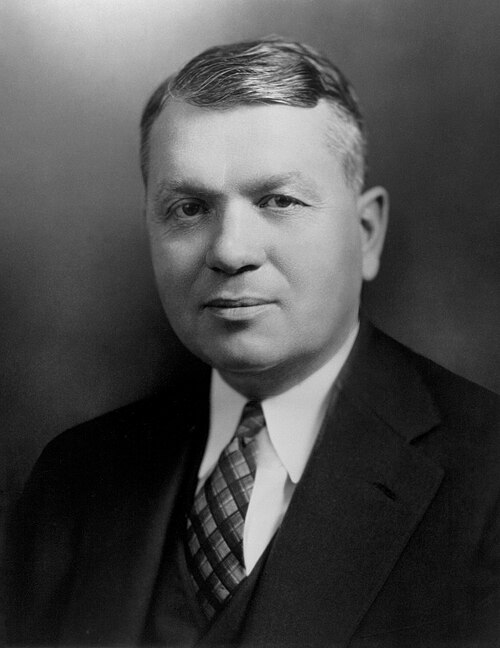
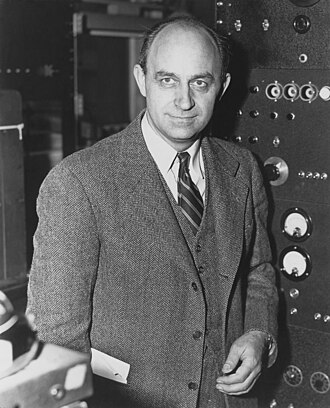
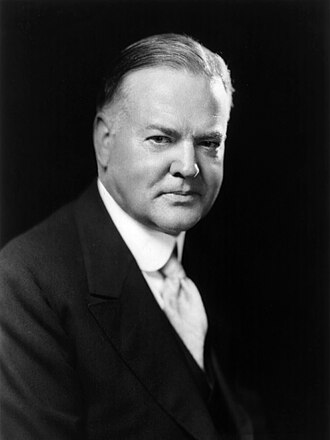
图:Flickr: ENERGY.GOV - Unknown photographer. Restored by Creator:Adam Cuerden · Public domain · 维基共享资源
- 生卒
- 1893 年 4 月 29 日—1981 年 1 月 5 日
- 出生地
- 沃克顿 (印地安纳州)
- 去世地
- 拉霍亚
- 国籍 / 所属
- 美国
- 身份
- 天文学家、作家、物理学家、动物学家、化学家、大学教师、物理化学家
- 配偶
- Frieda Urey
- 子女
- Elizabeth Baranger
- 参与
- 曼哈顿计划
- 原文名
- Harold Clayton Urey
- 就读
- 哥伦比亚大学、加州大学伯克利分校、蒙大拿大学、厄尔汉学院
- 任职机构
- 哥伦比亚大学、芝加哥大学、哥本哈根大学、约翰·霍普金斯大学、月球与行星研究所、圣迭戈加利福尼亚大学
- 所属组织
- 美国科学进步协会、英国皇家学会、瑞典皇家科学院、美国国家科学院、美国文理科学院、美国天文学会 等 10 项
- 领域
- 物理学、物理化学
- 简述
- 天文学家, 美国
哈罗德·克莱顿·尤里(英语:Harold Clayton Urey,/ˈjʊəri/ YOOR-ee,1893年4月29日—1981年1月5日)是一名美国物理化学家,他在同位素方面的开创性研究使他因发现氘而在1934年获得诺贝尔化学奖。他在原子弹的研制中发挥了重要作用,并对从非生命物质发展出有机生命的理论做出贡献。
尤里出生于印第安纳州沃克顿,在加州大学柏克莱分校吉尔伯特·路易斯的指导下主修热力学。1923年获得博士学位后,他获得美国-斯堪地纳维亚基金会的奖学金,在哥本哈根的尼尔斯·波耳研究所学习。在成为哥伦比亚大学化学系副教授之前,他曾在约翰霍普金斯大学担任研究助理。 1931年,他开始同位素的分离工作,最终发现了氘。
在第二次世界大战期间,尤里将他在同位素分离方面的知识转向铀浓缩的问题。他领导位于哥伦比亚大学的小组,开发使用气体扩散法的同位素分离。该方法被成功开发,成为战后早期使用的唯一方法。战后,尤里成为核子学术研究所的化学教授,后来又成为芝加哥大学的瑞尔森化学教授。
尤里推测,早期的陆地大气是由氨、甲烷和氢组成的。他的芝加哥大学研究生之一是史丹利·米勒,他在米勒-乌雷的实验中表明,如果这种混合物暴露于电火花和水,它可以相互作用产生氨基酸,通常被认为是生命的组成部分。对氧的同位素的研究导致古气候学研究这一新领域的开拓。1958年,他接受新成立的加州大学圣地亚哥分校的全职教授职位,在那里他帮助创建了科学学院。他是加州大学圣地亚哥分校化学学院的创始成员之一,该学院创建于1960年。他对空间科学越来越感兴趣,当阿波罗11号从月球带回月岩样本时,乌里在月球物质回收实验所对它们进行检查。登月太空人哈里逊·舒密特说,尤里作为志愿者找到他,希望他能参加单程月球任务,他说:“我会去的,能不能回来我不在乎。”。
正文摘自中文维基百科「哈罗德·尤里」(删去了参考文献、表格和图片),按 CC BY-SA 4.0 使用
英文维基百科的更多内容
中文维基百科这一条比较短,下面是英文维基百科同一条目的节选,原文为英文,未翻译。
Harold Clayton Urey ( YOOR-ee; April 29, 1893 – January 5, 1981) was an American physical chemist who conducted pioneering work on isotopes. He earned the 1934 Nobel Prize in Chemistry "for his discovery of heavy hydrogen." He played a significant role in the development of the atom bomb, as well as contributing to theories on the development of organic life from non-living matter.
Born in Walkerton, Indiana, Urey studied thermodynamics under Gilbert N. Lewis at the University of California, Berkeley. After he received his PhD in 1923, he was awarded a fellowship by the American-Scandinavian Foundation to study at the Niels Bohr Institute in Copenhagen. He was a research associate at Johns Hopkins University from 1924 to 1929, before becoming an associate professor of chemistry at Columbia University. In 1931, he began work with the separation of isotopes that resulted in the discovery of deuterium.
During World War II, Urey turned his knowledge of isotope separation to the problem of uranium enrichment. He headed the group located at Columbia University that developed isotope separation using gaseous diffusion. The method was successfully developed, becoming the sole method used in the early post-war period. After the war, Urey became professor of chemistry at the Institute for Nuclear Studies, and later Ryerson professor of chemistry at the University of Chicago.
Urey speculated the early terrestrial atmosphere was composed of ammonia, methane, and hydrogen. One of his Chicago graduate students was Stanley L. Miller, who showed in the Miller–Urey experiment that if such a mixture were exposed to electric sparks and water, it can interact to produce amino acids, which are among the molecular building blocks of life.……
Early life
Harold Clayton Urey was born on April 29, 1893, in Walkerton, Indiana, the son of Samuel Clayton Urey, a school teacher and a minister in the Church of the Brethren, and his wife, Cora Rebecca née Reinoehl. Of mostly German ancestry, the family name had English origins. He had a younger brother, Clarence, and a younger sister, Martha.……
Deuterium
In the 1920s, William Giauque and Herrick L. Johnston discovered the stable isotopes of oxygen. Isotopes were not well understood at the time; James Chadwick would not discover the neutron until 1932. Two systems were used for classifying them based on their chemical and physical properties. The latter was determined using the mass spectrograph.……
Manhattan Project
By the time World War II broke out in Europe in 1939, Urey was recognized as a world expert on isotope separation. Thus far, separation had involved only the light elements. In 1939 and 1940, Urey published two papers on the separation of heavier isotopes in which he proposed centrifugal separation.……
Post-war years
After the war, Urey became professor of chemistry at the Institute for Nuclear Studies at the University of Chicago , and then became Ryerson professor of chemistry there in 1952. He did not continue his pre-war research with isotopes.……
Cosmochemistry and the Miller–Urey experiment
In later life, Urey helped develop the field of cosmochemistry and is credited with coining the term. His work on oxygen-18 led him to develop theories about the abundance of the chemical elements on Earth, and of their abundance and evolution in the stars. Urey summarized his work in The Planets: Their Origin and Development (1952).……
Death and legacy
Urey enjoyed gardening and raising cattleya, cymbidium and other orchids. He died at La Jolla, California on 5 January 1981, and is buried at the Fairfield Cemetery in DeKalb County, Indiana.
Apart from his Nobel Prize, he also won the Franklin Medal in 1943, the J.……
正文摘自英文维基百科(原文为英文,未翻译)「Harold Urey」(节选,删去了参考文献、表格和图片),按 CC BY-SA 4.0 使用;在维基百科读全文 ›
参与的事件
- 曼哈顿计划1939 年—1946 年 · 其他事件 · 北美洲
同时代、同地区的人物





同时代、同身份的人物(思想与学术)