史鉴
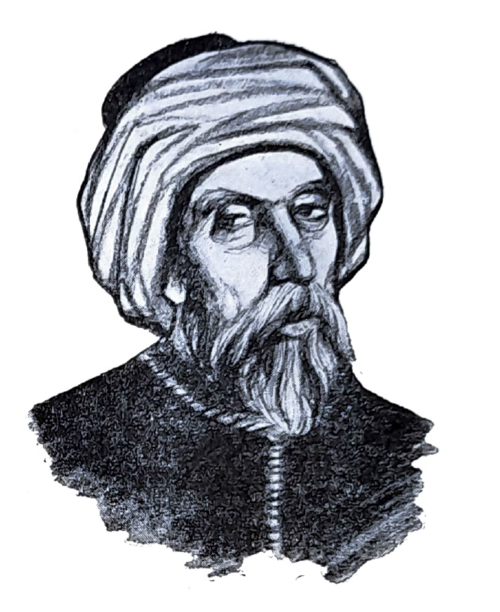
图:佚名 · Public domain · 维基共享资源
- 生卒
- 1110 年—1165 年
- 出生地
- 休达
- 去世地
- 西西里岛
- 身份
- 作家、历史学家、地理学家、埃及学家、制图师、植物学家、旅行者
- 代表作
- 鲁杰罗之书
- 宗教
- 伊斯兰教
- 领域
- 地理学、地图学、旅行
- 简述
- andalusian geographer (1100–1165)
阿布·阿布德·阿拉·穆罕默德·伊德里西·库尔图比·哈萨尼(阿拉伯语:أبو عبد الله محمد الإدريسي,1100年休达 - 1166年西西里或休达),阿拉伯地理学家、制图家和旅行者。
正文摘自中文维基百科「穆罕默德·伊德里西」(删去了参考文献、表格和图片),按 CC BY-SA 4.0 使用
英文维基百科的更多内容
中文维基百科这一条比较短,下面是英文维基百科同一条目的节选,原文为英文,未翻译。
Abu Abdullah Muhammad al-Idrisi al-Qurtubi al-Hasani as-Sabti, or simply al-Idrisi (Arabic: أبو عبد الله محمد الإدريسي القرطبي الحسني السبتي; Latin: Dreses; 1100–1165), was an Arab Muslim geographer and cartographer who served in the court of King Roger II at Palermo, Sicily. Muhammad al-Idrisi was born in Ceuta, then belonging to the Almoravid dynasty. He created the Tabula Rogeriana, one of the most advanced medieval world maps. al-Idrisi stands as one of the most celebrated cartographers and geographical scholars from the Islamic world, exemplifying the intellectual figures who preserved and advanced the Arabic culture and traditions during the Era of the Normans in medieval Sicily.
Early life
Al-Idrisi hailed from the Hammudid dynasty of North Africa and Al-Andalus, which was descended from Muhammad through the powerful Idrisid dynasty. Al-Idrisi was believed to be born in the city of Ceuta in 1100, at the time controlled by the Almoravids, where his great-grandfather had been forced to settle after the fall of Hammudid Málaga to the Zirids of Granada. He spent much of his early life travelling through North Africa and Al-Andalus (Muslim Spain and Portugal of the times) and seems to have acquired detailed information on both regions. He visited Anatolia when he was barely 16. He studied in the university in Córdoba.
His travels took him to many parts of Europe including Portugal, the Pyrenees, the French Atlantic coast, Hungary, and Jórvík (now known as York).
Tabula Rogeriana
Because of conflict and instability in Al-Andalus al-Idrisi joined contemporaries such as Abu al-Salt in Sicily, where the Normans had overthrown Arabs formerly loyal to the Fatimids.
Al-Idrisi incorporated the knowledge of Africa, the Indian Ocean and the Far East gathered by Islamic merchants and explorers and recorded on Islamic maps with the information brought by the Norman voyagers to create the most accurate map of the world in pre-modern times, which served as a concrete illustration of his Kitab nuzhat al-mushtaq, (Latin: Opus Geographicum), which may be translated A Diversion for the Man Longing to Travel to Far-Off Places.
The Tabula Rogeriana was drawn by al-Idrisi in 1154 for the Norman King Roger II of Sicily, after a stay of eighteen years at his court, where he worked on the commentaries and illustrations of the map.……
Nuzhat al-Mushtaq
As well as the maps, al-Idrisi produced a compendium of geographical information with the title Kitab nuzhat al-mushtaq fi'khtiraq al-'afaq. The title has been translated as The book of pleasant journeys into faraway lands or The pleasure of him who longs to cross the horizons. It has been preserved in nine manuscripts, seven of which contain maps.
The translated title of this work (in the "pleasure of him ..." form) attracted favourable comment from the team selecting lists of names for features expected to be discovered by the New Horizons probe reconnoitring the Pluto system. The Al-Idrisi Montes is a geographical feature in that system named after him.
In the introduction, al-Idrisi mentions two sources for geographical coordinates: Claudius Ptolemy and "an astronomer" that must be Ishaq ibn al-Hasan al-Zayyat;……
Publication and translation
An abridged version of the Arabic text was published in Rome in 1592 with title: De geographia universali or Kitāb Nuzhat al-mushtāq fī dhikr al-amṣār wa-al-aqṭār wa-al-buldān wa-al-juzur wa-al-madā' in wa-al-āfāq which in English would be Recreation of the desirer in the account of cities, regions, countries, islands, towns, and distant lands.……
Medical dictionary
Among the lesser known works of al-Idrisi is a medical dictionary that he compiled in which he brings down a list of simple drugs and plants and their curative effects, used by physicians, apothecaries and merchants in his day. The list is unique, as it includes the names of drugs in as many as 12 languages (among which are Spanish, Berber, Latin, Greek and Sanskrit), including some sixty Hebrew terms transliterated into Arabic and which are thought to have been passed down to him by Andalusian Jewish informants. At the end of the section on medicinal herbs which are described under each letter of the alphabet, he gives an index of their entries. One of the books of herbal medicine frequently cited by al-Idrisi is Marwan ibn Ganah's Kitāb al-Talḫīṣ, who in turn had been influenced by the Andalusian physician Ibn Juljul.
正文摘自英文维基百科(原文为英文,未翻译)「Muhammad al-Idrisi」(节选,删去了参考文献、表格和图片),按 CC BY-SA 4.0 使用;在维基百科读全文 ›
同时代、同身份的人物(思想与学术)